

Zaměření
Type of News
Focus

Breathomics, Asthma & GC×GC: PH Stefanuto on Fighting the “Proof‑of‑Concept” Trap
Pierre-Hugues Stefanuto and Candi Gokey discuss GC×GC, untargeted metabolomics, breath analysis, AI, and the path from molecular fingerprints to personalized asthma monitoring.
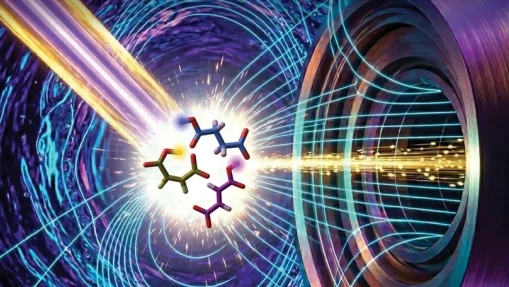
Proton sharing in polycarboxylic acids in aqueous solution
Researchers used X-ray photoelectron spectroscopy to investigate proton sharing in biologically relevant polycarboxylic acids, revealing the crucial role of molecular geometry.
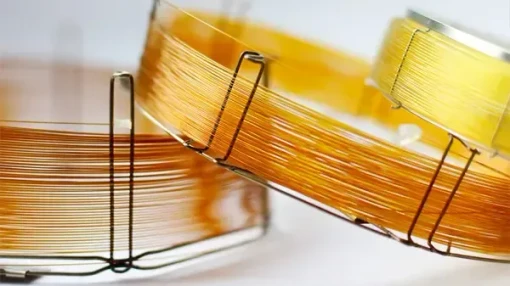
Role of Gas Chromatography in Forensics
Discover how gas chromatography supports forensic investigations, from drug detection and toxicology to arson analysis. Explore its applications, benefits, and limitations.
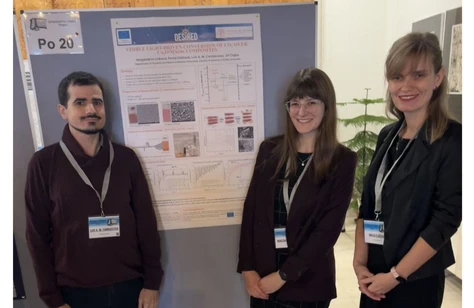
Researchers from Charles University, Prague, Have Developed a New Photocathode for Efficient Conversion of CO2 into Ethanol
Researchers at Charles University developed a new photocathode for solar-driven CO₂ conversion to ethanol. Surface-engineered MXene improves conversion efficiency and material stability.

News from LabRulezICPMS Library - Week 42, 2026
This week we bring you technical note by Agilent Technologies and application notes by LECO, Metrohm and Shimadzu!

News from LabRulezLCMS Library - Week 42, 2026
This week we bring you application notes by KNAUER and Shimadzu, brochure by Thermo Fisher Scientific and poster by Waters Corporation / ACS!

News from LabRulezGCMS Library - Week 42, 2026
This week we bring you technical note by Agilent Technologies and application notes by LECO and Shimadzu!

When Mass Spectrometry Helps Reveal the Secrets of DNA and RNA
A new Shimadzu LCMS-8045RX at the Institute of Biophysics of the Czech Academy of Sciences expands capabilities for studying modified nucleosides and other biologically important molecules.
Combining Performance, Robustness and Productivity in ICP-MS Analysis of Challenging Matrices
How can laboratories tackle trace element analysis in challenging matrices? Evonik experts share their ICP-MS experience and the benefits of adopting the Thermo Scientific iCAP MTX ICP-MS.