When Mass Spectrometry Helps Reveal the Secrets of DNA and RNA

Tu, 13.10.2026 | Original article from: Shimadzu
A new Shimadzu LCMS-8045RX at the Institute of Biophysics of the Czech Academy of Sciences expands capabilities for studying modified nucleosides and other biologically important molecules.
  • Photo: Shimadzu: When Mass Spectrometry Helps Reveal the Secrets of DNA and RNA
  • Video: ShimadzuEurope: LCMS TQ RX Series

What chemical changes occur in our nucleic acids, and how can they influence cellular function? Modern analytical technologies are helping scientists answer questions like these. We are therefore very pleased to have successfully installed our Shimadzu LCMS-8045RX mass spectrometer at the Institute of Biophysics of the Czech Academy of Sciences in Brno.

The new liquid chromatography–tandem mass spectrometry (LC-MS/MS) system will expand the institute’s analytical capabilities for studying biologically important molecules, particularly modified nucleosides.

Small chemical changes with major biological significance

DNA and RNA are not simply immutable carriers of genetic information. Their nucleobases can undergo a wide range of chemical modifications that play important roles in cellular processes.

One example is nucleobase methylation, which can contribute to the regulation of gene expression. RNA modifications can influence its stability, structure, or function. Some chemical changes in DNA can also arise as a result of damage to genetic material.

The ability to reliably identify and quantify these modifications is therefore an important tool in modern molecular biology research.
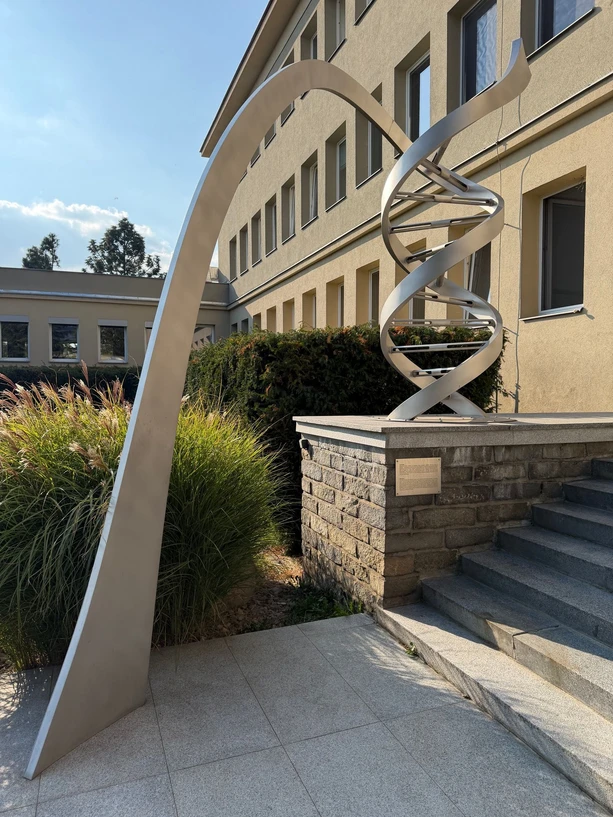
Shimadzu: Institute of Biophysics of the Czech Academy of SciencesShimadzu: Institute of Biophysics of the Czech Academy of Sciences

Our installation therefore included not only commissioning the instrument, but also implementing an analytical method for the determination of modified nucleosides. Using LC-MS/MS, individual compounds can first be chromatographically separated and then detected with high selectivity, even at low concentrations.

Shimadzu LCMS-8045RX: speed, sensitivity, and reliability

At the heart of the analytical MS laboratory is the Shimadzu LCMS-8045RX triple quadrupole mass spectrometer, combining high sensitivity with rapid data acquisition and a robust design for long-term laboratory operation.

The instrument belongs to the Shimadzu UFMS (Ultra-Fast Mass Spectrometry) family and offers a number of technological advantages:

  • High sensitivity and selectivity for accurate determination of trace-level analytes using MRM transitions.
  • Scan speeds of up to 30,000 u/s, enabling efficient data acquisition even with fast chromatographic separations.
  • Polarity switching in just 5 ms, allowing compounds ionizing in both positive and negative modes to be monitored within a single analysis.
  • Up to 555 MRM transitions per second, particularly advantageous for multicomponent analytical methods.
  • A robust ESI ionization interface, designed for stable response, high sensitivity, and easy maintenance.

Thanks to these features, the LCMS-8045RX is a suitable solution not only for routine quantitative analyses, but also for demanding research applications in biochemistry, molecular biology, and other life science fields.
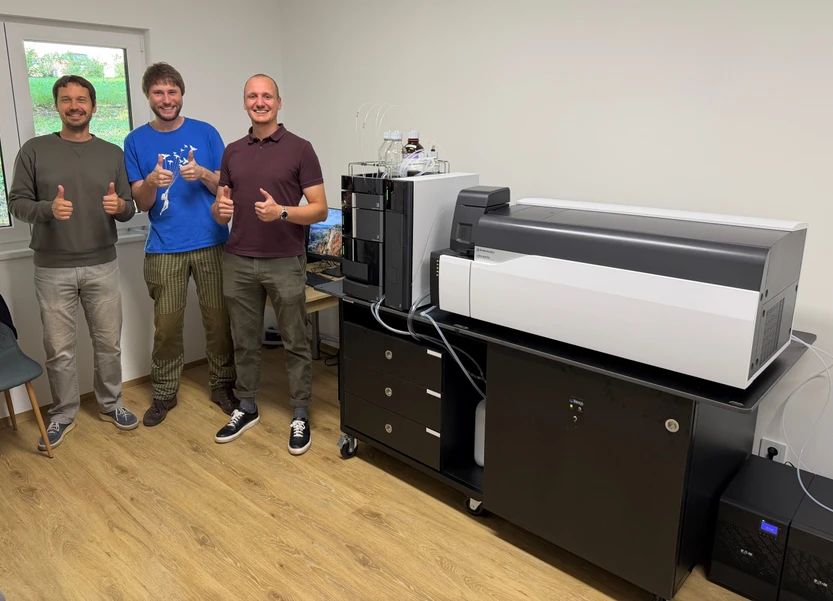
Shimadzu: When Mass Spectrometry Helps Reveal the Secrets of DNA and RNA – New Shimadzu LCMS-8045RX Installation in BrnoShimadzu: When Mass Spectrometry Helps Reveal the Secrets of DNA and RNA – New Shimadzu LCMS-8045RX Installation in Brno

High-quality analytics deserves a high-quality working environment

During the installation, we also paid attention to the overall laboratory setup. The complete LC-MS/MS system is installed on a specialized ionBench laboratory bench designed specifically for mass spectrometry applications.

One of the major advantages of this solution is the integrated soundproof enclosure for the rotary vacuum pump, together with a dedicated enclosure for the nitrogen generator from the same manufacturer, helping to significantly reduce noise in the laboratory.

The result is a compact, practical, and ergonomic workstation that saves space, provides convenient access to the instrumentation, and contributes to a more comfortable working environment.

Because high-end analytical performance is not only about instrument specifications, but also about the environment in which scientists work every day.

Thank you for your trust!

We greatly appreciate that the Institute of Biophysics of the Czech Academy of Sciences chose Shimadzu technology to expand its analytical capabilities. We would like to thank the entire team for the excellent cooperation during installation, training, and analytical method implementation.
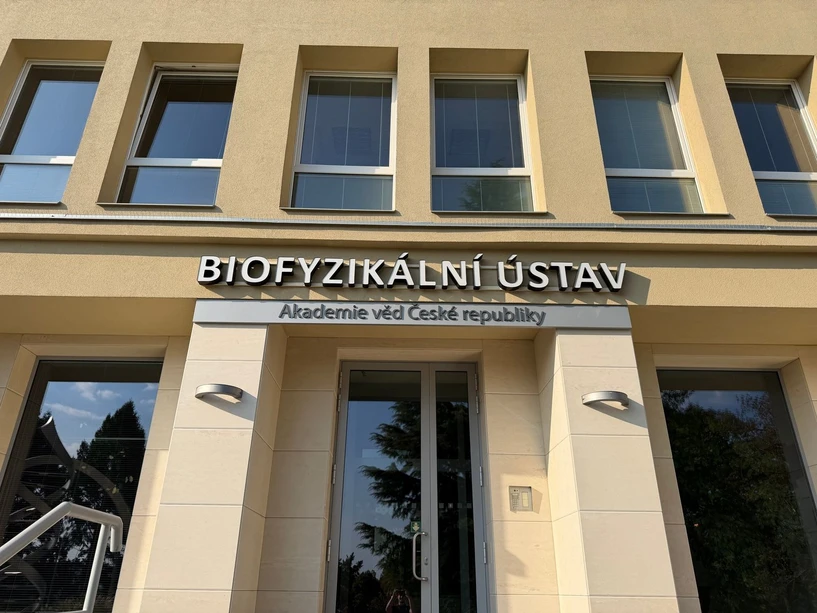
Shimadzu: Institute of Biophysics of the Czech Academy of SciencesShimadzu: Institute of Biophysics of the Czech Academy of Sciences

We wish the team every success in their future research and look forward to the exciting scientific results that the new LCMS-8045RX will help make possible.

Shimadzu – Excellence in Science.

SHIMADZU CORPORATION
LinkedIn Logo
 

Related articles

ESAS 2022 & 17th CSSC (Speakers + Lecture/Poster deadline)
Article | Events

ESAS 2022 & 17th CSSC (Speakers + Lecture/Poster deadline)

Who will be speakers at this year's European Symposium on Analytical Spectrometry (ESAS) and the 17th Czech-Slovak Spectroscopic Conference (CSSC)?
11th Conference of the Czech Society for Mass Spectrometry (Day 2)
Article | Events

11th Conference of the Czech Society for Mass Spectrometry (Day 2)

The second day of the 11th Czech Mass Spectrometry Conference featured 9 lectures, the Zdeněk Herman Award and a Bruker workshop.
Thomas Gouder: I want the project to continue. The surface research instrument is being relocated from Karlsruhe to Prague
Article | Science and research

Thomas Gouder: I want the project to continue. The surface research instrument is being relocated from Karlsruhe to Prague

A unique modular system for surface science, developed at JRC Karlsruhe by Thomas Gouder, is moving to Prague. Discover how it works, why it’s being transferred, and how it will support future research at FZU.
ISC 2026 - Day 2
Article | Events

ISC 2026 - Day 2

ISC 2026 Day 2 brought the conference into full swing with parallel scientific sessions, posters, the exhibition, vendor seminars, tutorials, and industry and career activities.
 

Related articles

ESAS 2022 & 17th CSSC (Speakers + Lecture/Poster deadline)
Article | Events

ESAS 2022 & 17th CSSC (Speakers + Lecture/Poster deadline)

Who will be speakers at this year's European Symposium on Analytical Spectrometry (ESAS) and the 17th Czech-Slovak Spectroscopic Conference (CSSC)?
11th Conference of the Czech Society for Mass Spectrometry (Day 2)
Article | Events

11th Conference of the Czech Society for Mass Spectrometry (Day 2)

The second day of the 11th Czech Mass Spectrometry Conference featured 9 lectures, the Zdeněk Herman Award and a Bruker workshop.
Thomas Gouder: I want the project to continue. The surface research instrument is being relocated from Karlsruhe to Prague
Article | Science and research

Thomas Gouder: I want the project to continue. The surface research instrument is being relocated from Karlsruhe to Prague

A unique modular system for surface science, developed at JRC Karlsruhe by Thomas Gouder, is moving to Prague. Discover how it works, why it’s being transferred, and how it will support future research at FZU.
ISC 2026 - Day 2
Article | Events

ISC 2026 - Day 2

ISC 2026 Day 2 brought the conference into full swing with parallel scientific sessions, posters, the exhibition, vendor seminars, tutorials, and industry and career activities.
 

Related articles

ESAS 2022 & 17th CSSC (Speakers + Lecture/Poster deadline)
Article | Events

ESAS 2022 & 17th CSSC (Speakers + Lecture/Poster deadline)

Who will be speakers at this year's European Symposium on Analytical Spectrometry (ESAS) and the 17th Czech-Slovak Spectroscopic Conference (CSSC)?
11th Conference of the Czech Society for Mass Spectrometry (Day 2)
Article | Events

11th Conference of the Czech Society for Mass Spectrometry (Day 2)

The second day of the 11th Czech Mass Spectrometry Conference featured 9 lectures, the Zdeněk Herman Award and a Bruker workshop.
Thomas Gouder: I want the project to continue. The surface research instrument is being relocated from Karlsruhe to Prague
Article | Science and research

Thomas Gouder: I want the project to continue. The surface research instrument is being relocated from Karlsruhe to Prague

A unique modular system for surface science, developed at JRC Karlsruhe by Thomas Gouder, is moving to Prague. Discover how it works, why it’s being transferred, and how it will support future research at FZU.
ISC 2026 - Day 2
Article | Events

ISC 2026 - Day 2

ISC 2026 Day 2 brought the conference into full swing with parallel scientific sessions, posters, the exhibition, vendor seminars, tutorials, and industry and career activities.
 

Related articles

ESAS 2022 & 17th CSSC (Speakers + Lecture/Poster deadline)
Article | Events

ESAS 2022 & 17th CSSC (Speakers + Lecture/Poster deadline)

Who will be speakers at this year's European Symposium on Analytical Spectrometry (ESAS) and the 17th Czech-Slovak Spectroscopic Conference (CSSC)?
11th Conference of the Czech Society for Mass Spectrometry (Day 2)
Article | Events

11th Conference of the Czech Society for Mass Spectrometry (Day 2)

The second day of the 11th Czech Mass Spectrometry Conference featured 9 lectures, the Zdeněk Herman Award and a Bruker workshop.
Thomas Gouder: I want the project to continue. The surface research instrument is being relocated from Karlsruhe to Prague
Article | Science and research

Thomas Gouder: I want the project to continue. The surface research instrument is being relocated from Karlsruhe to Prague

A unique modular system for surface science, developed at JRC Karlsruhe by Thomas Gouder, is moving to Prague. Discover how it works, why it’s being transferred, and how it will support future research at FZU.
ISC 2026 - Day 2
Article | Events

ISC 2026 - Day 2

ISC 2026 Day 2 brought the conference into full swing with parallel scientific sessions, posters, the exhibition, vendor seminars, tutorials, and industry and career activities.