
Why Solid Phase Extraction Is Having Its Moment
LCMSArticle | Environment

Why Solid Phase Extraction Is Having Its Moment

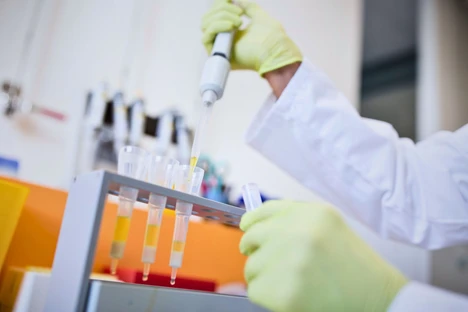
SPE has become a key technique in modern sample preparation. Explore how automation, PFAS analysis, LC-MS/MS, and emerging applications are driving its continued growth.
Why Solid Phase Extraction Is Having Its Moment
Science on the Front Lines: Cleanup of a Benzene Spill
GCMSICPMSLCMSArticle | Environment

Science on the Front Lines: Cleanup of a Benzene Spill

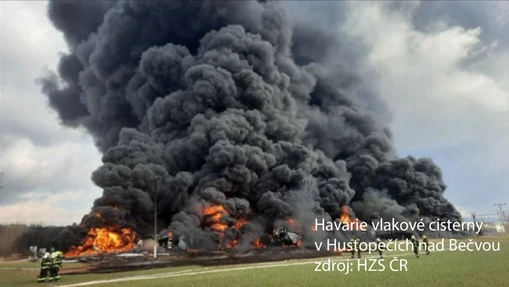
CXI TUL researchers tested in situ chemical oxidation to remediate benzene contamination after the Hustopeče nad Bečvou train accident and identified the most suitable treatment for field use.
Science on the Front Lines: Cleanup of a Benzene Spill
Beads with a nanofiber core. This is a better way to purify water.
GCMSICPMSLCMSArticle | Science and research

Beads with a nanofiber core. This is a better way to purify water.

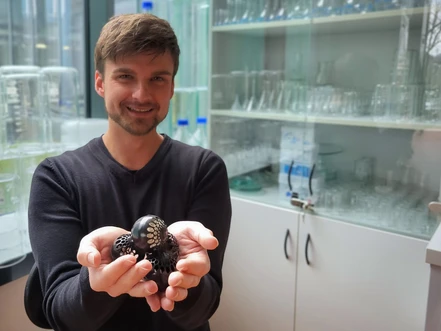
The HYMNA project combines MBR and MBBR technologies with nanofiber biomass carriers to improve ammonia nitrogen removal and enable modular wastewater treatment.
Beads with a nanofiber core. This is a better way to purify water.
The UK Just Released Its First-Ever Plan to Tackle 'Forever Chemicals' — Here's Why It Matters for Labs
LCMSArticle | Environment

The UK Just Released Its First-Ever Plan to Tackle 'Forever Chemicals' — Here's Why It Matters for Labs

The UK's first national PFAS Plan marks a major step in regulating "forever chemicals." Discover what it includes and why it will drive demand for PFAS testing and laboratory analysis.

The UK Just Released Its First-Ever Plan to Tackle 'Forever Chemicals' — Here's Why It Matters for Labs
PFAS in Water: Why We’re Missing 96% of the Problem
LCMSInterview | Video

PFAS in Water: Why We’re Missing 96% of the Problem

Dr. Terry discusses PFAS contamination, analytical challenges, fluorine mass balance, treatment technologies, and future directions for monitoring and protecting drinking water quality.
PFAS in Water: Why We’re Missing 96% of the Problem
Micro-Snyder Column vs Nitrogen Blowdown: Choosing the Right Concentration Method for EPA Applications
LCMSGCMSArticle | Academy

Micro-Snyder Column vs Nitrogen Blowdown: Choosing the Right Concentration Method for EPA Applications

Micro-Snyder column or nitrogen blowdown? Explore the advantages, limitations, and EPA applications of two widely used concentration techniques for environmental and trace analysis.
Micro-Snyder Column vs Nitrogen Blowdown: Choosing the Right Concentration Method for EPA Applications
Tackling Today’s Toughest Pollutants: Emerging POPs Analysis With GC-MS Technology
GCMSArticle | Product

Tackling Today’s Toughest Pollutants: Emerging POPs Analysis With GC-MS Technology

Persistent organic pollutants (POPs) are a growing challenge for environmental laboratories. Discover how GC-HRAM MS and non-targeted screening help identify both regulated and previously unknown contaminants.
Tackling Today’s Toughest Pollutants: Emerging POPs Analysis With GC-MS Technology
Gain Confidence in Your Total Organic Carbon (TOC) Data
ICPMSArticle | Product

Gain Confidence in Your Total Organic Carbon (TOC) Data

Why is Total Organic Carbon (TOC) essential for soil health? Discover the challenges of TOC analysis and how LECO analyzers deliver accurate, reliable, and repeatable results.
Gain Confidence in Your Total Organic Carbon (TOC) Data
Gas Chromatography-Atmospheric Pressure Chemical Ionization (GC-APCI) Expands the Analytical Window for Detection of Large PAHs (≥24 Ringed-Carbons) in Pyroplastics and Other Environmental Matrices
GCMSScientific article | Science and research

Gas Chromatography-Atmospheric Pressure Chemical Ionization (GC-APCI) Expands the Analytical Window for Detection of Large PAHs (≥24 Ringed-Carbons) in Pyroplastics and Other Environmental Matrices

This study develops a GC-APCI-MS/MS method for detecting large PAHs in pyroplastics, identifying potential markers of burned plastic pollution.
Gas Chromatography-Atmospheric Pressure Chemical Ionization (GC-APCI) Expands the Analytical Window for Detection of Large PAHs (≥24 Ringed-Carbons) in Pyroplastics and Other Environmental Matrices
Tracking Toxic PCBs in River Water using Gas Chromatography–Electron Capture Detection
GCMSInterview | Science and research

Tracking Toxic PCBs in River Water using Gas Chromatography–Electron Capture Detection

Francais Femi Oloy discusses PCB monitoring in Nigerian rivers, including GC-ECD analysis, liquid–liquid extraction, sample cleanup, and challenges in trace pollutant detection.
Tracking Toxic PCBs in River Water using Gas Chromatography–Electron Capture Detection