
Zaměření
Type of News
Focus
Article | Poster
News from LabRulezGCMS Library Week 29, 2024
New posters from ASMS 2024 by LECO, Agilent Technologies, Shimadzu, and Thermo Fisher Scientific in LabRulez Library.
Article | Interview
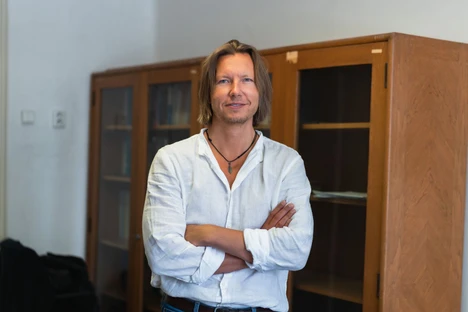
Life is an excellent model for chess
Alexandr Malijevský, now a full professor, joined UCT Prague in 2000 as a doctoral student. He completed his Master's degree at the Charles University Faculty of Mathematics and Physics.

Article | Webinars
Webinars LabRulezGCMS Week 30-31/2024
7 webinars: Food & Beverage, Aroma Non-Targeted Screening, Thermal desorption, GC & GC/MS FAQs, LDIR & Pharma, PFAS in Air.

Article | Scientific article
Becoming an Expert: Using Raman spectroscopy to analyse vaping ‘e-liquids’
Paul Richardson is a PhD student at the University of Liverpool and his research focuses on using infrared and Raman spectroscopy. His recent work has included analysis of vaping e-liquids via these techniques.

Article | Events
Invitation to ISC 2024 - Early Bird Registration Ending Soon!
The early bird registration to the 34th International Symposium on Chromatography – ISC 2024 is ending soon!

Article | Interview
Karel Šmejkal: I still find research an exciting game
This year, Karel Šmejkal received the MU Rector’s Award for long-term excellence in research in the field of natural sciences and medicine.

Article | Events
22 nd International Summer School on Bioanalysis was held at the Chemistry Institute of the Faculty of Science, Charles University
82 participants, 25 teachers and 57 students, came from 19 universities in 10 different European countries.

Article | Webinars
Webinars LabRulezGCMS Week 29/2024
3 webinars: Complexities of Catalyst Analysis; PFAS Workflows with Agilent SLIMS; FTIR Spectroscopy's efficiency in analyzing lithium-ion battery materials.

Article | Video
Scientists at IOCB Prague are developing a new generation of DNA tests for a wide range of applications
A research group led by Dr. Edward Curtis has developed two new types of catalytic DNA molecules (deoxyribozymes) that can reveal the presence of target molecules through fluorescence or color.

Article | Video
Why urea may have been the gateway to life
Urea reacts extremely quickly under the conditions that existed when our planet was newly formed. This new insight furthers our understanding of how life on Earth might have begun.