Zaměření
Type of News
Focus
Scientific article | Science and research
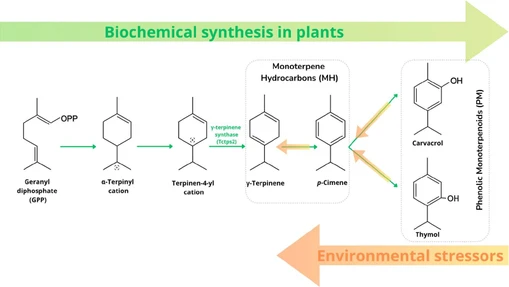
Can Temperature and UV Exposure Alter the Antimicrobial Properties of the Essential Oils? An Investigation of Origanum vulgare, Cymbopogon citratus, Syzygium aromaticum, and Lippia sidoides
GC-MS shows that heat and UV exposure modify essential oil composition and can improve antimicrobial activity, especially against fungal strains.
Scientific article | Science and research
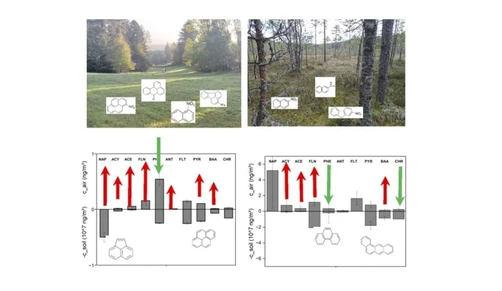
Polycyclic aromatic compounds in air – importance of re-volatilisation from soils
GC-MS/MS and flux analysis show that soils can re-emit PAHs and related compounds, with secondary emissions potentially rivaling local primary sources.
Scientific article | Science and research
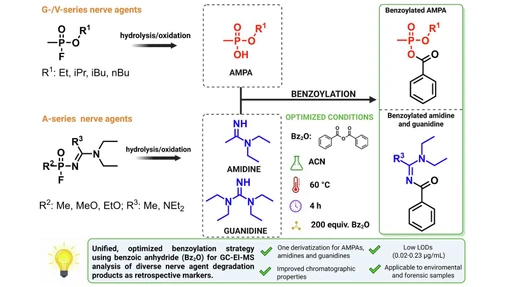
Benzoylation strategy for GC–EI–MS analysis of alkyl methylphosphonic acids, amidines and guanidines as retrospective markers of nerve chemical warfare agent use
A benzoylation strategy enables GC-EI-MS analysis of acidic and basic nerve-agent degradation products, with benzoic anhydride providing the best performance.
Scientific article | Science and research
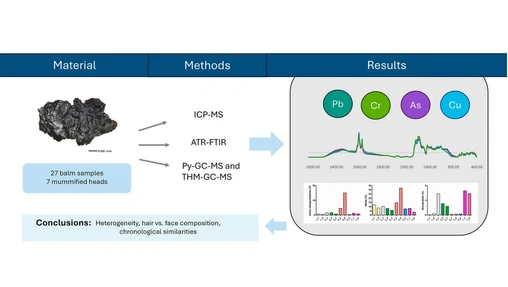
Combining elemental analysis and molecular techniques to characterize Ancient Egyptian mummification balms
A combined ATR-FTIR, ICP-MS, Py-GC-MS, and THM-GC-MS approach identifies organic and inorganic components in Ancient Egyptian mummification balms.
Scientific article | Science and research
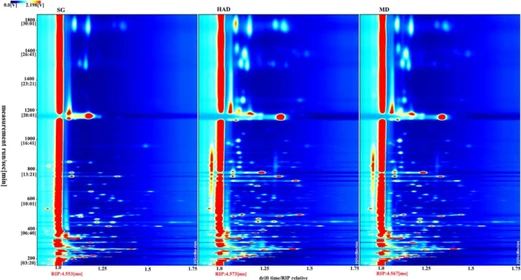
Analysis of characteristic flavor compounds in coffee peels subjected to different thermal processing treatments based on GC–IMS and HS-SPME–GC–MS combined with chemical pattern recognition
Combined GC-IMS and HS-SPME-GC-MS with chemometrics differentiates coffee peel processing treatments and identifies characteristic volatile aroma markers.
Scientific article | Science and research
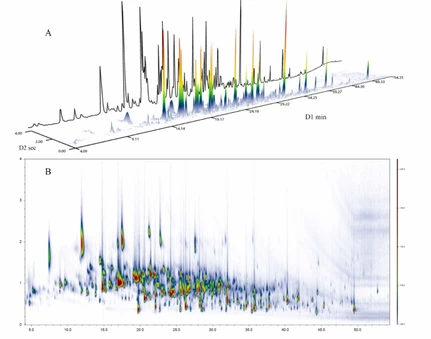
Volatile compound fingerprinting for traditional sesame oil authentication using GC-MS with GC×GC-MS-assisted identification
HS-SPME-GC×GC-MS-assisted fingerprinting enables sensitive authentication of sesame oil, detecting maize oil dilution from 5% and essence adulteration from 0.2%.
Scientific article | Science and research
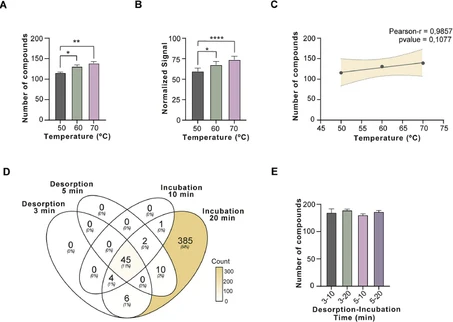
Automated Rapid Organic-Solvent-Free Metabolomics via Arrow–GC–MS: An Optimized Green Workflow for Human Plasma Profiling
AROMA-GC-MS provides automated, solvent-free plasma metabolomics using SPME Arrow, detecting over 100 metabolites from only 50 µL of plasma.

Scientific article | Science and research
Propionic Acid Outperforms Formic and Acetic Acid in MS Sensitivity for High-Flow Reversed-Phase LC-MS Bottom-Up Proteomics
Propionic acid increases peptide identifications by 39% versus formic acid in LC-MS proteomics while maintaining chromatographic performance and compatibility.
Scientific article | Science and research
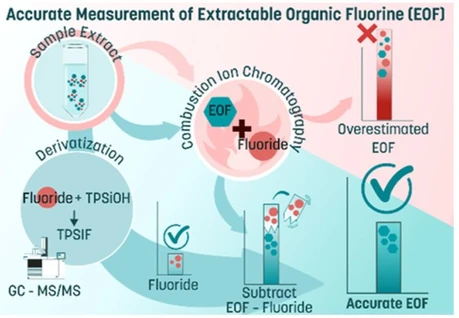
Toward Accurate Estimation of Extractable Organic Fluorine by Analysis of Fluoride Contamination in Extracts Using Gas Chromatography
A GC-MS/MS method quantifies inorganic fluoride in EOF extracts and shows that fluoride contamination can substantially overestimate organic fluorine measured by CIC.

Scientific article | Science and research
Hydrogen Analysis by Gas Chromatography–Mass Spectrometry
A cryogenic single-column GC-MS method with modified EI enables direct hydrogen quantification in complex gas mixtures using helium carrier gas.