Zaměření
Type of News
Focus
Article | Interview
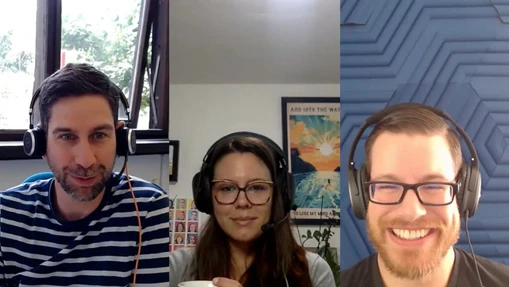
Breathomics, Asthma & GC×GC: PH Stefanuto on Fighting the “Proof‑of‑Concept” Trap
Pierre-Hugues Stefanuto and Candi Gokey discuss GC×GC, untargeted metabolomics, breath analysis, AI, and the path from molecular fingerprints to personalized asthma monitoring.
Article | Interview
How Chromatography Helps Build Better Catalysts
Madalyn Radlauer discusses polymer-supported catalysis, star polymers, SEC/GPC, light scattering, GC-MS benchmarking, and why asking the right questions drives better science.
Article | Interview
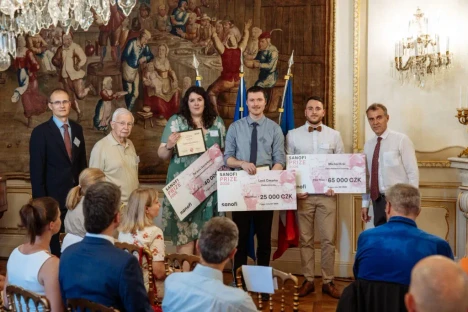
Interview: What Drew Postdoc Taťána Gazárková to Analytical Chemistry
Interview with Taťána Gazárková on analytical chemistry, untargeted metabolomics, the search for novel bioactive compounds, and her Sanofi Prize for Pharmacy 2026 award.
Article | Interview
The Chemistry of Human Decomposition: GC×GC, Body Farms, and Forensic Science with Dr. Darshil Patel
Darshil Patel discusses his path from dentistry to forensic chemistry and explains how GC×GC–TOF-MS reveals complex VOC profiles from human decomposition and supports human-remains detection.
Article | Interview
How Mass Spectrometry Actually Works: The Quadrupole Explained
Dr. Lee Polite explains the fundamentals of GC/MS through memorable analogies, making one of analytical chemistry's most powerful techniques easy to understand.
Interview | Scientists
How Separation Science Is Taught vs. How It’s Actually Used
Chemistry educator Natasha Le discusses how students learn separation science, why critical thinking matters more than memorizing procedures, and how future analytical scientists are trained.
Interview | Video
Did Mars Destroy Its Own Biosignatures? | GC-MS, Sterols & the Search for Life
Discover how GC-MS, LC-MS, ion chromatography, and NMR help scientists investigate organic molecules on Mars and distinguish potential biosignatures from analytical artifacts.
Interview | Video
Using LC-MS & GC-MS to Decode Photoredox Catalyst Stability
Interview with Lindsay Repka on photoredox chemistry, photocrosslinking, solvent activation, and the critical role of LC-MS and GC-MS in studying catalyst stability and reaction mechanisms.
Interview | Science and research
Tracking Toxic PCBs in River Water using Gas Chromatography–Electron Capture Detection
Francais Femi Oloy discusses PCB monitoring in Nigerian rivers, including GC-ECD analysis, liquid–liquid extraction, sample cleanup, and challenges in trace pollutant detection.

Interview | Video
Selective Separations: What Membrane Science Can Teach Chromatographers
Explore how membrane science supports water treatment, selective separations, and analytical workflows, with insights into RO, PFAS removal, scale-up challenges, and sustainable membrane design.