Zaměření
Type of News
Focus
Article | Video
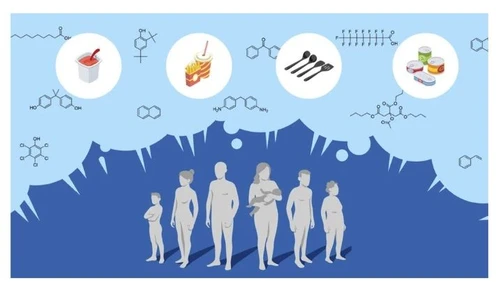
The study revealed a surprisingly large amount of hazardous chemicals in food packaging materials.
The study revealed a surprisingly large amount of hazardous NIAS components in food packaging materials. Almost 2000 of those are not even contained in the list of authhorized chemicals.
Article | Webinars
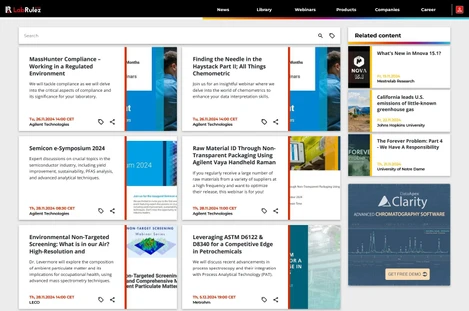
Webinars LabRulezGCMS Week 48/2024
5 webinars: MassHunter Compliance, Chemometric & data interpretaion, Semicon e-Symposium, Raman & Raw Material ID, GCxGC/TOF Non-Targeted Screening & Air.

Article | Science and research
California leads U.S. emissions of little-known greenhouse gas
The state emits more of the common pesticide sulfuryl fluoride than the rest of country combined, a Johns Hopkins study finds.

Article | Video
The Forever Problem: Part 4 - We Have A Responsibility
Professor Daniele Miranda tracks the flow of per- and polyfluoroalkyl substances (PFAS), also known as forever chemicals, through waterways to study the effects they have on local communities.

Article | Product
Celebrate Mestrelab’s Anniversary with Exclusive Store Offers!
Celebrate with us and take advantage of these deals before they end on November 30, 2024.
Article | Application
News from LabRulezGCMS Library - Week 46, 2024
This week we bring you applications by Agilent Technologies, Thermo Fisher Scientific, and Shimadzu!
Article | Product
What’s New in MSChrom with Mnova 15.1?
Mnova 15.1 introduces enhancements for MSChrom, including a new Peak Purity Assessment mode based on the MCR-ALS algorithm for LCMS, along with updated settings for the Molecule Match tool.

Scientific article | Food
A multiplatform metabolomics/reactomics approach as a powerful strategy to identify reaction compounds generated during hemicellulose hydrothermal extraction from agro-food biomasses
The researchers explored the metabolomics of degradation compounds formed during hydrothermal treatment of hazelnut shells, a process commonly used for hemicellulose extraction.
Article | Webinars
Webinars LabRulezGCMS Week 47/2024
12 webinars: Micro GC, Tips & Tricks GC & GC/MS, Catalysis, Non-target GC/MS, OMNIS NIR, Empower SW, PAT & QC, SamplePrep, PLOT colums, Pesticides, Nitrosamines.

Article | Science and research
Glass alchemy of Marie Staré. The recyclate has new uses.
Marie Stará and the team from the Department of Glass Producing Machines and Robotics at the Technical University of Liberec are behind the discovery of how to give waste glass a chance.