Zaměření
Type of News
Focus

Article | Academy
GC Technical Tip: Retention Times Prolonged or Shortened
Learn how to diagnose and fix retention time shifts in GC. This guide explains common column performance issues, their causes, and practical remedies for consistent chromatographic results.

Article | Science and research
MOSH/MOAH Analysis: Technology, Regulation, and the Road Ahead
MOSH/MOAH testing is becoming a key topic in food safety and regulation. Discover how Thermo Fisher Scientific’s LC-GC-FID and GC×GC-MS workflows improve reliability, compliance, and source identification.
Article | Product
Creating Custom Calculations in Clarity Chromatography Software
Step-by-step guide to creating custom user columns in Clarity Chromatography Software. Learn to define, manage, and share calculation expressions for automated analytical results.
Article | Webinars
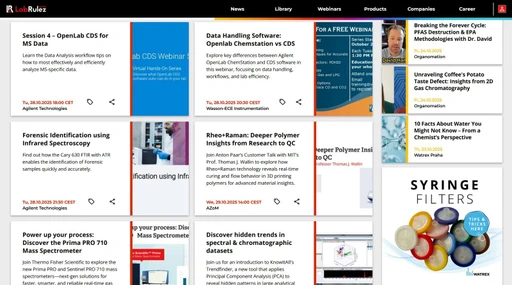
Webinars LabRulezGCMS Week 44/2025
5 webinars: CDS software, forensic FTIR, gas analysis, MS data, Rheo+Raman polymer insights
Scientific article | Science and research
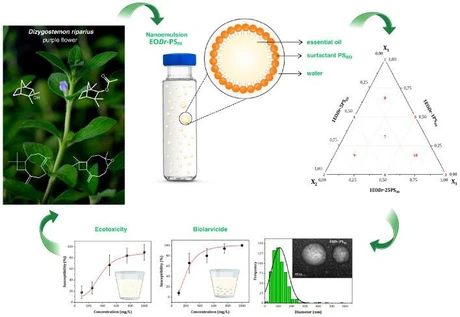
Influence of Polysorbate 80 on the Larvicidal and Ecotoxicological Profile of Dizygostemon riparius Essential Oil Nanoemulsion: Insights into Green Nanotechnology
A green nanoemulsion from Dizygostemon riparius essential oil, stabilized with Polysorbate 80, exhibited potent larvicidal action against Aedes albopictus and minimal ecotoxic effects.

Interview | Video
Breaking the Forever Cycle: PFAS Destruction & EPA Methodologies with Dr. David Hanigan
Prof. David Hanigan explains why PFAS removal isn’t enough, how online FTIR reveals gas-phase products, and where EPA 1633 vs. 533/537 and OTM-45/50 fit in real-world PFAS analysis.

Interview | Video
Unraveling Coffee's Potato Taste Defect: Insights from 2D Gas Chromatography
Award-winning chromatographer Caitlyn explains why GC and LC are complementary, how GC×GC unlocks complex aromas, and what her team learned about coffee’s potato taste defect—plus where AI fits next.
Article | Water
10 Facts About Water You Might Not Know – From a Chemist’s Perspective
Water is far more than just H₂O. Discover 10 fascinating facts about its physicochemical mysteries — from isotopes and ice forms to lab purity standards and its vital role in scientific research.

Article | Application
Analysis of Coffee Flavors by Purge and Trap Sampling
This study analyzes four instant coffee blends using the Encon Evolution Purge and Trap system with GC/MS to identify key flavor compounds defining roast profile and aroma.
Article | Academy
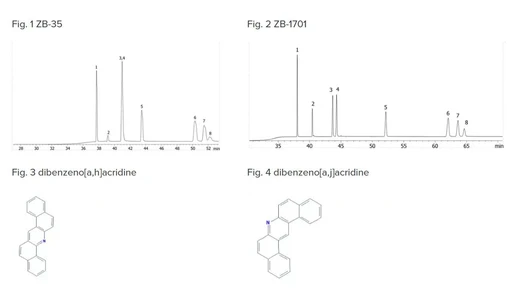
Good Column Selection: Polarity vs Selectivity
Understanding GC column polarity and selectivity is key to achieving optimal separations. Learn how to choose the right stationary phase for your compounds and improve chromatographic performance.