Zaměření
Type of News
Focus

Presentation | Video
Application of GC×GC for the investigation of fermented beverages (Sarah C. Foster, MDCW 2026)
GC×GC-TOFMS reveals how yeast strain and honey concentration shape mead aroma. Learn the workflow from headspace sampling to PCA/PCoA/HCA, plus key VOC trends across fermentations.

Article | Academy
Why Is It Necessary to Dry the SPE Sorbent Before Elution?
Proper drying of the SPE sorbent is a critical step to achieve high sensitivity, good reproducibility, and maximum analyte recovery, especially for complex sample matrices.

Article | Health
Hexane in Food: When Processing Chemistry Meets Public Health
Hexane remains a key food extraction solvent, but EFSA now calls for re-evaluation of its long-term safety. Robust GC-FID and GC-MS methods are critical for reliable residue detection and risk assessment.
Scientific article | Science and research
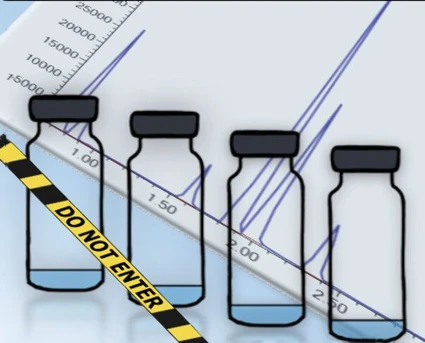
Introducing Headspace Gas Chromatography–Mass Spectrometry to Undergraduate Chemistry Students from a Forensic Toxicology Perspective
This undergraduate experiment teaches headspace GC–MS using forensic toxicology analysis of volatiles, integrating calibration, data evaluation, and real-world analytical workflows.
Article | Webinars
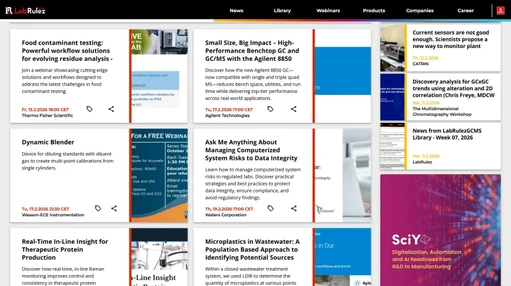
Webinars LabRulezGCMS Week 08/2026
3 webinars: 8850 GC, benchtop GC/MS, computerized systems, data integrity, dynamic blender, gas calibration, regulated labs, triple quad MS

Article | Science and research
Current sensors are not good enough. Scientists propose a new way to monitor plant health
Researchers present printable, low-cost sensor technologies using smart materials to enable real-time plant health monitoring and advance smart agriculture solutions.

Presentation | Video
Discovery analysis for GCxGC trends using alteration and 2D correlation (Chris Freye, MDCW 2026)
Advanced chemometric methods reveal subtle, statistically significant changes in complex GC×GC-MS and LC-MS data. Learn how Alteration Analysis and 2D correlation turn massive datasets into actionable insights.
Article | Application
News from LabRulezGCMS Library - Week 07, 2026
This week we bring you technical note by Agilent Technologies, presentation by MDCW/University of Copenhagen and application notes by Shimadzu and Thermo Fisher Scientific!
Article | Academy
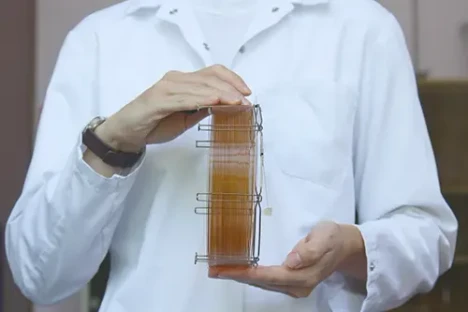
How to Protect Your GC Column - Part 2
How can you extend GC column lifetime and prevent contamination? Part 2 focuses on using liners with glass wool and proper column bake-out to maintain separation performance.

Article | Events
ISC 2026 Short Course 3 - Interpretation of Mass Spectra: Basic Introduction for Chromatographers
Short Course 3 at ISC 2026 offers a practical introduction to LC–MS spectral interpretation for chromatographers, covering ESI, APCI, APPI, adducts, isotope patterns, and MS/MS fundamentals.