
Zaměření
Type of News
Focus
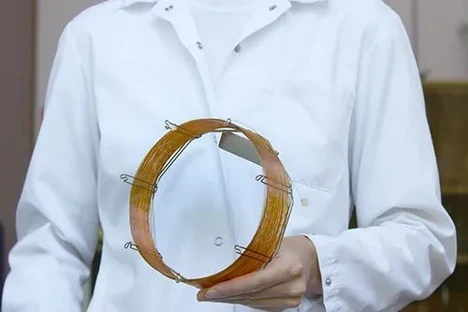
How to Protect Your GC Column - Part 1
Dirty samples can quickly damage your GC column and shorten its lifetime. Learn simple, proven ways to protect your column, improve performance, and reduce downtime. Part 1 focuses on smart sample preparation.

ISC 2026 Short Course 2 - The Analytical Procedure Lifecycle Approach: from Procedure Design to Performance Assessment using AQbD Principles
Short Course 2 at ISC 2026 explores the Analytical Procedure Lifecycle using AQbD principles, covering ATP definition, DoE-based design, robustness, MODR, and ICH Q14/Q2(R2) performance assessment.

Ion Chromatography Turns 50: Chromeleon Software’s Tribute to a Lifelong Partner
50 years of ion chromatography: how IC and Chromeleon software evolved together to deliver clearer data, smarter workflows, and lasting impact on modern analytical laboratories.
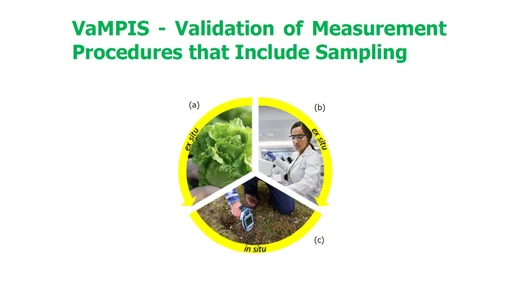
VaMPIS - Validation of Measurement Procedures that Include Sampling
Eurachem/CITAC VaMPIS guidance introduces validation of measurement procedures that include sampling, using measurement uncertainty to assess fitness for purpose in both in situ and ex situ measurements.
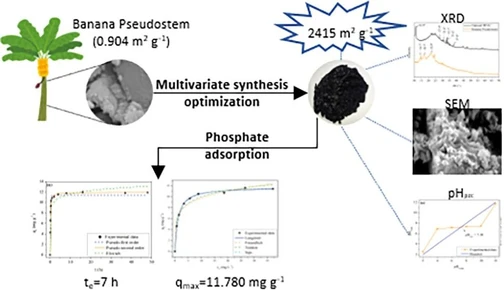
Activated Carbon from Banana Pseudostem: Multivariate Optimization of Synthesis and Adsorption Study for Phosphorus Removal
This study develops banana pseudostem activated carbon with ultrahigh surface area and optimized phosphate adsorption using multivariate experimental design.
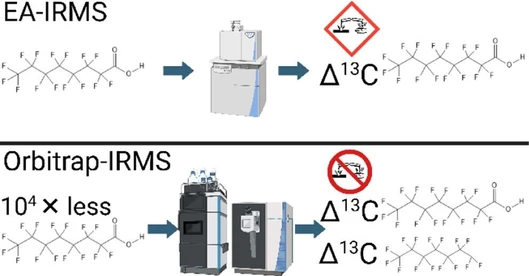
Source Fingerprinting of PFOA via Full- and Intramolecular Stable Isotope Ratios of Carbon Using Orbitrap-IRMS
This study demonstrates Orbitrap-IRMS for full and intramolecular carbon isotope analysis of PFOA, enabling sensitive PFAS source fingerprinting without analyte decomposition.
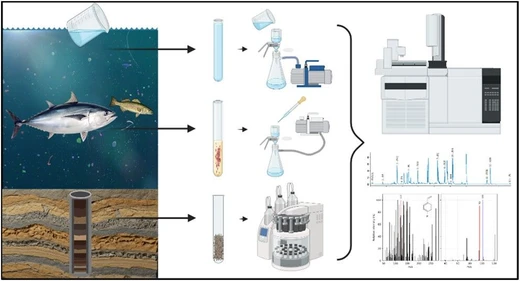
Rapid and Sensitive Quantification of Nano- and Microplastics in Water, Sediment, and Biological Tissue by Pyrolysis-Gas Chromatography Tandem Mass Spectrometry with Dynamic Reaction Monitoring
This study presents a sensitive Py-GC–MS/MS method using dynamic reaction monitoring to quantify nano- and microplastics in water, sediment, and biota at nanogram levels.
Webinars LabRulezICPMS Week 06/2026
5 webinars: atomic spectroscopy, ED-XRF, energy storage, FTIR, ICP-MS, ICP-OES, microwave digestion, rare earth magnets, semiconductor analysis, spectroelectrochemistry