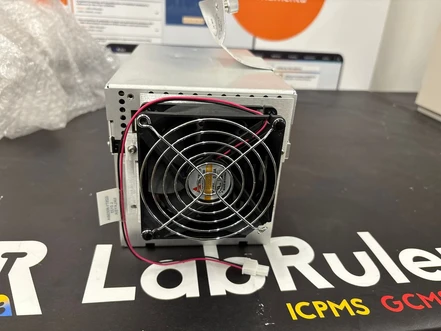
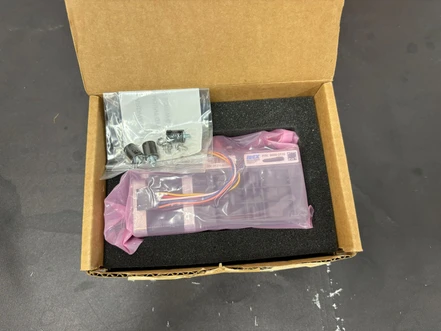
The Agilent 1.0 MHz 3000 m/z AMU Quad Driver is a genuine OEM electronic module designed for Agilent 6400 Series Triple Quadrupole Mass Spectrometers (64XX Series).
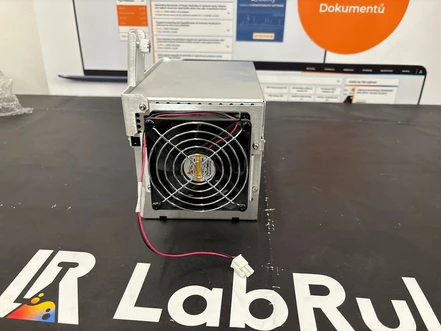
Agilent Quad Driver Assy (G2571-60487) provides precise quadrupole control for accurate ion separation, ensuring stability and reliability in LC/MS workflows.
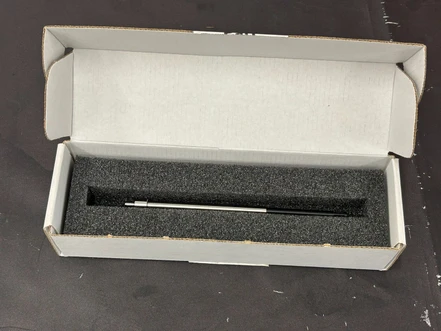
The Agilent SU57331 is a reusable SPME fiber assembly holder for Varian 8100/8200 automated sampling systems and SPME/HPLC interfaces. It protects and controls the replaceable SPME fiber during extraction and desorption; the coated fiber assembly is supplied separately.
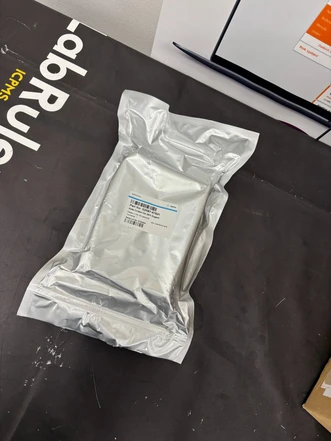
The Agilent G2587-67631 is a service Vortex Collision Cell for the Agilent 6575 Revident LC/Q-TOF. It uses nitrogen collision gas for CID fragmentation of selected precursor ions and forms a critical part of the MS/MS ion path between the quadrupole and TOF analyzer.
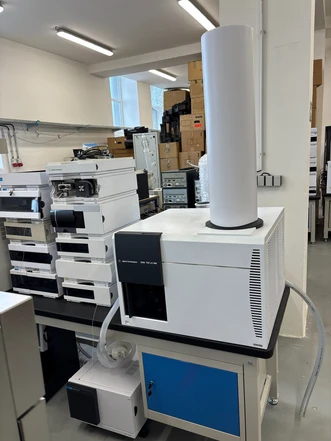
This Agilent 6230B LC/TOF configuration combines a complete Agilent 1200 Series HPLC stack, diode-array detection, accurate-mass TOF MS, and a Peak NM32LA nitrogen generator. The 6230B provides >22,000 resolution at m/z 1522 and <1 ppm installation mass accuracy, while the LC system adds four-solvent gradients, automated sample handling, and controlled sample and column temperatures.
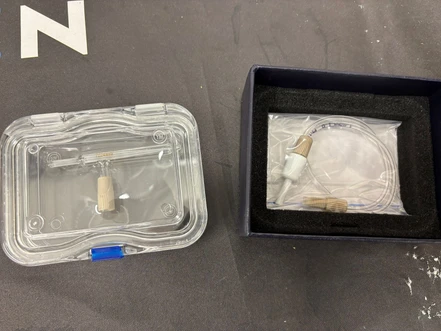
Agilent PL0890-0390 replacement nebulizer assembly for ELSD models G4261A, G4261B, and G7102A, designed for aerosol generation from LC effluent.
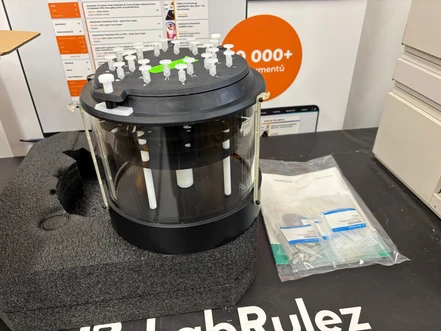
Agilent Vac Elut SPS 24 is a 24-position vacuum SPE manifold designed for parallel processing of up to 24 samples, with regulated vacuum control to manage flow through SPE cartridges. It includes a collection rack for 10 × 75 mm test tubes.
Agilent G1311-60007 vacuum pump for HPLC/UHPLC systems provides the vacuum required for mobile phase degassing and stable chromatographic performance.tubes.
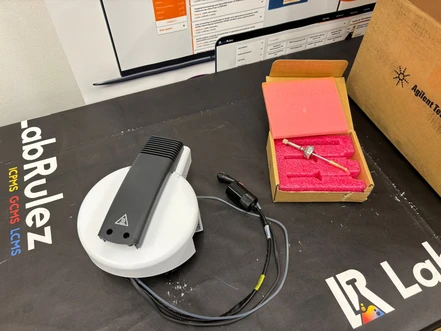
Agilent Jet Stream (AJS) Ion Source G1958-65638 is a high-sensitivity ESI source for LC/MS and LC/MS/MS, designed for efficient desolvation and sensitive trace-level analyte detection.
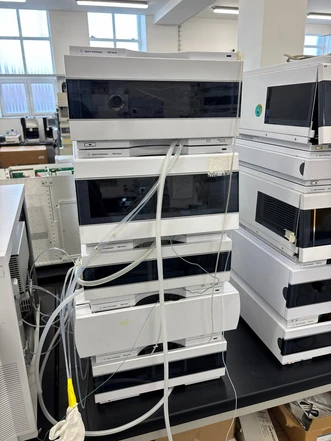
This Agilent 1260 Infinity configuration provides an integrated HPLC workflow from four-solvent gradient formation and temperature-controlled sample injection to precise column thermostating and high-speed diode-array detection. It is particularly well suited to automated QA/QC and development methods requiring reproducible sample, separation, and UV/Vis detection conditions.
Related content
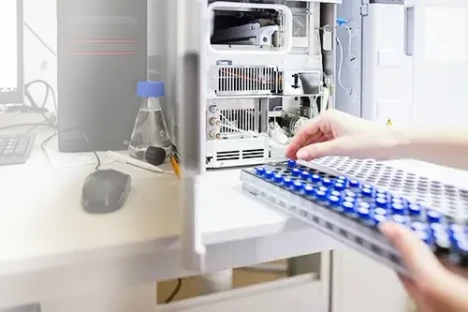
Sample Preparation Techniques for Precision in Analysis
News from LabRulezLCMS Library - Week 43, 2026