Zaměření
Type of News
Focus

Article | Science and research
Ask the Experts: Practical Answers to Today’s Biggest MOSH/MOAH Analysis Questions
Expert insights from Thermo Fisher and SampleQ on MOSH/MOAH analysis using LC-GC-FID and GC×GC-FID/MS. Practical guidance on sample preparation, ISO 20122, internal standards, and data workflows.

Article | Events
ANALYTIKA at analytica 2026
Meet ANALYTIKA at analytica 2026 in Munich to explore certified reference materials for pH, matrix standards, and custom solutions supporting accurate, compliant laboratory analysis across industries.
Article | Events
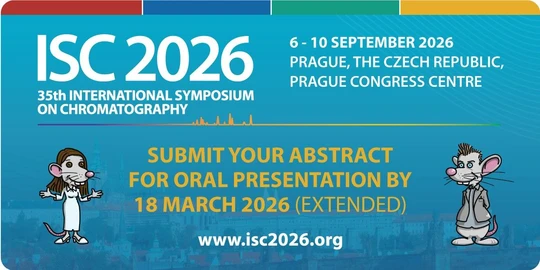
ISC 2026 Deadline for abstract submission extended to 18 March 2026
ISC 2026 extends the oral abstract submission deadline to 18 March 2026. Take advantage of the extra time to prepare your contribution and secure a place in the scientific programme.

Article | Software
Identification of Substructures in Unknowns Through MSn Data
How MSⁿ spectral libraries like mzCloud help identify substructures in unknown compounds. Learn how fragmentation data can guide structure elucidation and support identification of complex molecules.
Scientific article | Science and research
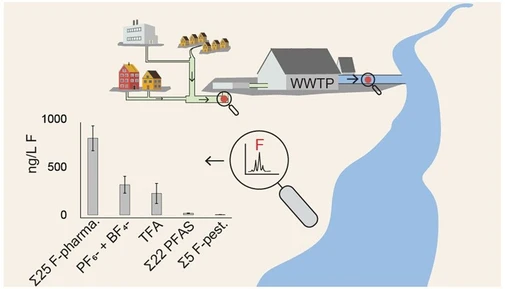
Elucidating Unknown Organofluorine in Municipal Wastewater: A Mass Balance Approach including Fluorinated Pharmaceuticals
A multisorbent SPE–LC-HRMS approach shows fluorinated pharmaceuticals significantly contribute to extractable organofluorine in wastewater.
Scientific article | Science and research
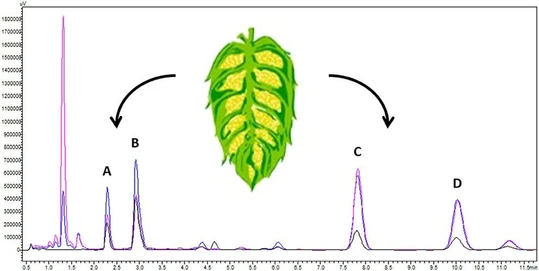
Hop (Humulus lupulus L.) Phytochemical Profiles as a Function of Growth Region by HPLC and GC-MS Analysis
This study compares phytochemical profiles of Cascade hops from two U.S. regions using HPLC-DAD and HS-GC-MS, supporting evidence of hop terroir.
Article | Webinars
Webinars LabRulezLCMS Week 12/2026
13 webinars: antimicrobial testing, continuous bioprocessing, glycoproteomics, GLP-1 purification, IC-MS workflows, imaging MS oncology, metabolomics design, peptide HPLC, PFAS TFA analysis

Interview | Scientists
Teaching Separation Science in High School
This interview explores how high school students learn separation science through filtration, gravimetric analysis, and chromatography, building the foundations for future chemistry studies.
Article | Science and research
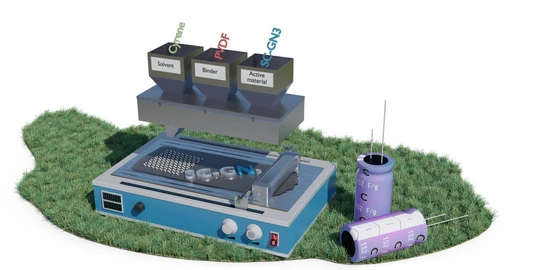
CATRIN researchers offer a “greener” way to make supercapacitors
CATRIN scientists show that green solvents Cyrene and Tamisolve can replace toxic NMP in supercapacitor production while maintaining high electrochemical performance and enabling more sustainable manufacturing.

Article | Science and research
The Effect of Needle Gauge and Flow Rate on Evaporation Rate
The study evaluates how needle gauge, nitrogen flow rate, and needle design influence solvent evaporation rate during sample concentration and provides practical optimization guidance.