
Zaměření
Type of News
Focus

Article | Academy
Using Free Public Libraries in NIST26 Chromatogram and Lib Search
Learn how free MoNA and MS-DIAL MS/MS libraries can complement NIST26, expand spectral search coverage, and support compound identification in LC-MS/MS workflows.
Article | Academy
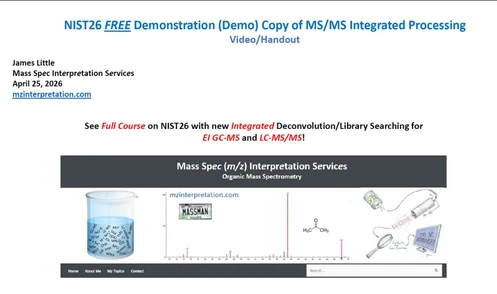
NIST26 FREE Demonstration (Demo) Copy of MS/MS Integrated Processing
Explore the free NIST26 demo for integrated LC-MS/MS processing, including MS/MS deconvolution, library searching, test files, and support for NIST, MoNA, and MS-DIAL libraries.

Article | Academy
Pressurized Liquid Extraction: Principle, Method, and Workflow
Explore pressurized liquid extraction (PLE), including its principle, instrumentation, step-by-step workflow, and key parameters affecting extraction efficiency.
Article | Academy
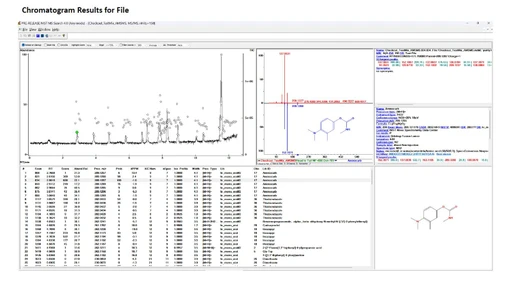
Identifications Folder: Raw Files Created in MS/MS NIST26
Explore the NIST26 Identifications folder and learn how XIC traces, MS/MS searches, isotope information and intermediate “check” files support more confident LC-MS/MS identifications.

Article | Academy
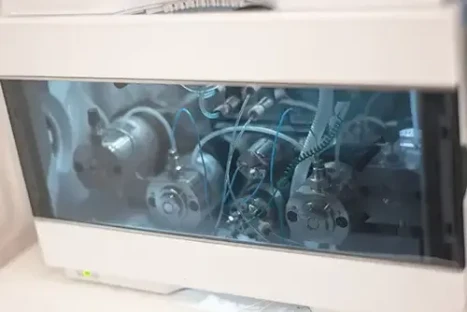
How to Extend the Lifetime of HPLC Columns?
How can you extend the life of an HPLC column? Proper handling, suitable operating conditions, regular flushing, and correct storage all play an important role.
Article | Academy
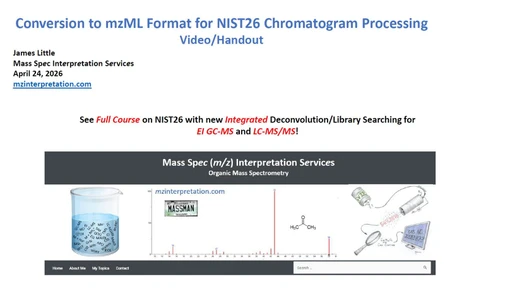
Conversion to mzML Format for NIST26 Chromatogram Processing
Learn how to convert LC-MS and GC-MS vendor data to mzML for NIST26 chromatogram processing using ProteoWizard MSConvert, including correct centroiding and Peak Picking settings.
Article | Academy
Principles of Ion Exchange Chromatography: A Comprehensive Guide
Ion exchange chromatography (IEX) uses differences in charge to separate ionizable compounds effectively. Learn how it works, where it is used, and what its key benefits and limitations are.
Article | Academy
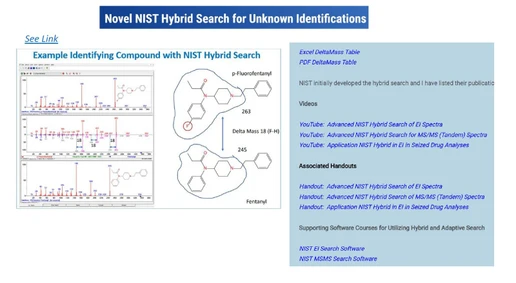
Manual and Automated Hybrid Searches in NIST26
Learn how manual and automated Hybrid MS/MS Searches in NIST26 use spectral similarity, mass differences, dForm, and fragmentation to investigate unknown compounds beyond exact library matches.
Article | Academy
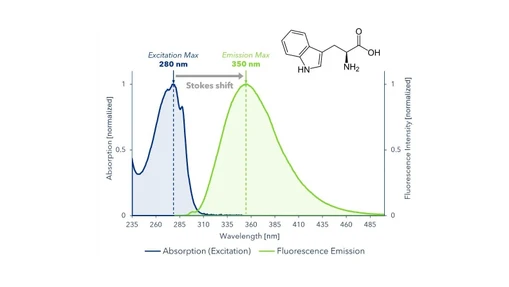
Seeing is Believing – Detection Made Easy Part 5: Fluorescence Detectors
Discover how fluorescence detection works in HPLC, why it offers exceptional sensitivity and selectivity, and how to optimize FLD for trace analysis in complex samples.
Article | Academy
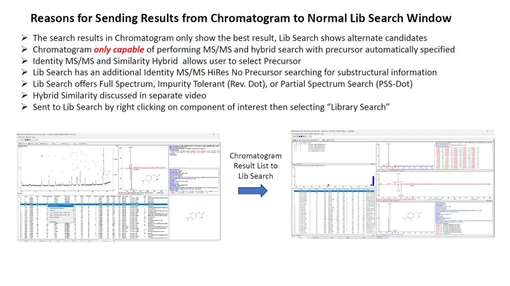
Searching Normal NIST Search with Chromatogram Results
Learn how moving chromatogram results into the NIST Library Search window enables deeper candidate review, flexible precursor settings, and alternative spectral matching strategies.