
Zaměření
Type of News
Focus
Article | Product
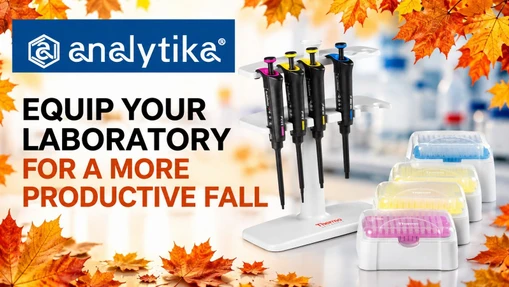
Equip Your Laboratory for Autumn at a Better Price
Equip your laboratory for autumn at a better price. analytika offers discounts on Thermo Scientific Finnpipette pipettes and tips, plus limited special prices while stocks last.

Article | Product
When Mass Spectrometry Helps Reveal the Secrets of DNA and RNA
A new Shimadzu LCMS-8045RX at the Institute of Biophysics of the Czech Academy of Sciences expands capabilities for studying modified nucleosides and other biologically important molecules.
Article | Science and research
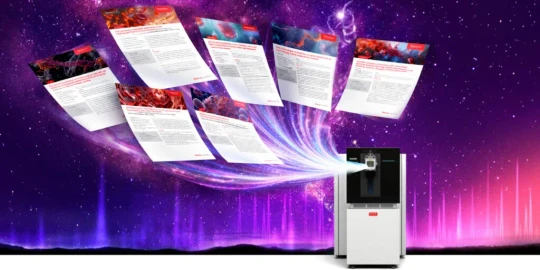
Rethinking What’s Possible in Biological Research with the Orbitrap Astral Zoom Mass Spectrometer
Orbitrap Astral Zoom shifts key proteomics trade-offs, enabling deeper and faster plasma, DIA, single-cell, immunopeptidomics, and XL-MS workflows.
Article | Laboratories
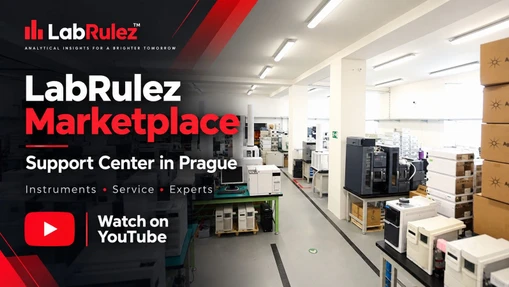
LabRulez Service Center: A Second Life for Analytical Instruments
LabRulez combines expert portals, Marketplace, and a Prague service center with hundreds of analytical instruments and thousands of spare parts.

Article | Science and research
Neuroscience Takes Flight: How Collaboration, Spaceflight, and Orbitrap Astral MS Are Opening a New Window into Brain Aging
UC San Diego researchers use patient-derived brain organoids, spaceflight, and Orbitrap Astral MS proteomics to study accelerated brain aging and neurodegeneration.

Article | Product
Refrigerated SpeedVac SRF110 vs. CentriVap - Why Sample Capacity Matters More Than Ever for Peptide and Protein Labs
Compare the Labconco Refrigerated CentriVap and Thermo Fisher SpeedVac SRF110 in terms of capacity, temperature range, price, and flexibility.
Article | Academy
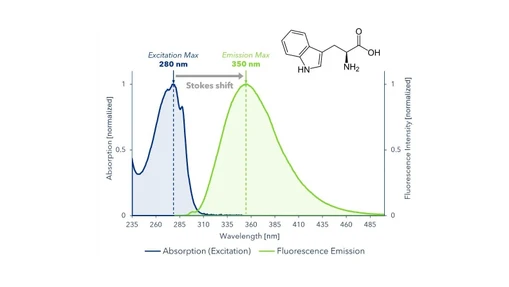
Seeing is Believing – Detection Made Easy Part 5: Fluorescence Detectors
Discover how fluorescence detection works in HPLC, why it offers exceptional sensitivity and selectivity, and how to optimize FLD for trace analysis in complex samples.
Article | Product
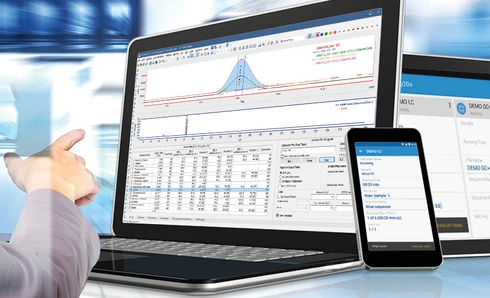
Back to School: 20% Off Clarity Chromatography Software
Prepare your lab for the new academic year with 20% off Clarity Chromatography Software for educational institutions, plus a free Clarity Offline license with every new purchase.

Article | Product
What Multi-Year Batch Data Reveals About (U)HPLC Column Consistency
Multi-year data from approximately 17,500 tested columns show how consistent retention times and peak shape support reliable long-term HPLC and UHPLC methods.

Article | Academy
Seeing is Believing – Detection Made Easy Part 4: Refractive Index Detector
Discover how refractive index detection works in HPLC, its key advantages and limitations, and why RID remains a reliable choice for sugars, polymers, alcohols and other UV-inactive compounds.