Identification of Substructures in Unknowns Through MSn Data

Tu, 17.3.2026 | Original article from: Thermo Fisher Scientific / Tim Stratton
How MSⁿ spectral libraries like mzCloud help identify substructures in unknown compounds. Learn how fragmentation data can guide structure elucidation and support identification of complex molecules.
  • Thermo Fisher Scientific: Identification of Substructures in Unknowns Through MSn Data
  • Video: mzCoud: mzCloud - Home Page

This is the second part of a multi-part Library blog series. For additional information, see blog Part 1- Generating Quantitative Methods Automatically From Spectral Library Data and stay tuned for more blogs on our website.
Thermo Fisher Scientific: Identification of Substructures in Unknowns Through MSn Data.Thermo Fisher Scientific: Identification of Substructures in Unknowns Through MSn Data.

While identification of unknowns remains a significant challenge, it has become easier over the years with the growth of large MSn spectral libraries. These libraries, such as mzCloud, can provide substructure data on unknowns.  Such information can help us to elucidate the structure of compounds that would previously remain unknown.

Substructure identification such as this takes advantage of the fact that a structure will always create the same fragments under a given set of fragmentation conditions regardless of if that structure was from MS1 or an MSn level of fragmentation.  While no library will ever contain fragmentation data on all possible chemicals, what we need with this approach is enough breadth of coverage in the various substructures commonly occurring to “build up” larger molecules.  What that means is we can take the MSn data on many structurally diverse molecules and use it to identify substructures in our unknown.

As an example of using MSn data in this fashion, figure 1 shows the query MSn spectra for an unknown and two of the library hits.  The hits are from MSn spectra of two known compounds and the precursor of the specific MSn fragment spectra is shown.  Both hits from the library provide a similar structure – an aromatic benzyne linked to either an amide or linked to a carbonyl and amine group.
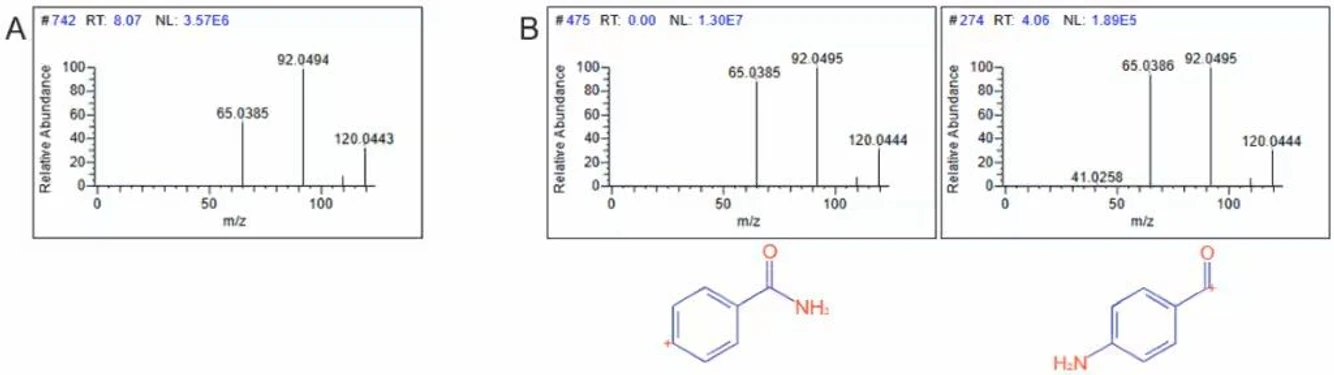
Thermo Fisher Scientific: Identification of Substructures in Unknowns Through MSn Data: Figure 1: The MS3 spectra of the unknown (A) and two matching fragment spectra from the library search along with the precursors of those spectra (B).Thermo Fisher Scientific: Identification of Substructures in Unknowns Through MSn Data: Figure 1: The MS3 spectra of the unknown (A) and two matching fragment spectra from the library search along with the precursors of those spectra (B).

While in this example, the specific orientation could not be determined, we have at least a very good starting point in our structure determination by knowing at least one piece of our unknown.  Further searches with other MSn spectra from our molecule may uncover other substructures bringing us close to a final identification.  In fact, the unknown in this case was isoproturon (Figure 2) which indeed has the substructure indicated from the search.
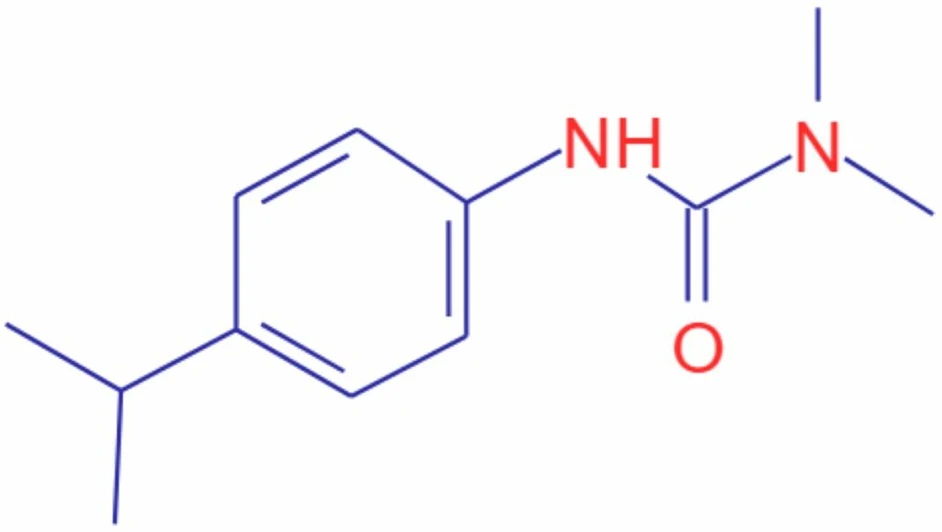
Thermo Fisher Scientific: Identification of Substructures in Unknowns Through MSn Data: Figure 2: Structure of Isoproturon.Thermo Fisher Scientific: Identification of Substructures in Unknowns Through MSn Data: Figure 2: Structure of Isoproturon.

By utilizing a large library of MSn reference data and acquiring the same MSn query data on our unknowns, we can begin to build up a picture based on substructures we identify.  Visit mzCloud to see the breadth of MSn fragmentation spectra on a diverse range of chemicals that can be used for such an approach.

  • Visit us on LinkedIn: #mzCloud #MassSpectralLibraries
Tim Stratton

Tim is a University of Minnesota graduate with over a decade of experience in pharmaceutical analysis and research, specializing in structure elucidation and interpretation of fragmentation. After roles at Solvay Pharmaceuticals and Abbott Laboratories spanning regulated analysis, method validation, and drug metabolism/pharmacokinetics, Tim joined Thermo Fisher Scientific. Over the past decade, he has focused on supporting hardware and software development, as well as building high-resolution, accurate mass spectral libraries to advance unknown identification in research.


Thermo Fisher Scientific
LinkedIn Logo
 

Related articles

Generating Quantitative Methods Automatically From Spectral Library Data
Article | Software

Generating Quantitative Methods Automatically From Spectral Library Data

Generating quantitative MS methods directly from spectral library data: Thermo Fisher Scientific demonstrates how mzCloud enables efficient method creation without extensive tuning.
MS/MS Mass Spectrometry Filtering Tree for Bile Acid Regio- and Stereoisomer Annotation
Scientific article | Science and research

MS/MS Mass Spectrometry Filtering Tree for Bile Acid Regio- and Stereoisomer Annotation

This study introduces an MS/MS filtering tree workflow to distinguish bile acid isomers in LC-MS/MS data using ion intensity ratios and a web-based tool.
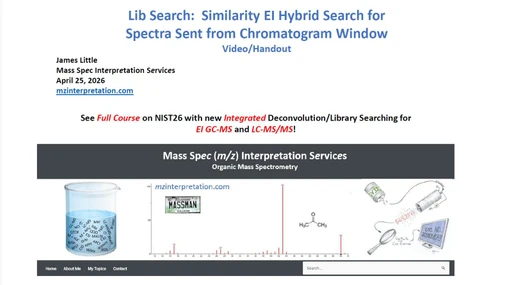
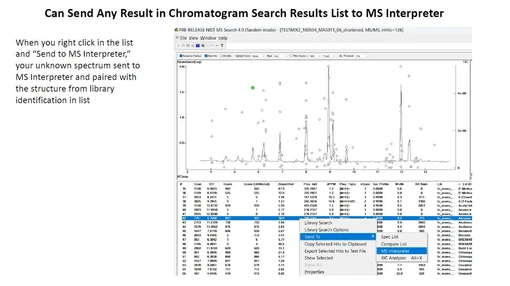
Lib Search: Similarity EI Hybrid Search for Spectra Sent from Chromatogram Window
Article | Academy

Lib Search: Similarity EI Hybrid Search for Spectra Sent from Chromatogram Window

Learn how NIST 26 Hybrid Search expands EI GC-MS library searching by identifying structurally related compounds using mass-shifted fragment matching, DeltaMass analysis, and MS Interpreter validation.
MS Interpreter for Accurate Mass Data: Correlating Structure to m/z
Article | Academy

MS Interpreter for Accurate Mass Data: Correlating Structure to m/z

Learn how NIST MS Interpreter connects accurate-mass MS/MS fragments with molecular structure, enabling substructure assignment, ppm evaluation, candidate modification, and improved unknown identification.
 

Related articles

Generating Quantitative Methods Automatically From Spectral Library Data
Article | Software

Generating Quantitative Methods Automatically From Spectral Library Data

Generating quantitative MS methods directly from spectral library data: Thermo Fisher Scientific demonstrates how mzCloud enables efficient method creation without extensive tuning.
MS/MS Mass Spectrometry Filtering Tree for Bile Acid Regio- and Stereoisomer Annotation
Scientific article | Science and research

MS/MS Mass Spectrometry Filtering Tree for Bile Acid Regio- and Stereoisomer Annotation

This study introduces an MS/MS filtering tree workflow to distinguish bile acid isomers in LC-MS/MS data using ion intensity ratios and a web-based tool.
Lib Search: Similarity EI Hybrid Search for Spectra Sent from Chromatogram Window
Article | Academy

Lib Search: Similarity EI Hybrid Search for Spectra Sent from Chromatogram Window

Learn how NIST 26 Hybrid Search expands EI GC-MS library searching by identifying structurally related compounds using mass-shifted fragment matching, DeltaMass analysis, and MS Interpreter validation.
MS Interpreter for Accurate Mass Data: Correlating Structure to m/z
Article | Academy

MS Interpreter for Accurate Mass Data: Correlating Structure to m/z

Learn how NIST MS Interpreter connects accurate-mass MS/MS fragments with molecular structure, enabling substructure assignment, ppm evaluation, candidate modification, and improved unknown identification.
 

Related articles

Generating Quantitative Methods Automatically From Spectral Library Data
Article | Software

Generating Quantitative Methods Automatically From Spectral Library Data

Generating quantitative MS methods directly from spectral library data: Thermo Fisher Scientific demonstrates how mzCloud enables efficient method creation without extensive tuning.
MS/MS Mass Spectrometry Filtering Tree for Bile Acid Regio- and Stereoisomer Annotation
Scientific article | Science and research

MS/MS Mass Spectrometry Filtering Tree for Bile Acid Regio- and Stereoisomer Annotation

This study introduces an MS/MS filtering tree workflow to distinguish bile acid isomers in LC-MS/MS data using ion intensity ratios and a web-based tool.
Lib Search: Similarity EI Hybrid Search for Spectra Sent from Chromatogram Window
Article | Academy

Lib Search: Similarity EI Hybrid Search for Spectra Sent from Chromatogram Window

Learn how NIST 26 Hybrid Search expands EI GC-MS library searching by identifying structurally related compounds using mass-shifted fragment matching, DeltaMass analysis, and MS Interpreter validation.
MS Interpreter for Accurate Mass Data: Correlating Structure to m/z
Article | Academy

MS Interpreter for Accurate Mass Data: Correlating Structure to m/z

Learn how NIST MS Interpreter connects accurate-mass MS/MS fragments with molecular structure, enabling substructure assignment, ppm evaluation, candidate modification, and improved unknown identification.
 

Related articles

Generating Quantitative Methods Automatically From Spectral Library Data
Article | Software

Generating Quantitative Methods Automatically From Spectral Library Data

Generating quantitative MS methods directly from spectral library data: Thermo Fisher Scientific demonstrates how mzCloud enables efficient method creation without extensive tuning.
MS/MS Mass Spectrometry Filtering Tree for Bile Acid Regio- and Stereoisomer Annotation
Scientific article | Science and research

MS/MS Mass Spectrometry Filtering Tree for Bile Acid Regio- and Stereoisomer Annotation

This study introduces an MS/MS filtering tree workflow to distinguish bile acid isomers in LC-MS/MS data using ion intensity ratios and a web-based tool.
Lib Search: Similarity EI Hybrid Search for Spectra Sent from Chromatogram Window
Article | Academy

Lib Search: Similarity EI Hybrid Search for Spectra Sent from Chromatogram Window

Learn how NIST 26 Hybrid Search expands EI GC-MS library searching by identifying structurally related compounds using mass-shifted fragment matching, DeltaMass analysis, and MS Interpreter validation.
MS Interpreter for Accurate Mass Data: Correlating Structure to m/z
Article | Academy

MS Interpreter for Accurate Mass Data: Correlating Structure to m/z

Learn how NIST MS Interpreter connects accurate-mass MS/MS fragments with molecular structure, enabling substructure assignment, ppm evaluation, candidate modification, and improved unknown identification.