
Stability-Indicating HPLC-UV Method for Semaglutide Impurity Analysis
LCMSArticle | Application

Stability-Indicating HPLC-UV Method for Semaglutide Impurity Analysis

Discover a stability-indicating HPLC-UV method for semaglutide impurity analysis using the Vanquish Flex UHPLC system and Hypersil GOLD Peptide column.
Stability-Indicating HPLC-UV Method for Semaglutide Impurity Analysis
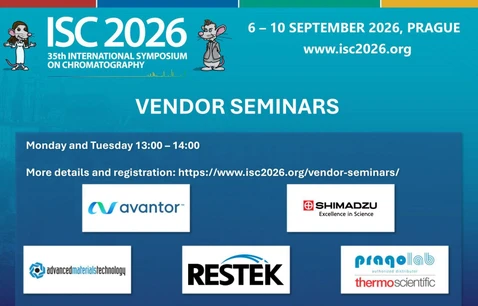
Vendor Seminars at ISC 2026
GCMSLCMSArticle | Events

Vendor Seminars at ISC 2026

Explore ISC 2026 vendor seminars featuring the latest advances in LC, GC-MS, LC-MS, chromatography method development, and biotherapeutic characterization.
Vendor Seminars at ISC 2026
In-Source Fragmentation Searches in NIST26 Chromatogram Window
LCMSArticle | Academy

In-Source Fragmentation Searches in NIST26 Chromatogram Window

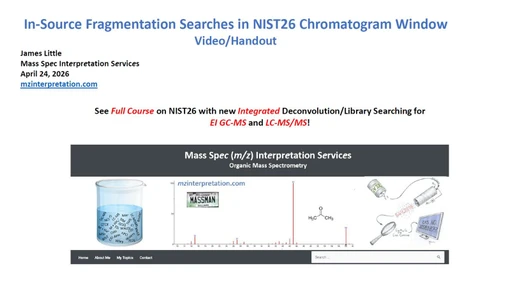
Learn how to recognize and search in-source fragmentation spectra in NIST26 using chromatogram results, Score (Unfiltered), and MS/MS Library Search for compound identification.
In-Source Fragmentation Searches in NIST26 Chromatogram Window
Setting Target Measurement Uncertainty
GCMSICPMSLCMSArticle | Academy

Setting Target Measurement Uncertainty

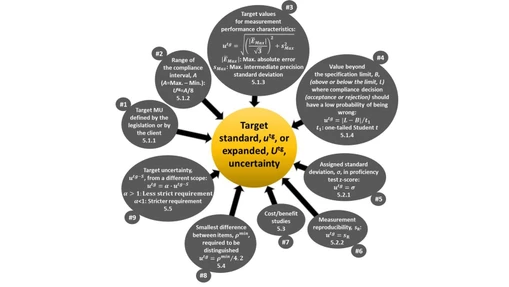
How small should measurement uncertainty be? Eurachem explains how target measurement uncertainty helps laboratories ensure results are fit for purpose and support reliable decisions.
Setting Target Measurement Uncertainty
Development of a Flow-through Cell for Ultrasonic Extraction (UE)─Single Particle (SP)─ICP-MS─an Approach for Nano/Microparticle Elemental and Isotopic Analysis
ICPMSScientific article | Science and research

Development of a Flow-through Cell for Ultrasonic Extraction (UE)─Single Particle (SP)─ICP-MS─an Approach for Nano/Microparticle Elemental and Isotopic Analysis

This study develops a flow-through UE-SP-ICP-MS method for direct extraction and elemental and isotopic characterization of nano- and microparticles from silicon wafers.
Development of a Flow-through Cell for Ultrasonic Extraction (UE)─Single Particle (SP)─ICP-MS─an Approach for Nano/Microparticle Elemental and Isotopic Analysis
Aromatase Inhibitor Therapy Is Associated with Distinct Plasma Lipidomic Profiles in Postmenopausal Breast Cancer Patients
LCMSScientific article | Science and research

Aromatase Inhibitor Therapy Is Associated with Distinct Plasma Lipidomic Profiles in Postmenopausal Breast Cancer Patients

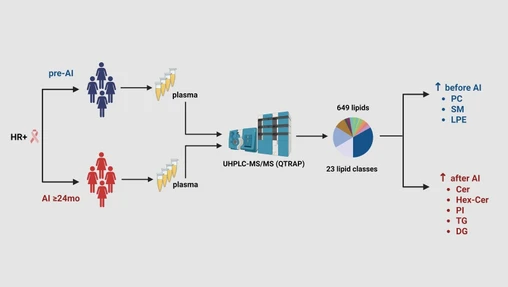
Mass spectrometry-based lipidomics identifies distinct plasma lipid changes linked to long-term aromatase inhibitor therapy in postmenopausal breast cancer patients.
Aromatase Inhibitor Therapy Is Associated with Distinct Plasma Lipidomic Profiles in Postmenopausal Breast Cancer Patients
Analytical Challenges and Strategies for Compound Identification Using Gas Chromatography–Ion Mobility Spectrometry
GCMSScientific article | Science and research

Analytical Challenges and Strategies for Compound Identification Using Gas Chromatography–Ion Mobility Spectrometry

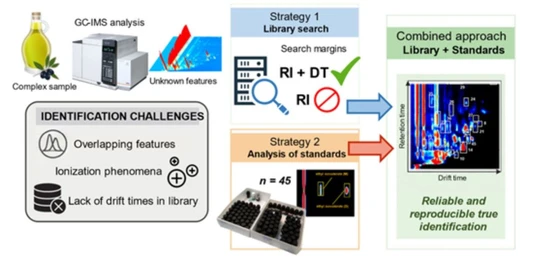
This study evaluates strategies for reliable VOC identification by GC-IMS, showing the importance of drift times and confirmation with analytical standards.
Analytical Challenges and Strategies for Compound Identification Using Gas Chromatography–Ion Mobility Spectrometry
Science on the Front Lines: Cleanup of a Benzene Spill
GCMSICPMSLCMSArticle | Environment

Science on the Front Lines: Cleanup of a Benzene Spill

CXI TUL researchers tested in situ chemical oxidation to remediate benzene contamination after the Hustopeče nad Bečvou train accident and identified the most suitable treatment for field use.
Science on the Front Lines: Cleanup of a Benzene Spill
The Future of Ion Chromatography | PFAS Testing, EPA 1621 & AOF Explained
LCMSArticle | Interview

The Future of Ion Chromatography | PFAS Testing, EPA 1621 & AOF Explained

Jay Gandhi discusses ion chromatography, AOF and combustion IC for PFAS analysis, explaining how these techniques complement targeted LC-MS and help reveal the broader fluorine burden.
The Future of Ion Chromatography | PFAS Testing, EPA 1621 & AOF Explained
GC-MS: Principles of How it Works?
GCMSArticle | Academy

GC-MS: Principles of How it Works?

Learn how GC-MS combines gas chromatography and mass spectrometry for sensitive compound separation, identification, quantification, and structural analysis across a wide range of applications.

GC-MS: Principles of How it Works?