Agilent Technologies 1260 Infinity Isocratic Pump G1310B features a dual-piston design with low pressure pulsation, flow rates of 0.2–10 mL/min, leak detection, and advanced diagnostics.
Agilent Technologies 1260 Infinity G1310B is an isocratic HPLC pump featuring precise flow control, adjustable mobile phase compressibility compensation, and EMF maintenance monitoring.
Agilent 1260 Infinity Isocratic Pump G1310B is a dual-piston HPLC pump offering flow rates of 0.2–10 mL/min, operating pressures up to 600 bar, and advanced diagnostic features.
The Agilent 1260 Infinity Binary Pump (G1312B) supports a wide range of chromatographic techniques by delivering unparalleled precision and reliability in flow rates, gradient formation, and pressure control. Its design incorporates advanced features for low delay volumes and minimal peak dispersion, ensuring compatibility with both conventional and modern chromatographic methods.
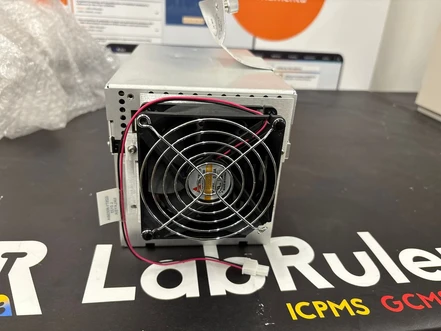
The Agilent 1.0 MHz 3000 m/z AMU Quad Driver is a genuine OEM electronic module designed for Agilent 6400 Series Triple Quadrupole Mass Spectrometers (64XX Series).
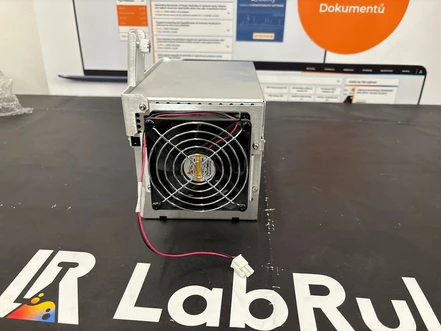
Agilent Quad Driver Assy (G2571-60487) provides precise quadrupole control for accurate ion separation, ensuring stability and reliability in LC/MS workflows.
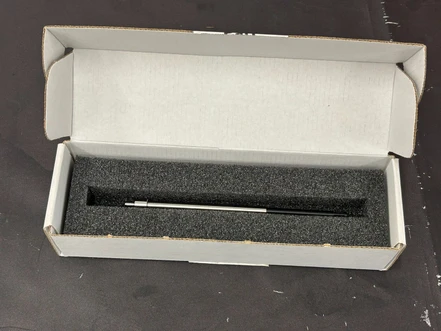
The Agilent SU57331 is a reusable SPME fiber assembly holder for Varian 8100/8200 automated sampling systems and SPME/HPLC interfaces. It protects and controls the replaceable SPME fiber during extraction and desorption; the coated fiber assembly is supplied separately.
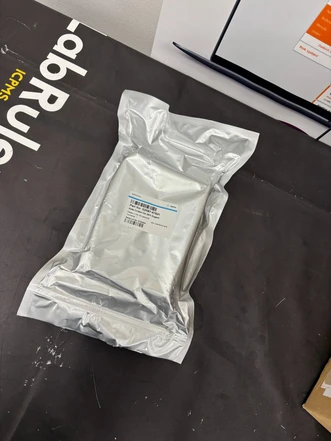
The Agilent G2587-67631 is a service Vortex Collision Cell for the Agilent 6575 Revident LC/Q-TOF. It uses nitrogen collision gas for CID fragmentation of selected precursor ions and forms a critical part of the MS/MS ion path between the quadrupole and TOF analyzer.
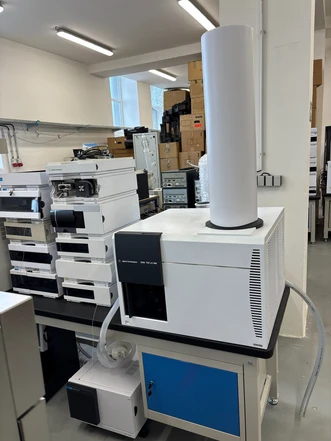
This Agilent 6230B LC/TOF configuration combines a complete Agilent 1200 Series HPLC stack, diode-array detection, accurate-mass TOF MS, and a Peak NM32LA nitrogen generator. The 6230B provides >22,000 resolution at m/z 1522 and <1 ppm installation mass accuracy, while the LC system adds four-solvent gradients, automated sample handling, and controlled sample and column temperatures.
Related content

Keynote Speakers at the 18th MDCW
Separating Closely Related Species in Complex Oligonucleotide Samples