Tu, 29.9.2026 | Original article from: Thermo Fisher Scientific / Jared Deyarmin
UC San Diego researchers use patient-derived brain organoids, spaceflight, and Orbitrap Astral MS proteomics to study accelerated brain aging and neurodegeneration.Neuroscience Takes Flight: How Collaboration, Spaceflight, and Orbitrap Astral MS Are Opening a New Window into Brain Aging
- Photo: Thermo Fisher Scientific: Neuroscience Takes Flight: How Collaboration, Spaceflight, and Orbitrap Astral MS Are Opening a New Window into Brain Aging
- Video: Sci Spec Co., Ltd.: Orbitrap Astral Mass Spectrometer Thermo Fisher Scientific - TH
At UC San Diego, researchers are using patient-derived brain organoids and spaceflight to explore whether aging-associated biology can be accelerated in orbit. With advanced proteomics enabled by the Thermo Scientific Orbitrap Astral Mass Spectrometer (MS), the team is gaining deeper insight into complex brain biology and new possibilities for studying neurodegenerative disease.
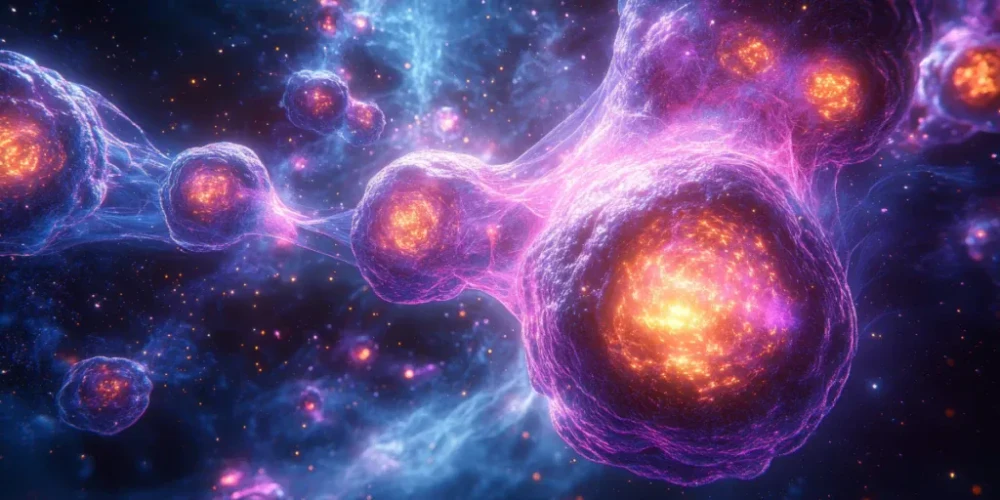 Thermo Fisher Scientific: Neuroscience Takes Flight: How Collaboration, Spaceflight, and Orbitrap Astral MS Are Opening a New Window into Brain Aging
Introduction
Neurodegenerative diseases remain among the most difficult conditions to study. Researchers cannot easily or safely biopsy living brain tissue, and even sophisticated disease models can take years to reveal meaningful biological change. At UC San Diego, Drs. Aline Martins and Alysson Muotri are taking a different approach: creating patient-derived brain organoids from skin cells and sending them to space to explore whether low Earth orbit can accelerate aging-associated biology. Preliminary data suggest that 30 days in space may compress roughly 10 years of aging biology into a much shorter experimental window, opening the door to a faster path for understanding neurodegeneration and evaluating new therapeutic ideas.
A study design built around biology
The real power of this work begins with the study design. Rather than relying on generalized models, the researchers begin with skin cells from patients and generate 3D mini-brain organoids that can model diseases such as Alzheimer’s while preserving critical patient context. That gives the team a more human-relevant system for studying how aging and disease unfold over time. Spaceflight adds a second dimension: a research environment that is exceptionally difficult to reproduce on Earth, but one that may help reveal the molecular and cellular drivers of neurodegeneration faster than conventional studies allow. The Integrated Space Stem Cell Orbital Research (ISSCOR) Center at UC San Diego have begun to explore this broader approach to study how space-related stressors influence brain aging and cognitive decline, with potential relevance to diseases such as Alzheimer’s and dementia. Once those organoids return to Earth, the next challenge is extracting as much insight as possible from every sample.
Enabling deeper insight from limited samples
Brain organoids are inherently heterogeneous, with multiple cell subtypes that may respond differently to aging and environmental stress.
To extract deeper biological insight from the organoid samples, the researchers describe the Orbitrap Astral MS as central to their investigation. They highlight that the high sensitivity required for single-cell proteomics is essential for revealing how the space environment affects distinct cell populations and the Orbitrap Astral MS helps unlock deeper biological insight.
That distinction is important: the value of the Orbitrap Astral MS analytical workflow is not simply generating more data but importantly helping the team resolve more of the biology within a complex model.
How Orbitrap Astral MS helps push biology further
At Thermo Fisher Scientific, we work alongside researchers pursuing bold scientific questions by developing technologies that help them see deeper into complex biology.
Aline describes Orbitrap Astral MS as a major advance for the sensitivity and resolution this research requires. Its synchronized data acquisition capabilities and parallel ion processing across dual high-resolution accurate-mass analyzers with maximized instrument utilization help deliver deeper coverage, higher sensitivity, faster throughput, and accurate, precise quantitation across demanding biological workflows.
For studies like this one, those capabilities help researchers get more from limited sample material, uncover subtle disease-relevant changes, and translate an inventive experimental design into deeper biological insight, faster.
Looking ahead
The power of this research lies in the convergence of ideas. Patient-derived brain organoids offer a human-relevant model of disease. Spaceflight may serve as an aging accelerator. Advanced proteomics helps researchers understand what complex biological models are revealing with greater depth and clarity, while single-cell proteomics unlocks a view into cell-specific changes that can drive disease biology. Together, this approach could give scientists a faster and more informative way to study late-onset diseases such as Alzheimer’s and dementia. This initiative between UC San Diego and Thermo Fisher Scientific shows how collaborations across the scientific community can open new doors in neuroscience and accelerate discovery in ways that matter. As researchers continue to push the boundaries of what is possible, studies like this one point to a future where deeper biological insight can be reached faster and with greater potential to improve human health.
Learn more
- Listen to the interview with Dr. Aline Martins for more on the scientific vision behind this research and its implications for brain aging and neurodegenerative disease.
- Learn more about Thermo Fisher Scientific single-cell proteomics solutions and how they help researchers gain deeper insight from limited and complex samples.
- Explore the Thermo Scientific Orbitrap Astral MS and see how it helps researchers achieve deeper biological insight with faster throughput, higher sensitivity, and accurate, precise quantitation across advanced workflows.
Visit us on LinkedIn: #BrainOrganoids #SpaceBiology #Neurodegeneration #OrbitrapAstralMS