Zaměření
Type of News
Focus

Article | Popularization
Prague Metabolism and Signaling Symposium brought together leading researchers in metabolism
Prague welcomed nearly 200 researchers from MIT, Harvard, Stanford, and other leading institutions for the Prague Metabolism and Signaling Symposium, focused on cellular metabolism, aging, and cancer.
Article | Academy
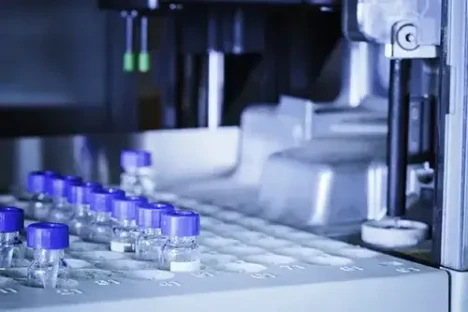
2D-LC (Two-dimensional Liquid Chromatography): What, When and Why to Use it
Learn how two-dimensional liquid chromatography (2D-LC) overcomes the limits of 1D-LC. Explore its principles, operating modes, applications, and the latest advances shaping modern analytical science.

Article | Poster
News from LabRulezLCMS Library - Week 30, 2026
This week we bring you posters by Agilent Technologies / ASMS, Shimadzu / ASMS, Thermo Fisher Scientific / HPLC Symposium and Waters Corporation / ASMS and technical note by KNAUER!
Article | Academy
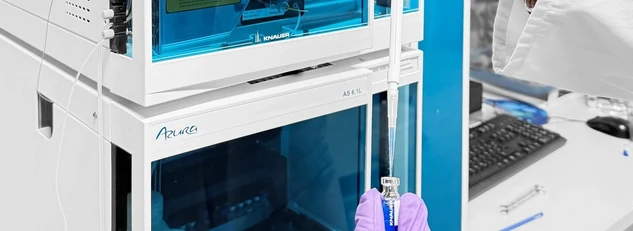
Pipetting Made Easy – Part 1: Best Practice Guide
Master proper pipetting with practical tips to improve accuracy, precision, and reproducibility. Learn best practices for aspiration, dispensing, and handling different types of liquids.

Article | Science and research
Cracking the Code of PEGylated Proteins: How Advanced Mass Spectrometry Reveals What’s Really Attached
Discover how Orbitrap Charge Detection MS and a multi-enzyme workflow characterize PEGylated therapeutic proteins by determining PEG stoichiometry, mapping attachment sites, and detecting impurities.
Article | Events
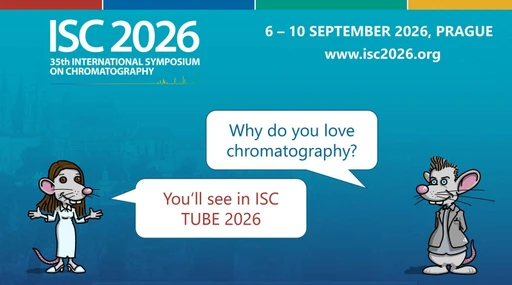
ISC 2026 - ISC Tube & Late-Breaking Poster Deadline
Register for ISC 2026 in Prague and submit your late-breaking poster abstract by 30 July. Join the ISC Tube video competition and share your passion for chromatography!
Article | Academy
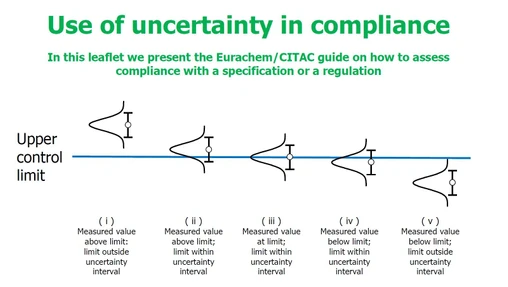
Use of uncertainty in compliance
In this leaflet we present the Eurachem/CITAC guide on how to assess compliance with a specification or a regulation.

Article | Webinars
Webinars LabRulezLCMS Week 30/2026
15 webinars: ADC, AQbD, biopharma QC, capillary electrophoresis, fluorescence detection, GLP-1, LC-MS, mass spectrometry, MAM, PAT, petrochemical analysis, PFAS, RT-MALS, SAF, titration

Scientific article | Science and research
Residue-Level Determination of Small-Molecule–Protein Affinities by Hydrogen–Deuterium Exchange Mass Spectrometry
This study introduces an HDX-MS titration workflow for quantifying protein–ligand affinities at global, peptide, and residue resolution.

Interview | Scientists
How Separation Science Is Taught vs. How It’s Actually Used
Chemistry educator Natasha Le discusses how students learn separation science, why critical thinking matters more than memorizing procedures, and how future analytical scientists are trained.