




Separating Closely Related Species in Complex Oligonucleotide Samples
Discover how NIBRT researchers optimized an ion-pair RP-LC-MS workflow to improve the separation of oligonucleotide impurities, degradation products, and truncated sequences.

TSQ Certis MS Enables Robust Low-Flow LC-MS for Clinical Protein Biomarker Quantitation
Discover how Thermo Scientific TSQ Certis MS and nano LC-MS enable ultra-sensitive, robust quantification of proinsulin forms and C-peptide for clinical diabetes research.
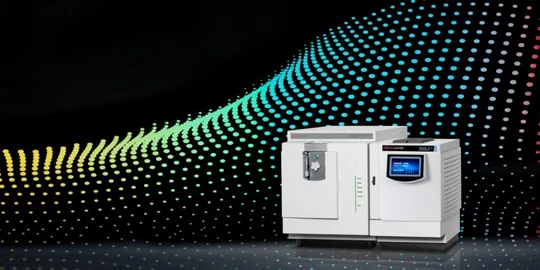
Why a New Orbitrap GC Mass Spectrometer Should Be Considered for Routine Regulatory Analysis
Four application studies demonstrate the capabilities of the Thermo Scientific Orbitrap Exploris GC S for routine pesticide and dioxin analysis using high-resolution accurate-mass GC-MS.

Reducing Errors and Increasing Throughput in ICP-MS and ICP-OES with Automated Dilution
Discover how Thermo Scientific prepFAST 3 automates sample dilution and QC-driven reanalysis for ICP-MS and ICP-OES, while FilterProbe and SampleSense3 help reduce manual intervention.

Unlocking High-Throughput Potential in Liquid Chromatography With Vanquish Systems
Discover how Thermo Scientific Vanquish systems boost LC throughput through parallel analysis, automated sample handling, expanded capacity, and online sample preparation.

PFAS Analysis Beyond the Target List: Connecting Quantitation and Discovery in a Single Workflow
PFAS analysis now combines targeted quantitation with non-targeted discovery. Chromeleon CDS and Compound Discoverer help reveal known and emerging PFAS and move findings into structured follow-up.
Combining Performance, Robustness and Productivity in ICP-MS Analysis of Challenging Matrices
How can laboratories tackle trace element analysis in challenging matrices? Evonik experts share their ICP-MS experience and the benefits of adopting the Thermo Scientific iCAP MTX ICP-MS.
Rethinking What’s Possible in Biological Research with the Orbitrap Astral Zoom Mass Spectrometer
Orbitrap Astral Zoom shifts key proteomics trade-offs, enabling deeper and faster plasma, DIA, single-cell, immunopeptidomics, and XL-MS workflows.
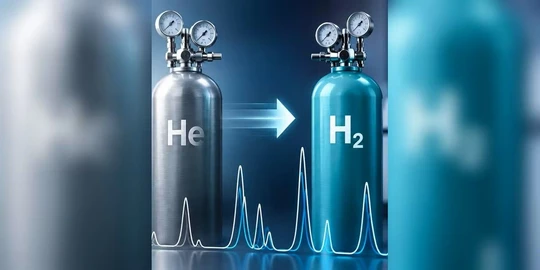
Helium to Hydrogen: What Happens to GC-MS/MS Performance When You Switch Carrier Gas?
Switching from helium to hydrogen in GC-MS/MS does not necessarily mean losing sensitivity. A study of 181 pesticides shows how method optimization can maintain reliable routine quantitation.