Tu, 10.11.2026 | Original article from: Thermo Fisher Scientific / Monica Driscoll
Four application studies demonstrate the capabilities of the Thermo Scientific Orbitrap Exploris GC S for routine pesticide and dioxin analysis using high-resolution accurate-mass GC-MS.Why a New Orbitrap GC Mass Spectrometer Should Be Considered for Routine Regulatory Analysis
- Photo: Thermo Fisher Scientific: Why a New Orbitrap GC Mass Spectrometer Should Be Considered for Routine Regulatory Analysis
- Video: Thermo Fisher Scientific: Advancing POPs analysis with the Orbitrap Exploris GC S mass spectrometer
It’s out with the old and in with the new when it comes to GC-MS. High-resolution accurate mass (HRAM) instruments are no longer viewed solely as research tools and are increasingly being evaluated for routine regulatory workflows.
Four recent application notes released with the launch of the new Thermo Scientific Orbitrap Exploris GC S mass spectrometer illustrate this shift to using HRAM instruments for high throughput analytical testing. These resources cover pesticide and dioxin analysis and point to the conclusion that laboratories no longer need to choose between sensitivity and the flexibility of full-scan HRAM data.
Whether the challenge is measuring dioxins at femtogram levels or screening almost 200 pesticides, the Orbitrap Exploris GC S mass spectrometer delivers the sensitivity, selectivity, and smartness that routine laboratories need.
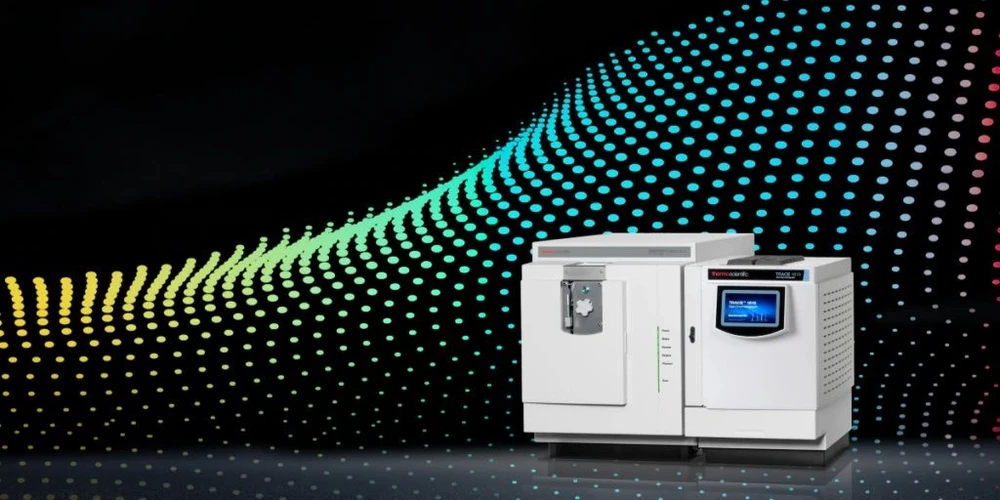 Thermo Fisher Scientific: Why a New Orbitrap GC Mass Spectrometer Should Be Considered for Routine Regulatory Analysis
The first two publications focus on pesticide analysis, where the analytical challenge is monitoring hundreds of pesticides across a wide variety of food matrices while keeping pace with constantly changing regulations.
Traditional GC-MS/MS still performs extremely well for targeted methods, but HRAM offers more flexibility. Because the Orbitrap collects full-scan accurate-mass data, laboratories can go back and search existing datasets for compounds that were not part of the original method. As pesticide lists continue to grow, that becomes a significant advantage.
Example 1: Pesticide analysis in highly pigmented matrices
 Thermo Fisher Scientific: Why a New Orbitrap GC Mass Spectrometer Should Be Considered for Routine Regulatory Analysis
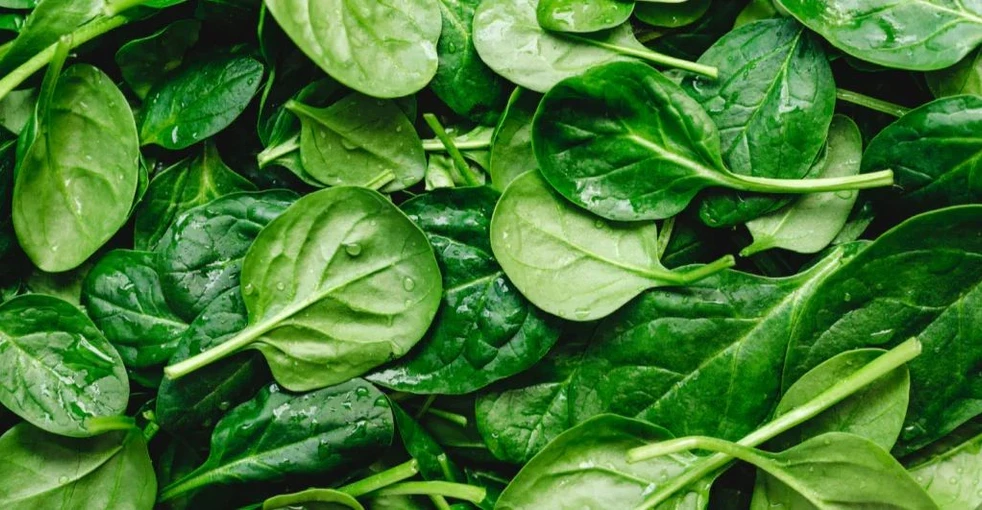
Pesticide residue analysis becomes exceedingly challenging when the food sample itself adds complexity to the analysis. Highly pigmented vegetables like spinach can introduce matrix interferences and cause ion suppression, making confident identification and accurate quantitation more difficult. This technical note (TN 004615) evaluates the Orbitrap Exploris GC S MS for this demanding application, analyzing 185 pesticides in spinach QuEChERS extracts using full-scan HRAM acquisition. This approach combines quantitative analysis with screening in a single run, while high resolving power and accurate mass help distinguish target compounds from coeluting and isobaric interferences.
The results show just how well the system performs in a difficult matrix. All target compounds met SANTE identification criteria at the default maximum residue level (MRL) of 10 µg/kg, and more than 90% were confirmed at just 1 µg/kg. Across the calibration range, analytes demonstrated excellent linearity with R² >0.993, while quantitative recoveries ranged from 96% to 104%. The system also maintained average mass errors below 3 ppm across concentrations, with detection limits at or below 0.5 µg/kg for most pesticides evaluated. Together, the findings highlight a sensitive and selective approach for laboratories that need reliable pesticide quantitation in complex food samples, with the added flexibility of full-scan HRAM data for broader screening and retrospective analysis.
Example 2: Determination of trace level pesticide residues in fruits and vegetable matrices
 Thermo Fisher Scientific: Why a New Orbitrap GC Mass Spectrometer Should Be Considered for Routine Regulatory Analysis
Sensitivity is only part of the challenge when it comes to pesticide residue testing. Food safety laboratories also need confidence that their instruments can keep delivering accurate results across long sequences of complex samples. TN 004383 puts the Orbitrap Exploris GC S to the test, analyzing more than 180 pesticides in challenging fruit and vegetable matrices using full-scan, HRAM analysis. The results were compelling: 94% of the pesticides evaluated had instrument detection limits below 0.5 µg/kg, demonstrating the sensitivity needed to detect residues at ultra-trace levels.
The performance also held up over time. The system maintained consistent response and mass accuracy of ≤1.2 ppm across more than 400 injections of QuEChERS extracts from foods including spinach, blueberries, kiwi, lemon, and other complex matrices, without requiring ion source cleaning during the study. For busy food testing laboratories, the combination of trace-level sensitivity, confident compound identification, and stability across long analytical sequences can translate into a more reliable approach to routine multiresidue pesticide analysis.
The last two examples focus on dioxin analysis. Dioxins and furans (PCDD/Fs) are persistent, highly toxic pollutants that require monitoring at extremely low concentrations due to their stability and tendency to bioaccumulate. Their analysis is particularly challenging because low regulatory limits must be achieved in complex environmental matrices containing co-extracted and near-isobaric interferences.
Example 3: EPA Method 1613 dioxin analysis in environmental samples
 Thermo Fisher Scientific: Why a New Orbitrap GC Mass Spectrometer Should Be Considered for Routine Regulatory Analysis
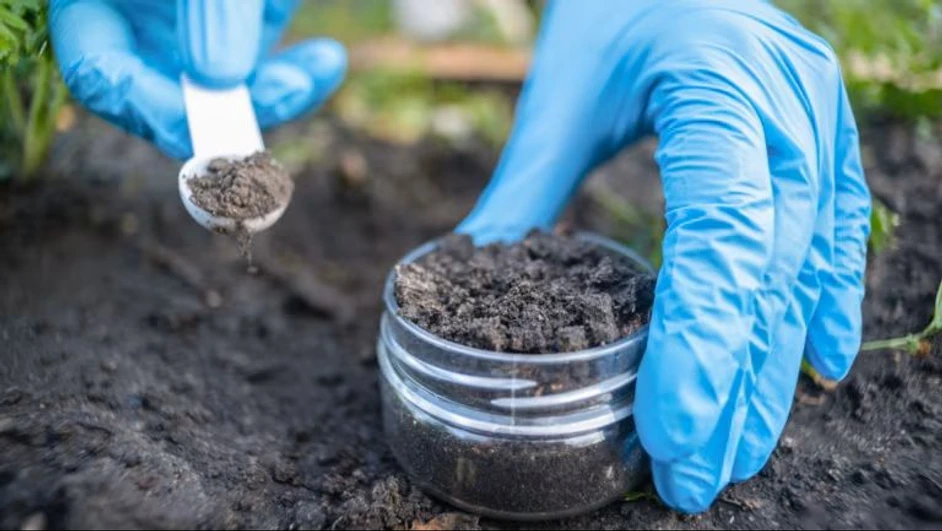
Using EPA Method 1613 workflows, the Orbitrap GC S system demonstrated reproducible detection of 15 fg on-column 2,3,7,8-TCDD, excellent calibration across all 17 regulated dioxin congeners, stable response factors, and resolving power well above EPA requirements of 10,000 resolution at 5% peak height. Repeat injections of spiked soil extracts produced excellent precision, showing that the performance is not limited to solvent standards.
Example 4: Determination of polychlorinated dibenzo-p-dioxins in food and feed with consideration of regulatory criteria
 Thermo Fisher Scientific: Why a New Orbitrap GC Mass Spectrometer Should Be Considered for Routine Regulatory Analysis
In this food and feed study, the Orbitrap Exploris GC S comfortably met the requirements of EU Regulation 2017/644. The instrument achieved accurate quantitation of 2,3,7,8-TCDD down to 10 femtograms on-column while maintaining acceptable ion ratios, calibration performance, and mass resolution. Even more importantly, results agreed closely with those generated previously using magnetic sector GC-HRMS across a variety of real-world food and feed samples.
The common thread in these examples is confidence.
Although these studies focus on different applications, they all highlight the same strengths.
- High resolving power improves selectivity.
- Accurate mass reduces the likelihood of false positives.
- Full-scan acquisition provides flexibility to revisit data as new contaminants emerge.
- NeverVent Advanced Electron Ionization source delivers the sensitivity and robustness needed for routine, high-throughput laboratories.
HRAM GC-MS is finding its analytical niche because more laboratories are dealing with evolving regulations and expanding contaminant lists. This technology gives laboratories the ability to perform today’s targeted analyses while generating data that will still have value tomorrow.
If you would like to learn about the new Orbitrap GC S and its applications, please check out these two other resources:
- On-demand webinar: Modernizing Dioxin Analysis for Food Control: Introducing a New GC Orbitrap
- Dr Kerstin Kratschmer (Wageningen Food Safety Research) and Dominic Roberts (Thermo Fisher Scientific), present application data, review analytical performance against regulatory criteria, and discuss current challenges in dioxin analysis.
- Orbitrap GC S mass spectrometer webpage
Visit us on LinkedIn: #DioxinAnalysis #PesticideAnalysis