
Inactive
Proteoform Studio software, top down made simple
Join our webinar on Thermo Scientific Proteoform Studio software. Learn how integrated workflows, interactive deconvolution, and reporting simplify top-down MS and intact protein analysis.

Addressing LC Method Optimization - Scaling For Efficiency, Throughput And Reproducibility
Join our webinar on LC method optimization and scaling. Learn how column dimensions, particle morphology, and sample loading strategies maximize throughput and reproducibility.
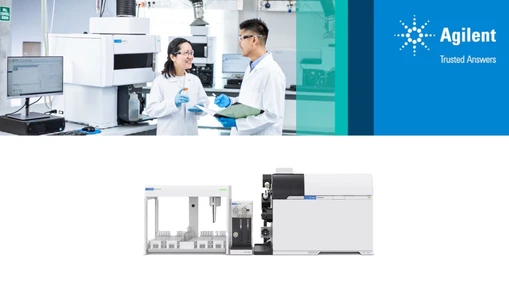
ICP-MS for Hybrid Photoelectrode Characterization
Quantify catalyst loading on hybrid photoelectrodes. Discover how Agilent 7850 ICP-MS supports solar fuel research.
Modern Methods for Faster Microbial Analysis
Struggling to choose the right technique for microbial testing? Learn how MALDI-TOF, FTIR, and automated DNA/RNA electrophoresis accelerate identification.

Getting Started with Single Particle Cryo-EM: How to Access the NIH National Centers
Learn how to access NIH National Cryo-EM Centers, prepare a competitive proposal, and launch successful single particle cryo-EM projects with expert support and advanced instrumentation.
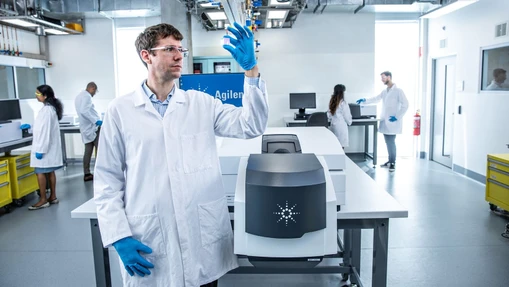
Absolute Specular Reflectance made Easy in UV-Vis-NIR
How to perform accurate specular measurements without swapping accessories? Discover how the unique Cary 7000 design enables fast, precise reflectance and transmission testing at any angle in UV-Vis-NIR.

Tech Spotlight: Mass Spectrometry 2026
Explore MS innovations in omics. Learn how advances in ion mobility and data analysis drive biomarker discovery in 2026.

Tips to power up your LC with Chromeleon software
Join our webinar on Thermo Scientific Chromeleon software. Discover how to boost sample throughput, automate data processing, and maximize productivity with Vanquish UHPLC systems.

The TFA & DFA Challenge Solved: Ultra-Sensitive Detection with End-to-End Automation
Master ultra-short-chain PFAS analysis. Discover SCIEX's automated LC-MS/MS workflow for TFA and DFA quantification.
Tips and Tricks II: Optimising LC Column Separation
Join our webinar on optimizing LC separations. Learn how mobile phase composition, pH, buffer selection, and column selectivity improve chromatographic resolution, recovery, and reproducibility.
Related content

AIMS vs. LC-MS for Cancer Diagnostics: ccRCC Metabolomics with Rachel Wood

Refrigerated SpeedVac SRF110 vs. CentriVap - Why Sample Capacity Matters More Than Ever for Peptide and Protein Labs
