
Active
Inactive
GCMS webinars focusing on Thermal Analysis - page 1
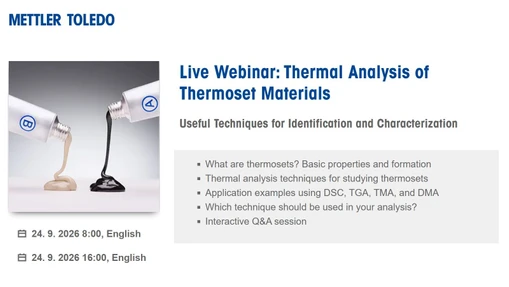
Thermal Analysis of Thermoset Materials
This webinar discusses the most important thermal properties of thermosets and describes useful thermal analysis techniques used to analyze them.
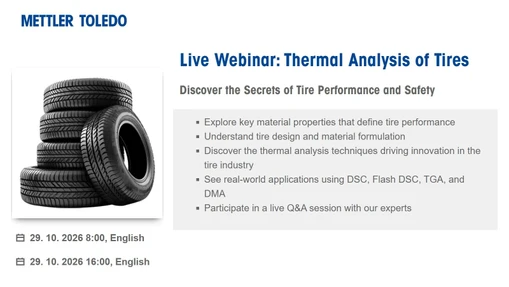
Thermal Analysis of Tires
Learn how thermal analysis techniques such as DSC, Flash DSC, TGA, and DMA reveal key material properties that drive tire performance, safety, and durability.
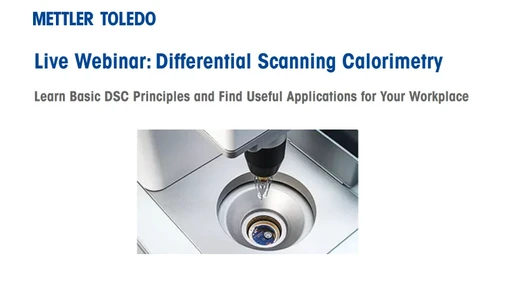
Differential Scanning Calorimetry
Join our webinar on DSC to gain knowledge and get the opportunity to ask our experts your questions!
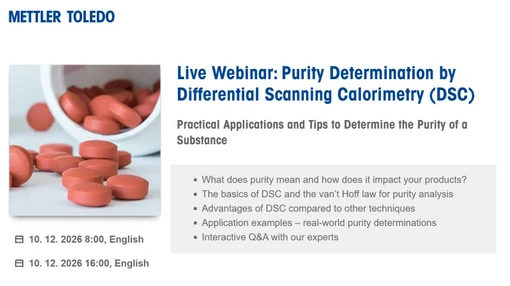
Purity Determination by Differential Scanning Calorimetry (DSC)
In this webinar, we will explain why differential scanning calorimetry (DSC) is a reliable technique for assessing the purity of organic substances, based on the thermodynamics of eutectic systems.
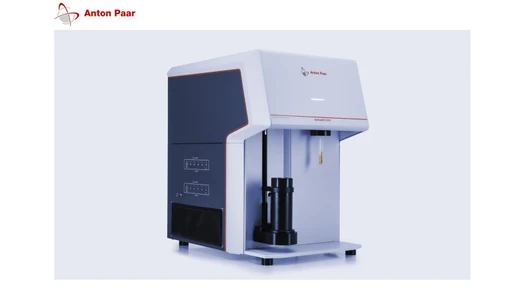
Next-Generation Flow Chemisorption with Autosorb 3300
Learn how Autosorb 3300 helps reduce the complexity of chemisorption and makes advanced catalyst characterization more accessible to laboratories.
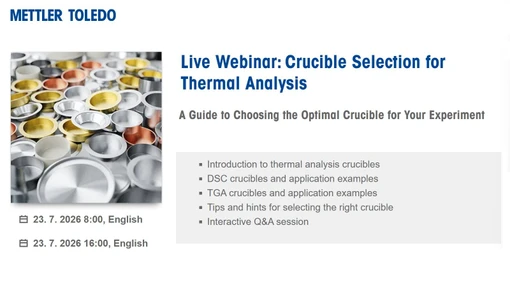
Crucible Selection for Thermal Analysis
Join our live webinar and discover useful tips and hints on how to select the correct crucible for different types of DSC and TGA applications

Dry Matter and Ash Determination in Wastewater and Sewage Sludge
Optimize wastewater analysis. Learn how automated thermogravimetric analysis (TGA) replaces manual drying and ashing steps to determine dry matter and ash in sewage sludge.
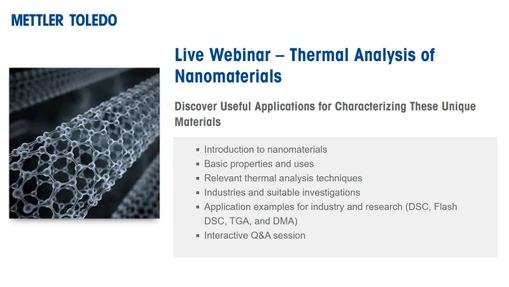
Thermal Analysis of Nanomaterials
Join our live webinar to explore how thermal analysis techniques can reveal the unique properties of nanomaterials.

Heated Stories: What DSC Reveals About Food Products
Discover how differential scanning calorimetry (DSC) analyzes the thermal behavior of fats, proteins, and starches to optimize quality control and food product development.

Removal of tire wear in stormwater tanks: In Situ Microflotation with TGA TED-GC/MS Analysis
Improve tire wear removal in stormwater tanks. Learn how in-situ microflotation separates hydrophobic microplastics and how TGA TED-GC/MS quantifies tire road wear particles (TRWP) to meet water standards.
Related content

Why Biologics QC Is So Much Harder Than Small Molecule Pharma

Unassuming Start–Stop “Gates” Regulate Protein Production in Cells
