

Zaměření
Type of News
Focus
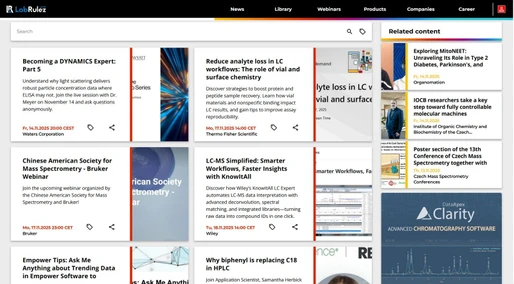
Webinars LabRulezLCMS Week 47/2025
22 webinars: biopharma, chromatography, corrosion, data, DLS, IC, LC, LC-MS, methods, PFAS, protein, Raman, SEC, spectroscopy, titration, workflows
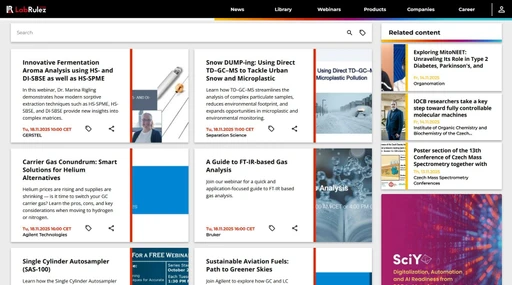
Webinars LabRulezGCMS Week 47/2025
9 webinars: biopharma, carrier gas, environmental analysis, fermentation, FT-IR, GC-MS, Raman, spectroscopy, sustainable fuels, tablet testing
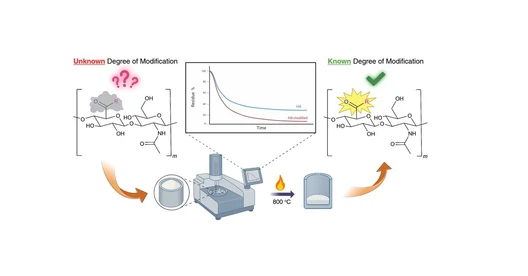
Residue-Based Thermogravimetric Analysis: A Novel Method to Quantify Carboxylate Group Modifications in Macromolecules
This work introduces residue-based TGA to quantify carboxylate modifications in hyaluronic acid. The method is label-free, functional-group independent, and applicable to diverse polymers.

Quantifying Citrate Surface Ligands on Iron Oxide Nanoparticles with TGA, CHN Analysis, NMR, and RP-HPLC with UV Detection
This study presents a multimethod strategy to quantify citrate ligands on iron oxide nanoparticles using TGA, CHN, qNMR, and RP-HPLC, showing how selective methods improve accuracy and prevent overestimation.

The Plant of Many Scents: Unraveling the Odorant Composition of Selected CBD Hemp Cultivars
Aroma analysis of six CBD hemp cultivars revealed 52 odor-active compounds, many new to hemp. Key terpenes and potent sulfur odorants drive distinct scent profiles across varieties.

Exploring MitoNEET: Unraveling Its Role in Type 2 Diabetes, Parkinson's, and Cancer with Taylor Bias
In this interview, Taylor Bias shares how she studies the protein MitoNEET using GC-MS and HPLC, uncovering its enzymatic roles and links to diabetes, Parkinson’s disease, and cancer.

IOCB researchers take a key step toward fully controllable molecular machines
IOCB Prague scientists have developed light-driven molecular motors that remain fully functional even when anchored to metal surfaces, marking a major step toward controllable nanoscale machines.

Poster section of the 13th Conference of Czech Mass Spectrometry together with 11th Informal proteomic meeting
In just one week, the 13th CSHS Conference and the 11th Informal Proteomics Meeting will take place in České Budějovice. Take a look at what awaits you in this year’s rich poster section!
Green Chromatography: How to Make HPLC More Eco- Friendly
Discover how “green chromatography” makes HPLC more sustainable — from solvent recycling (UFO, SPR-200) to leak detection (LSS-205) and greener methods that cut waste, costs, and environmental impact.