Inactive
-Session-2_s.webp)
Shimadzu Method Development LC-MS(MS) - Session 2
This second session will cover the objectives and strategies to use for successful LC-MS(MS) method development.
-Session-1_s.webp)
Shimadzu Method Development - LC-MS(MS) - Session 1
This webinar is designed for people who are new to LC-MS/MS to give them a grounding in the differences from LC before moving onto more in-depth discussions about method development.

Increasing Profits in the HPI Market with Process GC
Eclipse process gas chromatographs pair the most sensitive detectors with lab-quality chromatography to quickly detect ppm-ppb levels of stream impurities or catalyst poisons; ultimately impr. product quality.

Getting the Most from Your Liquid Injections: Optimization
At PerkinElmer University, you can find a wide range of Online learning topics to meet the needs of your lab. Whether you are a Gas Chromatographer or a Chromatography enthusiast.
Five Essentials for Surviving Your Next Laboratory Inspection: A Quality Control Example, Part 2
First, we will explain what you should expect during an inspection. Then, we will simulate an inspection to show you, in a realistic scenario, what an inspector might ask.
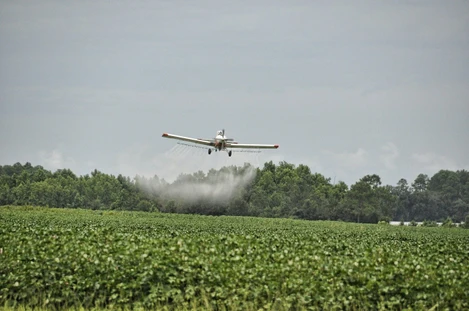
"Ask The Expert" Webinar: Automated online µSPE clean-up to improve efficiency, robustness and productivity in LC- and GC-MS/MS analysis of pesticide residues
This webinar will highlight an automated optimized online miniaturized cartridge clean-up approach providing more effective clean-up of QuEChERS extracts to overcome the analytical challenges.
Uncovering Hidden Pollutants: Advances in Thermal Desorption for Environmental Contaminant Analysis
In this presentation we will look at how thermal desorption combined with GC-MS is able to respond to the changing demands of regulated monitoring for these applications.
QuickProbe, Fast Sample Screening, with Minimal or No Sample Prep in Under a Minute
This work seeks to illustrate how this technique can be used as a fast-qualitative screening tool on existing 5977B/8890 GCMS system.
Shimadzu Theory & Key Principles Series - GC Session 4: Advanced Liquid Injection Techniques
This is the fourth session will cover: When split/splitless inlets are not suitable, Programmable Temperature Vaporisation (PTV), On-Column Injection (OCI) or Cool On-Column (COC), Multi-Mode Inlets (MMI).

TED-GC/MS, Thermal Extraction and –Desorption combined with Gas Chromatography-Mass Spectrometry, a novel technique for the determination of microplastics in water
Analyzing environmental samples, including water, for microplastics is a challenging task. In many cases, microplastics must be identified and quantified in the presence of significant amounts of other matter.
Related content
Decoding the Glycocode: AI-Powered Glycoproteomics & Cancer Research
A study in Nature sheds new light on DNA repair in early human embryos, with implications for future gene correction