Inactive
Reversed Phase Method Development: Mobile Phase Selection & Selectivity Considerations
In this webinar, you'll learn about the role that solvents (aqueous, organic) and pH play on selectivity for reversed phase HPLC separations.
Troubleshooting SPE & Other Sample Prep Techniques
In this webinar we will look at diagnostic skills needed to determine the root cause of the problem with your method. We will cover a stepwise approach to solving common SPE and other sample prep problems.

Achieving the Fastest Lab Turn Around Time with a Holistic Pesticide Workflow Solution
Material and data will be presented to show the capabilities and benefits of adding sample preparation automation with turnkey pesticide CRM standards, to an APCI/ESI LC/MSMS cannabis flower SOP.

New guidelines and modern chromatographic solutions converge to ensure data quality in the pharmaceutical laboratory: Join Waters for a panel discussion and insights from the USP and MHRA
In this webinar, Waters experts will show the benefits of improved technology with robust, fit-for-purpose methods using the new Arc HPLC System.
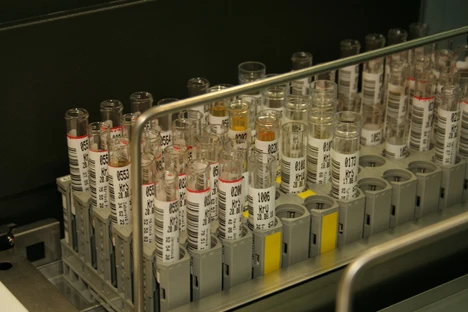
The Exposome of PFAS
This webinar will provide with an overview of PFAS, an introduction to PFAS analysis using LC-MS/MS, tips & tricks and also some applications of blood and urine concentrations and toxicokinetics of PFAS.
-GCMS_s.webp)
Shimadzu Theory & Key Principles Series - GCMS Session 3: Triple Quadrupole (TQ) GCMS
This is the third webinar on fundamental concepts in GCMS. This session will cover: Triple Quadrupole (TQ), Collision cell, Precursor & Product ions, Analysis modes, Benefits of TQ.
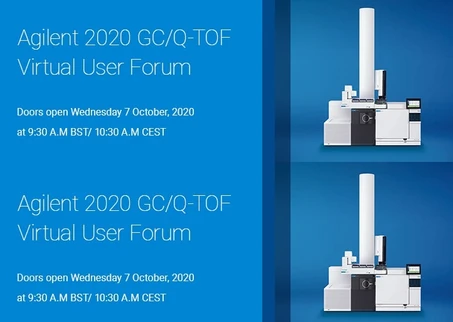
Agilent 2020 GC/Q-TOF Virtual User Forum
This is an Agilent hosted event for the community scientists and users interested in the technology, workflows and solutions the Agilent GC/Q-TOF can bring to your work.
Inside the Lab with Phenomenex: Tips & Tricks for Environmental Applications
Phenomenex “Inside the Lab” invites viewers to not only learn from a panel of experts of the related topic, but allows you to ask questions in real time and become a part of the discussion.
Inside the Lab with Phenomenex - Back to School
Phenomenex “Inside the Lab” invites viewers to not only learn from a panel of experts of the related topic, but allows you to ask questions in real time and become a part of the discussion.
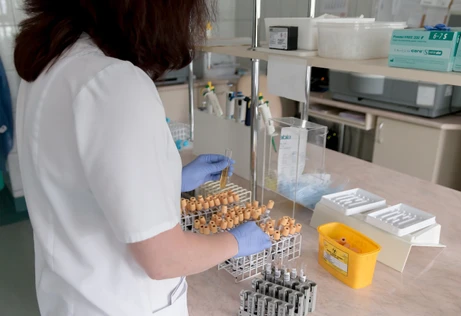
Simplify Volatiles Analysis. Part 2: Applying Routine Lab Techniques to Direct MS
In this webinar, we answer the frequently asked question: “How can I adopt direct mass spectrometry in my routine analysis workflow?” By combining SIFT-MS with conventional laboratory automation,
Related content
Decoding the Glycocode: AI-Powered Glycoproteomics & Cancer Research
A study in Nature sheds new light on DNA repair in early human embryos, with implications for future gene correction