Inactive
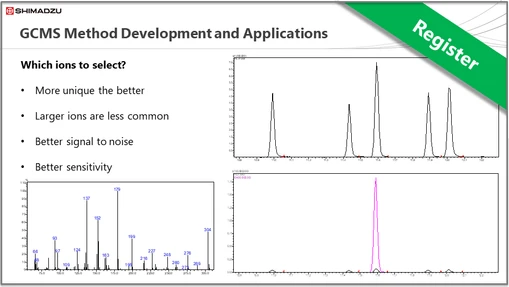
Shimadzu Theory & Key Principles Series - GCMS Session 5: GCMS Method Development and Applications
This is the fifth webinar on fundamental concepts in GCMS. This session will cover: General method set-up, Analysis aims, Column choice, Ion selection, Improving chromatography, Improving sensitivity.

Overview of Sample Preparation Options for the Pharmaceutical Industry
In this webinar, we will discuss different sample preparation options (dilution, filtration, and extraction) commonly used prior to chromatographic analysis and compare the benefits for each technique.
Solving Long Term Data Storage: Tools to Help Labs Migrate to Digital Workflows
This talk will give an overview of lab data standards in the industry and tools within Agilent platforms that can help customers to store data for long periods.

Hydrogen Fuel: Quality Control and Process Monitoring in an Emerging Sector using Direct MS
Direct, broad-spectrum analysis using SIFT-MS provides new opportunities across hydrogen analysis for transport applications. Learn how SIFT-MS readily detects challenging trace impurities in real-time.

Measurement of Underivatized Glyphosate and Other Polar Pesticides in Mult Matrices Using Reversed-Phase Chromatography and Tandem MS
A simple yet effective methodology will be presented that includes quick sample preparation, very robust reversed-phase chromatography and sensitive mass spectrometry detection for routine analysis.
Extractable and Leachable Analysis: Impact of E/L in Biologics Manufacturing and Processing
The talk will give an overview of the importance of controlling these impurities, challenges faced, and regulatory guidelines regarding such process-derived impurities.

Don’t Lose It: Getting Your Peaks in Shape
In this presentation, we’ll look at how your column choice, your sample, and mobile phase can all affect your peak shape in both good and bad ways.
Simultaneous Analysis of COVID-19 Drug Candidates in Human Plasma by LC-MS/MS
In this webinar we will talk about simultaneous analysis of COVID-19 drug candidates in human plasma by LC-MS/MS.
HPLC and UHPLC reversed-phase method development - Selecting a reproducible starting point
In this SelectScience webinar, we focus on reversed-phase chromatography and best practices for selecting a reproducible starting point for your initial method development.

Targeted Proteomics Quantitative Workflows: Considerations for Success
In this webinar, we will discuss an end-to-end targeted proteomics workflow including rigorously validated reagents/methods and its applications to quantitate proteins of interest.
Related content

Decoding the Glycocode: AI-Powered Glycoproteomics & Cancer Research
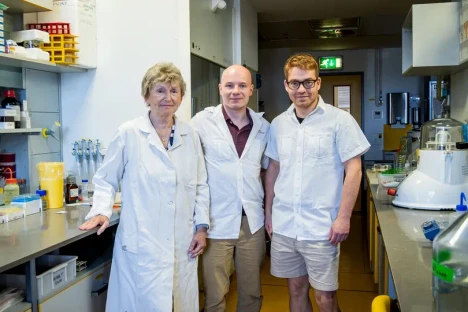
A study in Nature sheds new light on DNA repair in early human embryos, with implications for future gene correction