Inactive
Slashing Inefficiencies in Consumer Product Manufacturing with NIR Spectroscopy
Alex Mattingly from Chemlink Laboratories will show how he implemented NIR and developed the analytical methods to replace complex wet-chemical assays.
Tracking molecules made by the human microbiome
Both targeted and untargeted mass spectrometry approaches have been applied to identify the metabolites produced by intestinal bacteria that reach physiologically relevant levels in the systemic circulation.
High-Pressure TGA as Novel Analytical Method Enabling Closed Material Cycles Through Chemical Recycling of Polymers
High-pressure thermogravimetry is an analytical method for developing, parameter optimization and scaling of pyrolysis and gasification of organic materials.

A Discussion of All Things GPC - A Meet the Experts Roundtable Discussion
Understand how to problem solve your polymer separation. Better understand method development. Find answers to your daily polymer challenges.

Imaging Lipids in a Brain Injury model with AP-MALDI on Agilent Tandem Quadrupole Mass Spectrometers
In this study, we highlight AP-MALDI imaging with a high sensitivity tandem quadrupole (TQ) and to selectively detect and image endogenous mouse brain lipids.

Confidently Analyse Nitrosamine Impurities by GC-MS/MS & LC-MS/MS
Holistic solution to measurement of nitrosamines need both GC-MS/MS and LC-MS/MS technologies.

Column Selection for Bioanalytical Method Development
Selecting a Stationary Phase. Column Screening. Case studies.
Getting to Grips with your Polymer Data - An Empower™ Tutorial
Key aspects of a GPC processing method. Working with different types of calibration, such as Relative, Universal, and Cumulative Matching Calibration. Generating and interpreting results.
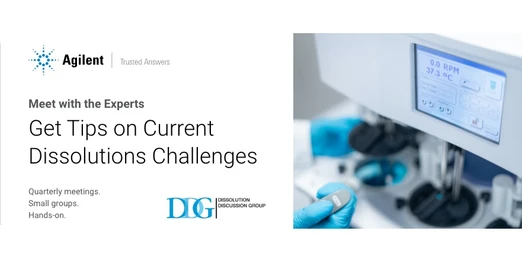
Current Practices for the Dissolution Testing of Medical Devices, Combination Products, and Novel Dosage Forms
Join us for a discussions on challenges and how they can be overcome.
Decrypting liquid chromatography variation and managing compound optimization and ion suppression for improved LC-MS/MS assay reproducibility
How to improve your LC-MS/MS assays by investigating the causes of chromatographic variation, the effects of differing methods of compound optimization and the sources of ion suppression.
Related content
How Chromatography Helps Build Better Catalysts

A new polymer could enable gastrointestinal transit monitoring without ionizing radiation