Inactive
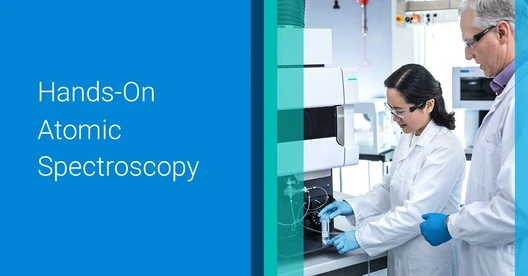
Analysis of Environmental Samples by 9500 ICP-QQQ in Advanced Helium Mode
This work describes a high-throughput ICP-MS/MS workflow for routine environmental analysis.
The AI-Enabled Metabolomics Lab: Today, Tomorrow and Beyond
How is artificial intelligence changing metabolomics? Explore its current applications, future potential and practical challenges in laboratory workflows.
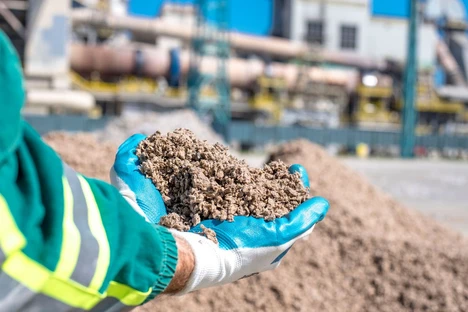
From Unknown Samples to Smart Decisions with Clever XRF Solutions
How can the elemental composition of unknown materials be determined quickly and reliably? Explore XRF analysis without extensive calibration for industrial, recycling and environmental applications.
Selectivity for Bioanalytical LC Methods: A Practical Approach to Column Selection
How do you choose the right column for bioanalytical LC? Explore how stationary-phase selectivity affects retention, resolution and peak shape in small-molecule analysis.
From Bases to Breakthroughs: Analytical Strategies for Oligonucleotides
How can the purity and chemical integrity of therapeutic oligonucleotides be assessed? Explore LC and LC-MS approaches and the role of USP reference standards.
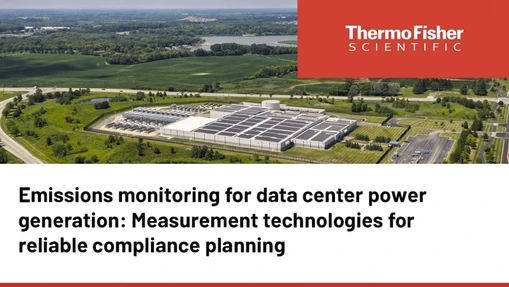
Emissions monitoring for data center power generation: Measurement technologies for reliable compliance planning
How should data centers plan emissions monitoring for natural gas power generation? Explore CEMS, periodic stack testing and approaches to demonstrating regulatory compliance.
Maintenance Matters: The Key to Consistent HPLC Performance
Unexpected HPLC downtime affects laboratory productivity. Learn how preventive maintenance and understanding key system components help ensure reliable performance.

Oligonucleotide Based Development Therapeutics: A Joint Webinar With Sumitomo Chemical and Shimadzu Scientific Instruments
From hidden gRNA impurities to sequence confirmation, discover how mass spectrometry and dedicated software support oligonucleotide characterization and quality control.
Are You Ready for Inspection?
Learn how modern QC workflows can support identity testing, impurity monitoring, data integrity, and GxP compliance throughout the commercial lifecycle of GLP-1 therapeutics.
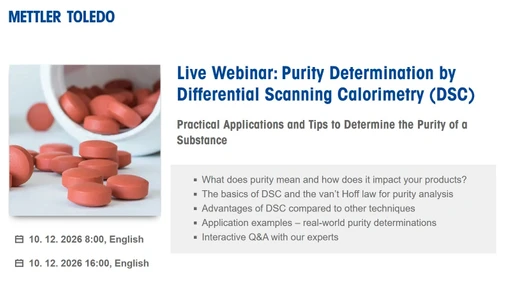
Purity Determination by Differential Scanning Calorimetry (DSC)
In this webinar, we will explain why differential scanning calorimetry (DSC) is a reliable technique for assessing the purity of organic substances, based on the thermodynamics of eutectic systems.
Related content

Keynote Speakers at the 18th MDCW
Separating Closely Related Species in Complex Oligonucleotide Samples