Inactive
Enhancing the scientific experience using laboratory software
Novel ways to interact with LIMS. Delivering knowledge from data. Automation solutions. Intuitive workflows.
GC carrier gas: Top ten ways to save helium
We will present 10 tools and accessories that Agilent provides to help GC operators and lab managers more easily conserve helium or move to an alternate carrier gas for gas chromatography.
HPLC Troubleshooting
Learn how to prevent and minimize problems before they occur. Understand how to approach problem solving and troubleshooting. Review peak shape and column performance problems.

ICP Expert How To: What is it and How to set up an Advanced Valve System (AVS) for ICP-OES
This presentation will discuss the different types of interferences present in ICP and how to correct for them.

Out of Lab Analysis Workshop: Meet the Handheld FTIR Family
Agilent’s Handheld FTIR spectrometer is a unique and innovative platform for measuring samples on site to yield fast and reliable chemistry analyses.
Improving End-to-End Metabolite Identification by LC-MS/MS
Here, an alternative fragmentation technique is applied to produce additional fragment ions and an informative MS/MS spectra for metabolite identification.
TIPS AND TRICKS FOR LC COLUMN SELECTION FOR ROBUST METHODS
Learn how to leverage different column attributes to drive retention and manipulate selectivity. Examples about how the latest column technologies can improve your results.
-Explore-a-mass-spectrometry-approach-for-target-deconvolution-and-compound-profiling_s.webp)
CETSA Explore – a mass spectrometry approach for target deconvolution and compound profiling
We will introduce the CETSA Explore method, present different applications and will show how CETSA Explore was part of a target deconvolution effort following a phenotypic screen.

Pyrolysis GC-MS for the analysis of microplastic in biota samples
Join this webinar and learn about a solution for microplastic and nanoplastic analysis using pyrolysis in combination with single quadrupole GC-MS or high resolution GC-MS.
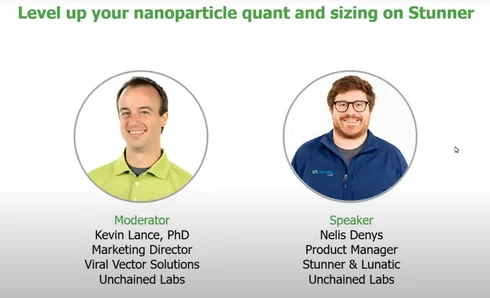
Level up your nanoparticle quant and sizing on Stunner
Tired of slow, complex nanoparticle analysis? Stunner delivers fast, high-throughput, non-destructive quant and sizing using just 2 µL—no dyes, standards, or breakdown steps needed.
Related content
Neuroscience Takes Flight: How Collaboration, Spaceflight, and Orbitrap Astral MS Are Opening a New Window into Brain Aging
Identifications Folder: Raw Files Created in MS/MS NIST26