
Inactive

From Challenge to Confidence: PFAS Analysis with Ion Chromatography-Based Techniques
Master comprehensive PFAS water analysis. Learn how Combustion IC (CIC) determines total AOF, and discover how IC-MS/MS quantifies highly hydrophilic ultra-short chain PFAS like trifluoroacetic acid (TFA).
Analysis of the Key Parameters of Biofuels
Learn how modern analytical techniques enable fast, precise characterization of biofuels and SRF. This webinar covers key parameters such as MVA, CHNS, calorific value, and ash fusion behavior.

Advancing Size Exclusion Chromatography (SEC) for Characterization of Genetic Therapeutics
Optimize size exclusion chromatography for genetic therapeutics. Learn how wide-pore SEC columns enable high-resolution profiling of mRNA, LNPs, and viral vectors while preventing shear degradation.
Charge! Next-Generation LNP Assays with Waters Reversed Phase Charge Aerosol Detection
Optimize lipid nanoparticle separations. Discover new lipid stationary phases and method development strategies for LNP composition and impurity analysis using UV, ELSD, CAD, and MS detection.

From Neural Recording to Functional Insight: Accelerating Discovery with the Inscopix Integrated Workflow
See the full suite of Bruker’s Inscopix integrated solutions and scientific support for neuroscience research.

Development and Implementation of an Efficient LC-TOF MS Screening Workflow in Seized Drug Analysis
The upcoming webinar will address how the Acquity UPLC with the RDa detector has been employed to develop a workflow for screening seized drug cases.

Optimizing Future Fuel Processes with Process Raman Spectroscopy: Applications in Hydrogen, Sustainable Aviation Fuels & Carbon Capture
Explore how process Raman spectroscopy supports real-time monitoring and optimization of sustainable aviation fuel, hydrogen, and carbon capture processes in future energy applications.

Recycled Plastics: Solutions for Quality and Process Control
Optimize recycled plastics quality and process control. Explore analytical solutions for food-grade PET consistency, PC/ABS molding variations, and rapid quantification of microscopic foreign matter.
Enabling Robust HILIC LC–MS Workflows for Highly Polar Compound Analysis
Enable robust HILIC LC-MS workflows for highly polar compounds. Learn how Kinetex Amide columns provide consistent retention, high selectivity, and excellent reproducibility in complex matrices.

Driving higher throughput through innovative QQQ ICP‑MS techniques
Advanced methodology for enhancing sample throughput through recent advances in Helium KED mode and complementary interference removal techniques.
Related content
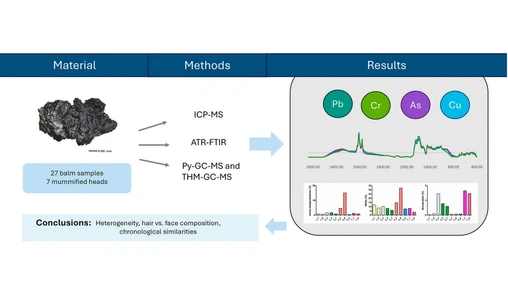
Combining elemental analysis and molecular techniques to characterize Ancient Egyptian mummification balms

Forced degradation analysis of recombinant adeno-associated virus serotype 8 based on analytical anion exchange chromatography coupled to orthogonal characterization
