Inactive
SCIEX OS software summer school - Data processing: screening
Join us for our summer school series dedicated to enhancing your proficiency with SCIEX OS software.
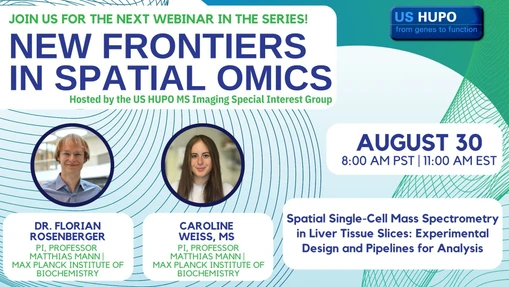
Spatial Single-Cell Mass Spectrometry in Liver Tissue Slices: Experimental Design and Pipelines for Analysis
Join the MS Imaging SIG for an interactive discussion with authors on experimental design and data pipelines for analysis.
The Cellular Itinerary of Renal Aquaporin-2 Shuttling with 4.5x Expansion Microscopy
This webinar will present results showing that newly established 4.5 expansion microscopy is an ideal approach to obtain detailed information regarding the AQP2 vesicle population.
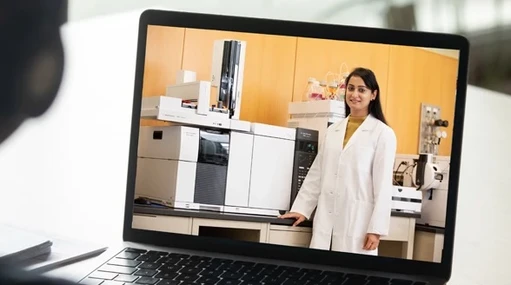
Getting the Most from Your Diode Array Detector: From Selection to Optimization
we will cover the fundamentals of how your DAD works. From there we will discuss the various options for DAD method optimization.
Non-targeted screening in forensics, a discussion of method development and screening of forensic samples using GCXGC-TOFMS
Non-targeted screening in forensics, a discussion of method development and screening of forensic samples using GCXGC-TOFMS.
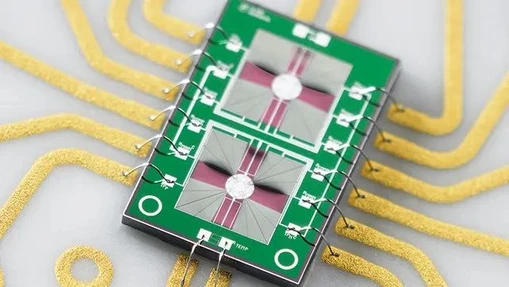
The Exciting World of Flash DSC
Advanced Material Characterization by Fast-Scanning Calorimetry
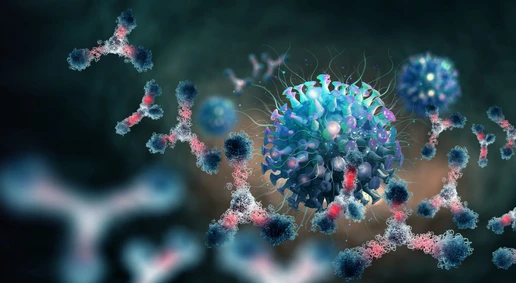
Fundamentals and biotherapeutics applications of Multi-Angle and Dynamic Light Scattering
We will delve into the fundamentals and advantages of SEC-MALS and DLS for the biophysical characterization of monoclonal antibodies (mAbs), conjugated proteins, and adeno-associated viruses (AAVs).
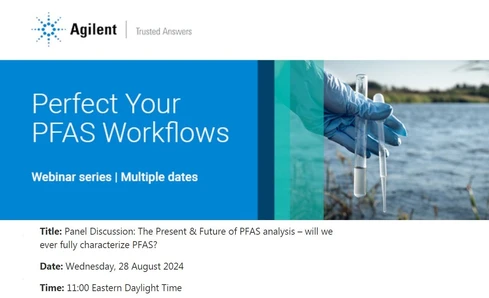
Panel Discussion: The Present & Future of PFAS analysis – will we ever fully characterize PFAS?
Panel Discussion: The Present & Future of PFAS analysis – will we ever fully characterize PFAS?

Improved EA-IRMS NCS workflow for archaeology and ecology applications
This presentation will describe how we have optimized our Thermo Scientific EA IsoLink System with the new High Performance Kit for sulfur analysis to allow for high precision and accuracy NCS analysis.
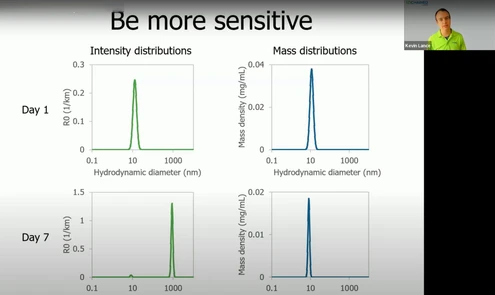
Lose the lag with high-throughput and flexible ADC analysis on Stunner
See how Stunner streamlines ADC analysis by measuring antibody concentration, DAR, and aggregation from just 2 μL per sample—fast, flexible, and high-throughput for up to 96 ADCs.
Related content
Accurate NMR chemical shifts through machine-learned dynamics
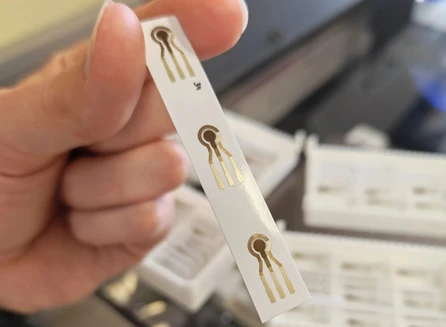
Atom by atom. Scientists reveal a new direction in medical diagnostics