Fr, 25.9.2026 | Original article from: Concentrating on Chromatography
Haidar Ahmad discusses chromatographic modeling, 2D-LC, greener method development, automation, and why strong fundamentals remain essential in separation science.In Silico Modeling, 2D-LC & Green Chromatography: Imad Ahmad on the Future of Method Development
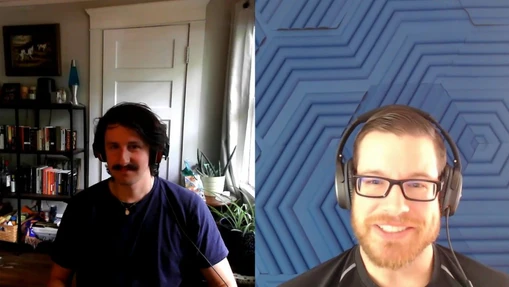
- Photo: Concentrating on Chromatography: In Silico Modeling, 2D-LC & Green Chromatography: Imad Ahmad on the Future of Method Development
- Video: Concentrating on Chromatography: In Silico Modeling, 2D-LC & Green Chromatography: Imad Ahmad on the Future of Method Development
In this episode of ChromatographyTalk, Organomation General Manager David Oliva sits down with Imad Haidar Ahmad, Scientific Research Director at Amgen leading separations for Discovery Chemistry and Externalization. Imad's career spans Novartis, Merck, and now Amgen, and his research on computer-assisted method development has landed multiple front covers in Analytical Chemistry.
We dig into how his group builds retention models from as few as nine lab experiments to map an entire separation landscape — replacing weeks of trial and error with a resolution map you can query and rebuild from. Imad breaks down where this modeling approach struggles (large molecules, SFC, fully autonomous method development), walks through two-dimensional liquid chromatography in plain terms for anyone who's only worked in 1D, and shares the story behind his group's greenness-score mapping work — including where swapping acetonitrile for methanol worked, and where it didn't.
We also talk career advice: what a typical day looks like leading a discovery-stage separations team, how undergrad and grad students can bridge the academia-to-industry gap, and what Imad sees as the field's biggest unsolved problem.
Video Transcription
Chromatographic method development is increasingly moving beyond trial and error toward workflows built on modeling, automation, multidimensional separations, and smarter use of data. In a recent interview, Haidar Ahmad discussed how these approaches are changing pharmaceutical analysis, why understanding the fundamentals of chromatography remains essential, and where some of the biggest opportunities in separation science still lie.
Ahmad’s route into analytical chemistry was not entirely planned. As an undergraduate, he initially found inorganic and organic chemistry particularly attractive, but a final-year project focused on the analysis of additives in bread introduced him to the possibilities of analytical chemistry. During his PhD, his research moved into polymer analysis and structure–property relationships. His interest in chromatography deepened when he encountered two-dimensional liquid chromatography (2D-LC), particularly its ability to reveal forms of polymer heterogeneity that could not be adequately characterized using a single separation technique. This eventually led to postdoctoral work with Peter Carr, where Ahmad focused on chromatographic separations and the fundamentals of chromatography.
His subsequent career in the pharmaceutical industry exposed him to different stages of drug development, from late-stage method development and validation to drug substance characterization, purification, and finally discovery-stage separations. That breadth of experience has shaped his view of chromatography as both a scientific discipline and a practical problem-solving tool. In late-stage development, the objective may be a highly robust method capable of successful validation and transfer between laboratories. In discovery, by contrast, speed becomes critical because teams may be working with thousands of molecules while trying to identify the best candidates to advance.
Discovery-stage chromatography: speed, prioritization, and throughput
For a separations team supporting drug discovery, the working day is shaped by a constant flow of requests from medicinal chemistry and other partner groups. The challenge is not simply to perform the analyses, but to decide which requests are most urgent, remove bottlenecks, communicate with project teams, and continuously improve existing workflows.
According to Ahmad, one of the most important questions is whether a task can be done faster or in a more high-throughput way. Discovery laboratories operate under strong time pressure, and efficiency therefore becomes part of the scientific strategy rather than merely an operational concern. As he describes it, the work combines science, prioritization, leadership, and communication, all with the aim of moving the most important projects forward as quickly as possible.
In silico modeling: letting the computer perform the experiments
One of the central themes of Ahmad’s work is in silico chromatographic modeling. In practical terms, the approach begins with a carefully designed set of laboratory experiments—often around nine runs. The resulting data are fed into software that builds retention models describing how analyte retention changes with variables such as mobile-phase composition and temperature.
The software can then generate a resolution map representing a much larger separation space than could realistically be tested experimentally. Instead of running dozens or hundreds of conditions by trial and error, the analyst can identify regions where critical peak pairs are predicted to achieve the best separation.
For Ahmad, the value of these maps goes beyond simply finding the condition with the highest resolution. Each point on the map represents a chromatographic condition, while the visual output shows where poor and strong separations are expected. A broad region of good resolution is particularly useful because it points toward a more robust operating space rather than a narrowly defined optimum that might be sensitive to small variations in experimental conditions.
He therefore prefers to think of a chromatographic model as a map or database, rather than simply an optimization tool. If an impurity later disappears from the process, the corresponding peak can be removed from the model and new conditions selected without repeating the complete experimental study. Conversely, if a new degradation product appears during stability studies, the peak can be added and the existing model used to search for updated separation conditions.
Why trial and error still has a place
Modeling does not mean that conventional trial-and-error method development has disappeared. Ahmad points out that it remains useful in early discovery, particularly for fit-for-purpose methods where speed is more important than achieving a fully optimized separation.
The situation changes later in development. A method intended for validation, transfer, or long-term routine use carries much greater risk. Trial and error may identify a condition that appears satisfactory without revealing whether it represents the most robust region of the separation space. If that method later fails during transfer or routine operation, the consequences can be costly.
For late-stage methods, the additional investment required to build a model can therefore reduce risk over the much longer lifetime of the analytical procedure.
Models are only as good as the experiments behind them
Chromatographic modeling is not automatic proof against poor method development. Ahmad compares the technology to a GPS: it is highly useful, but only if the analyst understands where they are trying to go.
Careful experimental design remains essential. Incorrect dwell-volume or column-volume information, as well as insufficient column re-equilibration, can produce misleading predictions. Importantly, these problems may not be obvious when the experimental runs used to construct the model are compared with their calculated values. They may emerge only when the software begins predicting new conditions within the modeled design space.
Modeling is also easier for some separations than others. Ahmad describes reversed-phase LC of small molecules as comparatively straightforward, while large biomolecules are more challenging because their retention can be highly sensitive to small changes in mobile-phase composition and temperature.
Other separation modes present additional difficulties. Ahmad notes that his teams have found supercritical fluid chromatography (SFC) particularly challenging to model successfully. Fully autonomous method development remains another unresolved goal: current tools can automate parts of optimization, but analyst input is still required.
Why two dimensions can reveal what one dimension cannot
Ahmad’s early interest in 2D-LC came from polymer characterization. He explains the principle simply: one-dimensional chromatography may answer one question about a sample, while two complementary dimensions can answer two.
Two copolymers, for example, may have similar molecular size and therefore coelute in size-exclusion chromatography. A second separation mechanism based on interaction with a stationary phase may distinguish them according to chemical composition. Combining both dimensions provides a more complete description of complex distributions involving molecular weight, composition, sequence, and other forms of heterogeneity.
Historically, the complexity of both instrumentation and software limited wider adoption of 2D-LC. Ahmad recalls systems requiring several computers and multiple software packages. That situation has improved substantially, and 2D-LC is now easier to implement across research and pharmaceutical development.
Nevertheless, modeling multidimensional separations still presents challenges. While models can be built for individual fractions or dimensions, current software does not easily identify a common optimum across multiple models simultaneously. Much of this comparison still requires manual work.
Bringing sustainability into method development
Another area where Ahmad sees room for change is green analytical chemistry.
Traditional pharmaceutical method development has understandably prioritized resolution, sensitivity, robustness, and turnaround time. Sustainability has often been treated as a secondary consideration, particularly at the analytical scale, where solvent use appears small compared with preparative chromatography or manufacturing.
That mindset is beginning to change. Ahmad argues that greenness metrics should increasingly be incorporated directly into method-development software. If analysts could immediately see how changes in flow rate, gradient conditions, solvent choice, or other parameters affect the environmental profile of a method, sustainability could become part of routine optimization rather than an assessment performed after the method has already been developed.
The objective, however, is not to pursue the greenest possible method regardless of analytical performance. Ahmad emphasizes the need to develop methods that are as green as possible while remaining fit for purpose. Modeling can potentially help balance these competing requirements by identifying conditions that preserve separation performance while allowing greener solvents or alternative chromatographic conditions to be introduced.
Advice for young chromatographers: do not treat HPLC as a black box
For students learning chromatography, Ahmad’s central recommendation is straightforward: do not treat the HPLC system as a black box.
Rather than collecting chromatograms by making random changes, he encourages analysts to build a mental model of the separation. When temperature, gradient, or another parameter is changed, they should ask why retention or selectivity changed and use each experiment to improve their understanding of the system.
He also recommends making use of educational resources on chromatographic fundamentals and method development and, importantly, not being afraid to experiment with instrument conditions. Modern systems are robust, but the analyst still needs to understand the underlying separation science in order to use them effectively.
The same proactive attitude applies to career development. Ahmad strongly encourages students to seek industry internships and make connections beyond their own institutions. Conferences and poster sessions can provide natural opportunities to meet scientists from industry, discuss research, and ask about internship opportunities. Based on his own experience working with undergraduate and graduate interns, these collaborations can benefit both students and research teams and may strongly influence later academic or career decisions.
What still needs to be solved?
Asked about the biggest unresolved challenges in separation science, Ahmad does not begin with technology. Instead, he points to a shortage of well-trained analytical chemists with a strong understanding of chromatographic fundamentals.
Alongside education, he identifies several technical opportunities. One is truly autonomous method development, where an instrument and software could optimize a separation without continuous analyst input. Another is the ability to predict chromatographic selectivity directly from molecular structure.
Such capability could be especially valuable in high-throughput discovery environments. If a laboratory could predict which stationary phase and conditions were most likely to separate a particular set of compounds or isomers before entering the laboratory, method development could become considerably faster and more efficient.
Taken together, Ahmad’s perspective points toward a future in which chromatography becomes increasingly model-driven, automated, multidimensional, and sustainability-aware. But the technology does not eliminate the need for chromatographic knowledge. On the contrary, as analytical tools become more powerful, understanding the fundamentals may become even more important—the software can explore the separation space, but the scientist still needs to know what question to ask and how to interpret the answer.
This text has been automatically transcribed from a video presentation using AI technology. It may contain inaccuracies and is not guaranteed to be 100% correct.
Concentrating on Chromatography Podcast
Dive into the frontiers of chromatography, mass spectrometry, and sample preparation with host David Oliva. Each episode features candid conversations with leading researchers, industry innovators, and passionate scientists who are shaping the future of analytical chemistry. From decoding PFAS detection challenges to exploring the latest in AI-assisted liquid chromatography, this show uncovers practical workflows, sustainability breakthroughs, and the real-world impact of separation science. Whether you’re a chromatographer, lab professional, or researcher you'll discover inspiring content!
You can find Concentrating on Chromatography Podcast in podcast apps:
and on YouTube channel