




Tomáš Pluskal and Robin Kryštůfek win Czech national science awards
Tomáš Pluskal and Robin Kryštůfek from IOCB Prague have received Česká hlava awards for developing computational tools for mass spectrometry data analysis and automating peptide synthesis and testing.
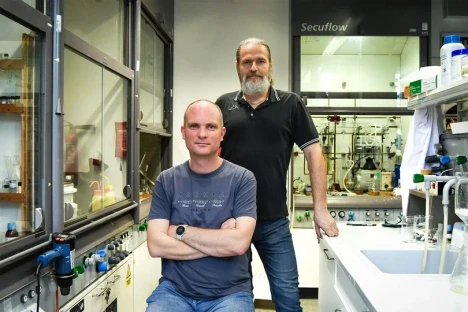
How to tame random motion inside a molecule? Scientists can do it with light
Scientists at IOCB Prague have developed a molecular system that uses light to slow down random rotation within a molecule by up to 300,000 times, opening new possibilities for molecular machines.
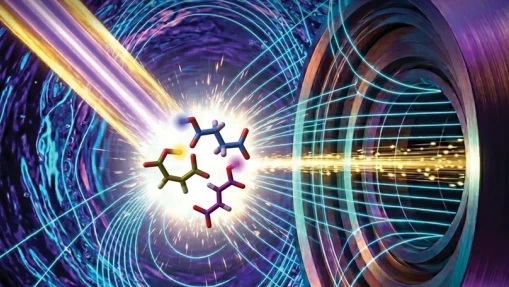
Proton sharing in polycarboxylic acids in aqueous solution
Researchers used X-ray photoelectron spectroscopy to investigate proton sharing in biologically relevant polycarboxylic acids, revealing the crucial role of molecular geometry.
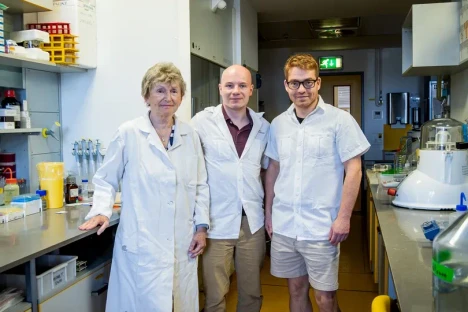
A study in Nature sheds new light on DNA repair in early human embryos, with implications for future gene correction
A Nature study reveals how early human embryos repair DNA during gene editing and highlights the potential and limitations of current genome-editing technologies.
A new polymer could enable gastrointestinal transit monitoring without ionizing radiation
Researchers developed a water-soluble fluorinated polymer tracer for ¹⁹F MRI that enables gastrointestinal transit monitoring without ionizing radiation.
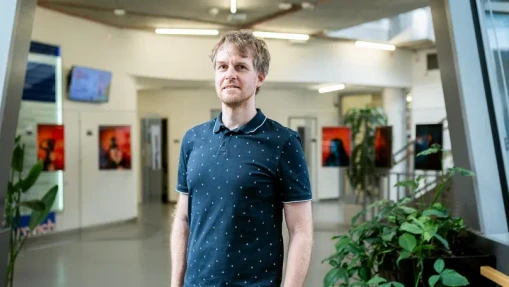
Accurate NMR chemical shifts through machine-learned dynamics
Scientists at IOCB Prague combine ML molecular dynamics with ShiftML3 to improve NMR chemical-shift predictions for exchangeable protons in solution.
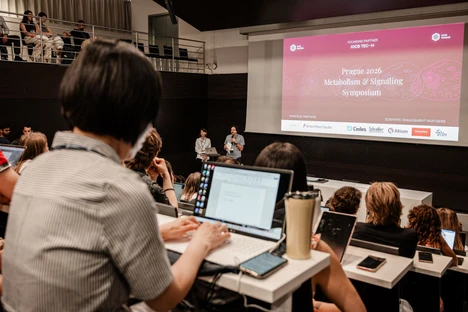
Prague Metabolism and Signaling Symposium brought together leading researchers in metabolism
Prague welcomed nearly 200 researchers from MIT, Harvard, Stanford, and other leading institutions for the Prague Metabolism and Signaling Symposium, focused on cellular metabolism, aging, and cancer.
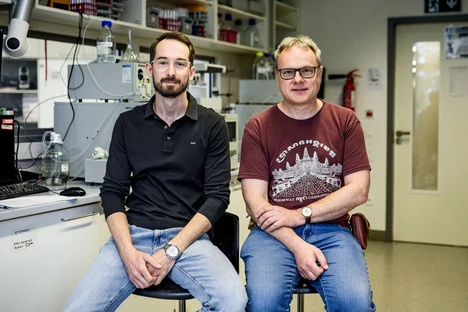
New technology streamlines the development of aptamers, synthetic alternatives to antibodies
Scientists at IOCB Prague developed a breakthrough technology that accelerates aptamer discovery, opening new opportunities for diagnostics, therapeutics, and wearable biosensors.
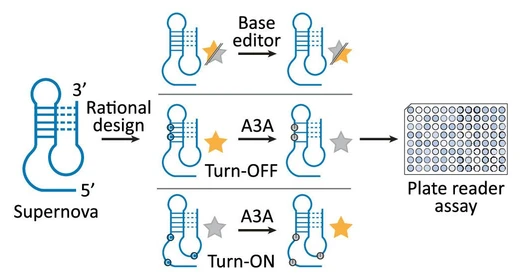
Deoxyribozymes, tools for precision sensing and machine learning-guided discoveries
Researchers at IOCB Prague developed deoxyribozyme-based sensors that detect DNA-editing enzymes faster and cheaper, while machine learning helps design new catalytic DNA tools.