
Inactive
Scalable Workflows for standardized proteomics
Join us to learn how scalable proteomics workflows are moving from promise to practice.
Solving Aluminum Challenges with Modern Characterization Tools
Learn how GD-OES, metallography, and hydrogen analysis combine to evaluate aluminum alloy quality, detect defects, and improve processing consistency in high-performance manufacturing.
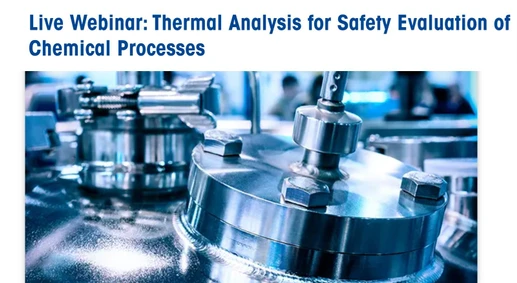
Thermal Analysis for Safety Evaluation of Chemical Processes
Join this webinar to explore how thermal analysis helps identify thermal hazards, improve process safety, and prevent runaway reactions in chemical production.
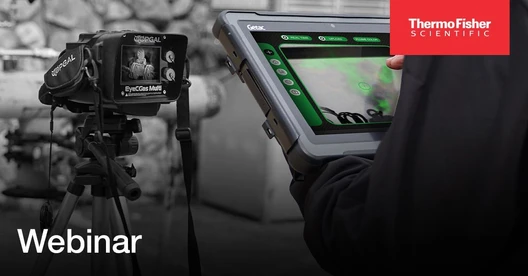
Seeing Gas Leaks in Real Time: How Handheld Optical Gas Imaging Improves LDAR
In this webinar, Thermo Fisher Scientific and Opgal experts will discuss the benefits of handheld OGI cameras for real-time visualization of gas leaks in oil & gas and industrial environments.

Master the challenging EQS values for endocrine active compounds
Learn how a sensitive LC-MS/MS supports the detection of estrogens in different water types.
Chromeleon Admin Console II: System management and automation
In this practical session, we’ll dive into more Administration Console capabilities that help you manage and standardize your setup at scale.

From Out-of-Spec Results to Audit-Ready: Controlling Titration in GxP Labs
Learn how to resolve out-of-spec titration results with practical KF and potentiometric troubleshooting strategies, and discover how compliant software controls ensure audit-ready, inspection-proof workflows.
Unlocking BioAFM Performance: From Sample Preparation to Advanced Accessories
Learn best practices for atomic force microscopy (AFM) in this webinar covering sample preparation, advanced imaging modes, environmental control, and AI-enabled features that expand AFM capabilities.

Navigating Regulatory Guidance for LNP and Liposomal Drug Characterization Using FFF-MALS
Learn how FFF-MALS enables comprehensive characterization of lipid nanoparticles and liposomes, supporting regulatory-relevant CQAs such as size, morphology, and encapsulation efficiency.

Why HPLC-CAD is ideal for quality assurance of APIs and excipients
Discover how HPLC-CAD enhances impurity profiling of APIs and excipients, enabling sensitive, near-universal detection beyond UV limits for robust pharmaceutical quality control workflows.
Related content
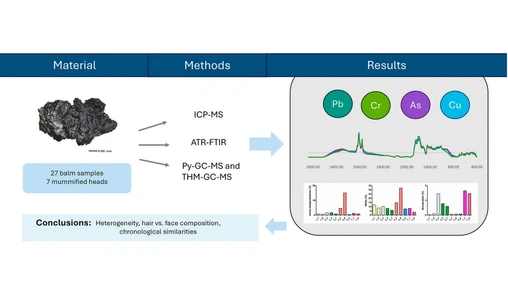
Combining elemental analysis and molecular techniques to characterize Ancient Egyptian mummification balms

Forced degradation analysis of recombinant adeno-associated virus serotype 8 based on analytical anion exchange chromatography coupled to orthogonal characterization
