
Inactive
Analytical Excellence Week 2026: Part 1- Understanding Pharmacopoeia and ACS Compliance
Discover the critical role of compliant reagents in your lab and learn how to ensure that your analyses meet regulatory standards.

Advancing and Characterizing Next-Gen Antibody Conjugates: Insights from BBB-Targeting Antibody Platforms
Discover next-generation antibody therapeutics, BBB-targeting platforms, and LC-QTOF workflows for advanced characterization of complex antibody-drug and oligonucleotide conjugates.
High-throughput activity based protein profiling - Systematic mapping of covalent drug-protein interactions on a proteome-wide scale
Part 3 of the Chemoproteomics Master Class highlights activity-based proteome profiling and covalent screening to accelerate target identification and drug discovery using scalable MS workflows.
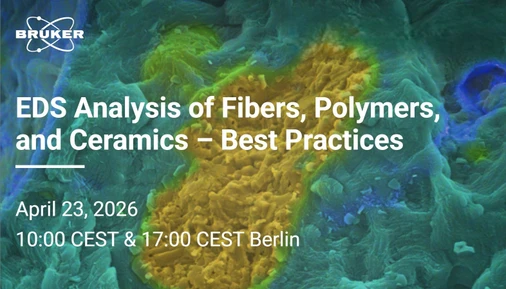
EDS Analysis of Fibers, Polymers, and Ceramics – Best Practices
Different EDS measurement approaches using conventional geometry and an annular approach (QUANTAX FlatQUAD) making the best choice for challenging analytical tasks.

Managing Process Performance in Stage 3 Process Validation: Regulatory Expectations for Continued Process Verification
Join this webinar to gain practical insights into regulatory expectations for CPV and strengthen your approach to maintaining process performance throughout the product lifecycle.

Insights from an IC specialist: Are you using the right eluent?
Join the IC Ask the Experts session to learn practical eluent management strategies, optimize ion chromatography workflows, and get answers to your real-world analytical challenges.
How to Determine Specific Heat Capacity by DSC
Explore six DSC techniques for measuring specific heat capacity and understand its importance in material performance, processing, and safety. Join the live webinar.

A Multi-Residue Approach - Pesticides, Pharmaceuticals, and Personal Care Products
Navigating Challenges and Opportunities for Environmental Testing Labs Under the Revised EU Water Framework Directive

Analysis of Glyphosate, Glyphosinate and AMPA in water without the need of derivatisation
Learn about required method conditions and instrumentation for Glyphosate, Glyphosinate and AMPA analysis in water without the need of derivatisation.

Enhancing Peptide and Oligonucleotide Analysis with Ultra Inert HPLC Technology
Learn how ultra-inert HPLC columns improve LC analysis of peptides and oligonucleotides by minimizing metal interactions and enhancing peak shape, sensitivity, and reproducibility.
Related content
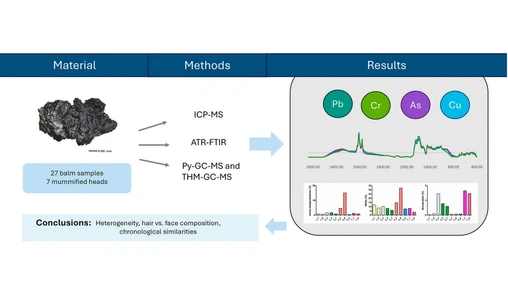
Combining elemental analysis and molecular techniques to characterize Ancient Egyptian mummification balms

Forced degradation analysis of recombinant adeno-associated virus serotype 8 based on analytical anion exchange chromatography coupled to orthogonal characterization
