Over-Drying of Silica-Based SPE Cartridges Can Lead to Poor Sample Recovery
GCMSLCMSArticle | Academy

Over-Drying of Silica-Based SPE Cartridges Can Lead to Poor Sample Recovery

Over-drying silica-based SPE cartridges during conditioning can reduce analyte retention and recovery. Learn best practices to avoid losses and ensure reproducible results.
Over-Drying of Silica-Based SPE Cartridges Can Lead to Poor Sample Recovery
Advantages of using immobilized stationary phases in chiral separations
LCMSArticle | Academy

Advantages of using immobilized stationary phases in chiral separations

Polysaccharide chiral stationary phases enable wide enantiomeric recognition, solvent flexibility, and robust resolution with coated or immobilised designs.
Advantages of using immobilized stationary phases in chiral separations
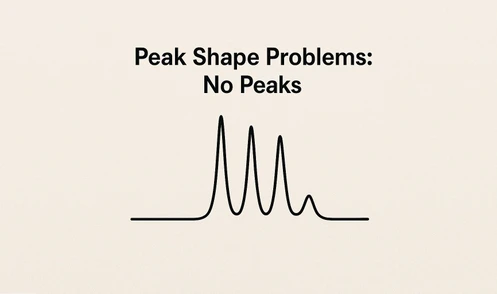
Peak Shape Problems: No Peaks
GCMSArticle | Academy

Peak Shape Problems: No Peaks

Missing peaks in GC runs? This technical tip reviews key causes like syringe, inlet, detector, or column issues, with practical solutions to restore results.
Peak Shape Problems: No Peaks
A Systematic Approach to Chiral Screening and Method Development
LCMSArticle | Academy

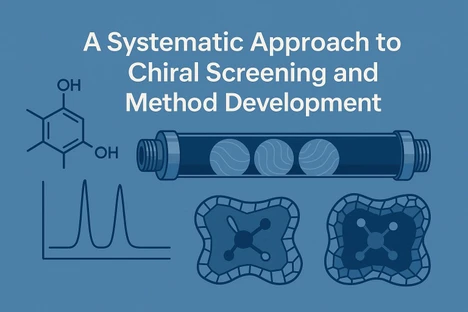
A Systematic Approach to Chiral Screening and Method Development

Chiral separations require careful screening of stationary phases. Learn how a systematic approach with polysaccharide-based columns streamlines method development.
A Systematic Approach to Chiral Screening and Method Development
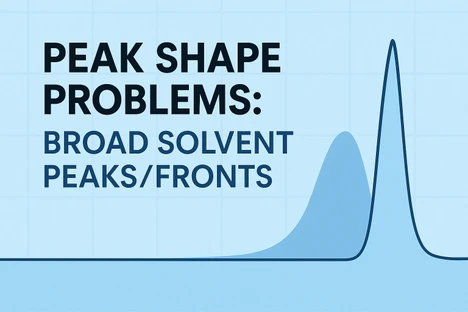
Peak Shape Problems: Broad Solvent Peaks/Fronts
GCMSArticle | Academy

Peak Shape Problems: Broad Solvent Peaks/Fronts

Learn how to troubleshoot and fix broad solvent peaks/fronts in GC analysis with practical tips from Phenomenex to improve peak shape and accuracy.
Peak Shape Problems: Broad Solvent Peaks/Fronts
Peptide Mapping Sample Preparation - Good Practices for Tryptic Digests
LCMSArticle | Academy

Peptide Mapping Sample Preparation - Good Practices for Tryptic Digests

Best practices for sample preparation in peptide mapping with trypsin, covering denaturation, alkylation, buffer exchange, and protease selection for complete sequence coverage.
Peptide Mapping Sample Preparation - Good Practices for Tryptic Digests
Peak Shape Problems: Tailing Peaks
GCMSArticle | Academy

Peak Shape Problems: Tailing Peaks

GC column issues often arise from improper installation. The table below helps you diagnose and resolve common problems using your Column Performance Test Mixture.
Peak Shape Problems: Tailing Peaks
Basic analytes and the benefits of modified silica supports in reversed-phase liquid chromatography
LCMSArticle | Academy

Basic analytes and the benefits of modified silica supports in reversed-phase liquid chromatography

C18 columns with residual positive charge improve peak shape of basic analytes at low pH by reducing silanol interactions and enabling 100% aqueous mobile phases.
Basic analytes and the benefits of modified silica supports in reversed-phase liquid chromatography
Sample Pre-treatment Procedures for Bioanalytical Samples
GCMSLCMSArticle | Academy

Sample Pre-treatment Procedures for Bioanalytical Samples

Bioanalytical samples often need pretreatment before SPE. Each matrix presents challenges like protein removal, red blood cell lysis, glucuronide hydrolysis, or tissue homogenization.
Sample Pre-treatment Procedures for Bioanalytical Samples
Overcoming Peak Tailing of Basic Analytes in Silica Type A Stationary Phases in RP
LCMSArticle | Academy

Overcoming Peak Tailing of Basic Analytes in Silica Type A Stationary Phases in RP

Struggling with peak tailing of basic compounds in RP-LC using type A silica columns? Discover how low-pH buffers and silanol suppressors can improve peak shape—plus why type B silica is a better choice.

Overcoming Peak Tailing of Basic Analytes in Silica Type A Stationary Phases in RP