Sample Pre-treatment Procedures for Bioanalytical Samples

We, 30.7.2025 | Original article from: Phenomenex
Bioanalytical samples often need pretreatment before SPE. Each matrix presents challenges like protein removal, red blood cell lysis, glucuronide hydrolysis, or tissue homogenization.
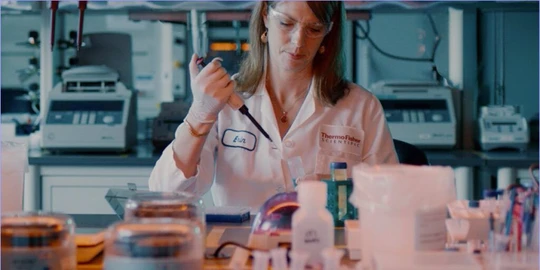
  • Photo: Phenomenex: Sample Pre-treatment Procedures for Bioanalytical Samples
  • Video: Phenomenex: Solid Phase Extraction (SPE) Tutorial

Due to their nature, bioanalytical samples often require a pretreatment step prior to further cleanup by solid phase extraction (SPE). Each sample matrix poses its own unique challenges such as the removal of proteins from plasma and serum, the disruption of red blood cells in whole blood, hydrolysis of glucuronidated analytes in urine, and homogenization of tissue samples. This technical note outlines common sample pre-treatment procedures for bioanalytical samples.

Plasma/Serum

Plasma and serum pre-treatments are analyte dependent. If the analyte of interest is an acid, 2 % phosphoric acid can be used (20 µL 85 % H3PO4 to 1 mL of plasma or serum) to disrupt the drug-protein interaction. If the analyte of interest is basic, 0.1 M sodium hydroxide can be used to disrupt the drug-protein interaction. After addition of acid or base, the sample should be vortexed for 20-30 seconds followed by centrifugation. The supernatant is now ready for further analysis.

Whole Blood

There are several pre-treatment strategies that can be followed for whole blood. If the target analyte is present in red blood cells, a hemolysis step is necessary

  • Hemolysis: To 0.2 mL whole blood (spiked with analytes and internal standard) in a 1.2 mL centrifuge tube, add 400 µL of 2 % zinc sulfate/80 % methanol. Vortex for 10-20 seconds followed by centrifugation at 14,000 rpm for 10 minutes. Collect the supernatant for further analysis.
    Preparation of zinc sulfate/methanol: Into a 100 mL volumetric flask add 20 mL water and 3.6 g ZnSO4, 7H2O. After the solution is clear and the salt crystals have dissolved, add 100 % methanol. Refrigerate the solution at 2-8 °C for 7 days.
  • Osmotic breakdown: To 1 mL of whole blood add internal standard and 4 mL of distilled water. Mix/vortex and let stand for 5 minutes. Centrifuge at 670 g for 10 minutes and discard the pellet. Adjust the pH of the supernatant accordingly with the addition of a buffer solution.
  • Sonication: Sonicate 1 mL whole blood for 15 minutes at room temperature. Add 3-6 mL of an appropriate pH buffer (such as potassium phosphate buffer). Mix/vortex. Let stand for 5 minutes. Centrifuge at 670 g for 15 minutes. Analyze supernatant.

Note: A comparison of the above pre-treatment techniques for whole blood was performed for acidic, basic, and neutral drugs. Recoveries were generally the highest when the whole blood sample was diluted with buffer and subjected to physical denaturing (sonication) rather than chemical means. In fact, the sonication process disrupts the cell membranes to the extent that no clogging was observed when the procedure listed above was followed.1

Saliva

No hydrolysis is required for oral fluids and the generic protocol used for plasma/serum pre-treatment may be followed.

Urine

Enzymatic hydrolysis is necessary in case of conjugated forms (sulfated or glucuronide form) of the analyte present. Enzymatic hydrolysis requires specific pH (pH 4-5) and temperature ranges. An acid or base hydrolysis can be performed as well, depending on the stability of the compound.

  1. Enzymatic hydrolysis: To 500 µL sample (spiked with analyte and internal standard) add 100 µL acidic buffer (see below) and 20 µL beta-glucuronidase. Vortex for 5-6 seconds. Incubate in a water bath at 63 °C for 30 minutes. Transfer sample to a 96-well collection plate or autosampler vial. Seal and centrifuge for 10 minutes at 2,000 rpm.
    Preparation of acidic buffer (1.0 M acetate buffer, pH 4.0): Dissolve 3.0 g of glacial acetic acid and 4.1g of sodium acetate in a 1 L volumetric flask.
  2. Base hydrolysis: To 1 mL urine (spiked with analyte and internal standard) add 100 µL 10 N KOH. Mix, vortex, and hydrolyze for 20 minutes at 60 ˚C. Cool and adjust pH to 3.5- 4.0 (by adding 200 µL glacial acetic acid).
  3. Acid hydrolysis: To 1 mL urine add 0.25 mL HCl in a screw capped test tube. Screw the tube top on loosely and heat in a boiling water bath for 60 minutes. Adjust to pH 7 (or as needed) with 1.0 N NaOH.

Tissue

Homogenize with organic or aqueous solvent depending upon analyte solubility. Settle, decant, centrifuge or filter supernatant. Perform direct Matrix Solid Phase Dispersion (MSPD) extraction on tissue.


Phenomenex
LinkedIn Logo
 

Related articles

Development of temperature-controlled batch and 3-column counter-current protein A system for improved therapeutic purification
Article | Scientific article

Development of temperature-controlled batch and 3-column counter-current protein A system for improved therapeutic purification

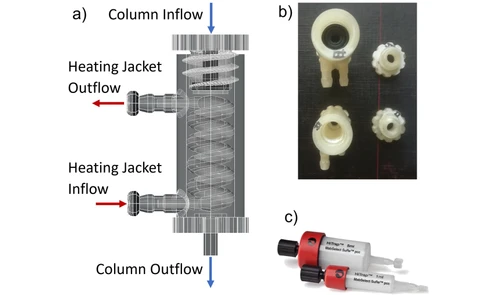
In the study in the Journal of Chromatography A, researchers investigated the impact of temperature on protein A chromatography for monoclonal antibody (mAb) purification.
Introduction of a small volume ethyl acetate based liquid-liquid extraction procedure for analysis of polycyclic aromatic hydrocarbons in wastewater by atmospheric pressure gas chromatography-mass spectrometry and evaluation of method greenness
Scientific article | Environment

Introduction of a small volume ethyl acetate based liquid-liquid extraction procedure for analysis of polycyclic aromatic hydrocarbons in wastewater by atmospheric pressure gas chromatography-mass spectrometry and evaluation of method greenness

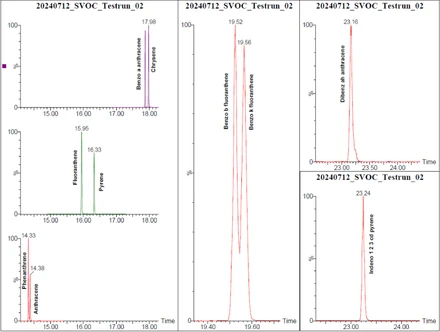
The goal of this study is to evaluate and validate a rapid, eco-friendly SVEA-LLE method with APGC-MS/MS for the sensitive and accurate analysis of 17 PAHs in water and wastewater.
Integrating NMR and multi-LC-MS-based untargeted metabolomics for comprehensive analysis of blood serum samples
Scientific article | Science and research

Integrating NMR and multi-LC-MS-based untargeted metabolomics for comprehensive analysis of blood serum samples

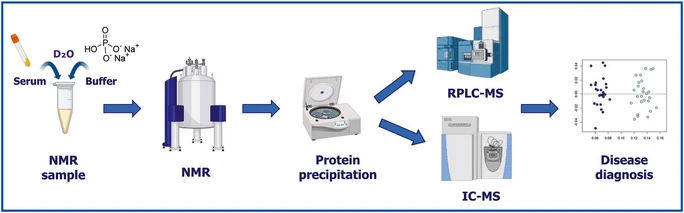
This study aims to create and validate a serum preparation method enabling combined untargeted NMR and multi-LC-MS analysis from one sample, enhancing efficiency and metabolome coverage.
Sample Preparation Strategies Demystified: Choosing the Right Fit for Your Toxicology Workflow
Article | Science and research

Sample Preparation Strategies Demystified: Choosing the Right Fit for Your Toxicology Workflow

Discover smarter LC-MS sample preparation strategies—dilute-and-shoot, PPT, LLE, SPE, automation & microsampling—for cleaner samples, robust toxicology results and efficient workflows.
 

Related articles

Development of temperature-controlled batch and 3-column counter-current protein A system for improved therapeutic purification
Article | Scientific article

Development of temperature-controlled batch and 3-column counter-current protein A system for improved therapeutic purification

In the study in the Journal of Chromatography A, researchers investigated the impact of temperature on protein A chromatography for monoclonal antibody (mAb) purification.
Introduction of a small volume ethyl acetate based liquid-liquid extraction procedure for analysis of polycyclic aromatic hydrocarbons in wastewater by atmospheric pressure gas chromatography-mass spectrometry and evaluation of method greenness
Scientific article | Environment

Introduction of a small volume ethyl acetate based liquid-liquid extraction procedure for analysis of polycyclic aromatic hydrocarbons in wastewater by atmospheric pressure gas chromatography-mass spectrometry and evaluation of method greenness

The goal of this study is to evaluate and validate a rapid, eco-friendly SVEA-LLE method with APGC-MS/MS for the sensitive and accurate analysis of 17 PAHs in water and wastewater.
Integrating NMR and multi-LC-MS-based untargeted metabolomics for comprehensive analysis of blood serum samples
Scientific article | Science and research

Integrating NMR and multi-LC-MS-based untargeted metabolomics for comprehensive analysis of blood serum samples

This study aims to create and validate a serum preparation method enabling combined untargeted NMR and multi-LC-MS analysis from one sample, enhancing efficiency and metabolome coverage.
Sample Preparation Strategies Demystified: Choosing the Right Fit for Your Toxicology Workflow
Article | Science and research

Sample Preparation Strategies Demystified: Choosing the Right Fit for Your Toxicology Workflow

Discover smarter LC-MS sample preparation strategies—dilute-and-shoot, PPT, LLE, SPE, automation & microsampling—for cleaner samples, robust toxicology results and efficient workflows.
 

Related articles

Development of temperature-controlled batch and 3-column counter-current protein A system for improved therapeutic purification
Article | Scientific article

Development of temperature-controlled batch and 3-column counter-current protein A system for improved therapeutic purification

In the study in the Journal of Chromatography A, researchers investigated the impact of temperature on protein A chromatography for monoclonal antibody (mAb) purification.
Introduction of a small volume ethyl acetate based liquid-liquid extraction procedure for analysis of polycyclic aromatic hydrocarbons in wastewater by atmospheric pressure gas chromatography-mass spectrometry and evaluation of method greenness
Scientific article | Environment

Introduction of a small volume ethyl acetate based liquid-liquid extraction procedure for analysis of polycyclic aromatic hydrocarbons in wastewater by atmospheric pressure gas chromatography-mass spectrometry and evaluation of method greenness

The goal of this study is to evaluate and validate a rapid, eco-friendly SVEA-LLE method with APGC-MS/MS for the sensitive and accurate analysis of 17 PAHs in water and wastewater.
Integrating NMR and multi-LC-MS-based untargeted metabolomics for comprehensive analysis of blood serum samples
Scientific article | Science and research

Integrating NMR and multi-LC-MS-based untargeted metabolomics for comprehensive analysis of blood serum samples

This study aims to create and validate a serum preparation method enabling combined untargeted NMR and multi-LC-MS analysis from one sample, enhancing efficiency and metabolome coverage.
Sample Preparation Strategies Demystified: Choosing the Right Fit for Your Toxicology Workflow
Article | Science and research

Sample Preparation Strategies Demystified: Choosing the Right Fit for Your Toxicology Workflow

Discover smarter LC-MS sample preparation strategies—dilute-and-shoot, PPT, LLE, SPE, automation & microsampling—for cleaner samples, robust toxicology results and efficient workflows.
 

Related articles

Development of temperature-controlled batch and 3-column counter-current protein A system for improved therapeutic purification
Article | Scientific article

Development of temperature-controlled batch and 3-column counter-current protein A system for improved therapeutic purification

In the study in the Journal of Chromatography A, researchers investigated the impact of temperature on protein A chromatography for monoclonal antibody (mAb) purification.
Introduction of a small volume ethyl acetate based liquid-liquid extraction procedure for analysis of polycyclic aromatic hydrocarbons in wastewater by atmospheric pressure gas chromatography-mass spectrometry and evaluation of method greenness
Scientific article | Environment

Introduction of a small volume ethyl acetate based liquid-liquid extraction procedure for analysis of polycyclic aromatic hydrocarbons in wastewater by atmospheric pressure gas chromatography-mass spectrometry and evaluation of method greenness

The goal of this study is to evaluate and validate a rapid, eco-friendly SVEA-LLE method with APGC-MS/MS for the sensitive and accurate analysis of 17 PAHs in water and wastewater.
Integrating NMR and multi-LC-MS-based untargeted metabolomics for comprehensive analysis of blood serum samples
Scientific article | Science and research

Integrating NMR and multi-LC-MS-based untargeted metabolomics for comprehensive analysis of blood serum samples

This study aims to create and validate a serum preparation method enabling combined untargeted NMR and multi-LC-MS analysis from one sample, enhancing efficiency and metabolome coverage.
Sample Preparation Strategies Demystified: Choosing the Right Fit for Your Toxicology Workflow
Article | Science and research

Sample Preparation Strategies Demystified: Choosing the Right Fit for Your Toxicology Workflow

Discover smarter LC-MS sample preparation strategies—dilute-and-shoot, PPT, LLE, SPE, automation & microsampling—for cleaner samples, robust toxicology results and efficient workflows.