
Inactive
How to choose the right LIMS solution
Understand the key considerations when selecting a LIMS to best meet your goals and elevate your lab.
Clarity 9.0 Webinar
Free webinar focusing on new Clarity 9.0 features, including the improved workflow for batches, the new integration algorithm, and much more.
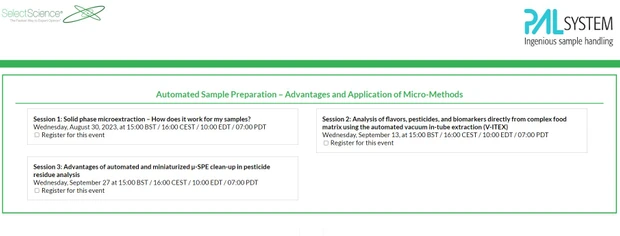
Analysis of flavors, pesticides, and biomarkers directly from complex food matrix using the automated vacuum in-tube extraction (V-ITEX)
Fully automated approach to vacuum in-tube extraction (V-ITEX).

How to decide between liquid or headspace sampling and recent improvements in headspace technology
Is headspace a better fit for your sample and analytes?
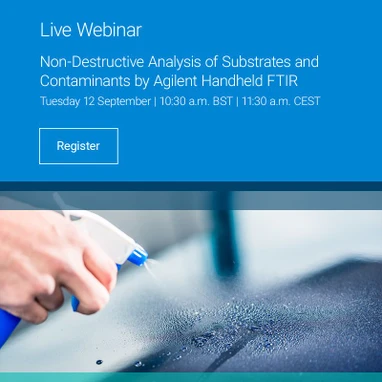
Non-Destructive Analysis of Substrates and Contaminants by Handheld FTIR
Cutting-edge technology of the Agilent 4300 handheld FTIR spectrometer, specially equipped with the specular reflectance interface.

USP 1220 & ICH Q14-Q2(R2) Part II – Validation & Verification
Validation by translating your written SOP into an Empower Method Validation Manager (MVM) scheme and Step 3 – On-going verification through the setup of Trend reports in Empower.
Reducing costs for environmental companies through advances in automation
Automated workflow to reduce solvent usage and costs, increase sample throughput, and improve data quality.

Change the Game Part I - POPs Analysis with Atmospheric Pressure GC (APGC)
Join our webinar to find out how APGC could improve your methods with: Sensitivity, Selectivity, Robustness.
Ask-the-expert on the analysis of microplastics with pyrolysis GC-MS
Questions on pyrolysis, from plastic samples, to micro and nano plastic, from qualitative results to quantitative results.
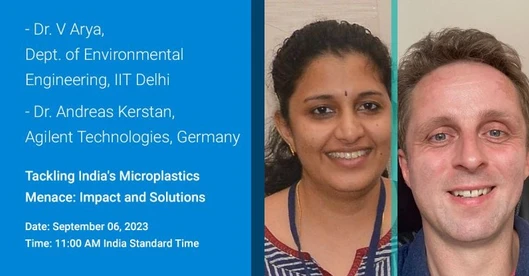
Tackling India's Microplastics Menace: Impact and Solutions
Microplastics and their Impact on Environment and Human Health.
Related content
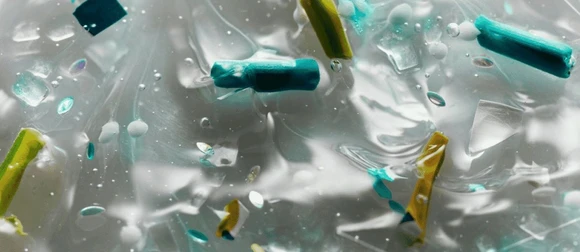
Surpassing the Limits of Traditional Microplastic Analysis Methods with Thermal Desorption and Pyrolysis GCxGC-TOFMS
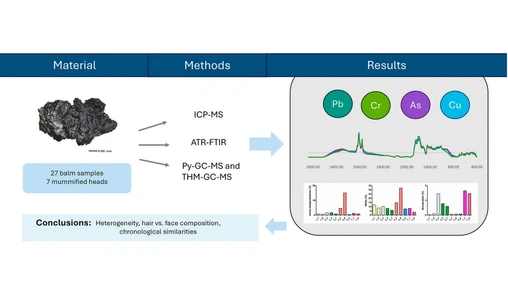
Combining elemental analysis and molecular techniques to characterize Ancient Egyptian mummification balms
