
Inactive
SciY Mestrelab Mnova & ZONTAL Join Forces for Next-Level Data Integration
ZONTAL and Mestrelab by SciY are leaders in their respective areas of data digitalisation and complex analytical data processing. In this talk we explore how the two products can be seamlessly integrated.
Using the latest innovative GC-MS/MS technology for trace contaminant analysis
In this webinar the focus will be on the latest innovative technology in triple quadrupole GC-MS/MS to maximize productivity while delivering unparalleled sensitivity.
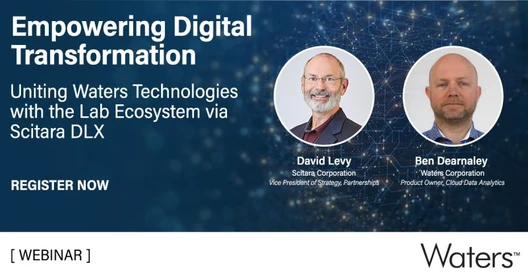
Empowering Digital Transformation: Uniting Waters Technologies with the Lab Ecosystem via Scitara DLX
We will navigate the landscape of connectivity, seamlessly integrating Waters technologies into the broader lab ecosystem through the innovative Scitara DLX platform.
NTS in Metabolomics: Insights from University of Liège
Nick Jones will regularly invite key leaders of the NTS space from all industries to present and discuss their groundbreaking work.
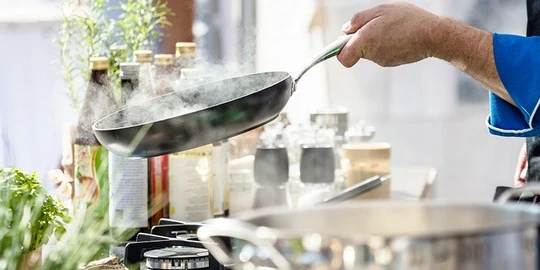
Emissions of PFAS from fluoropolymer-coated cookware: Analytical advances and findings
Discover how advanced thermal desorption (TD)–GC–MS can overcome the challenges faced with the analysis of PFAS, and the implications of these results for consumer safety.
Hydrogen Carrier Gas: Pesticides Analysis In Food Matrices
In this webinar we will discuss the analysis of pesticides in food matrices with the GC/MS/MS technique and the new Hydrolnert source, using hydrogen carrier gas.

Elevating the Standards of Residual Analysis with Triple Quadrupole GC/MS
This webinar focuses on technology advancements in triple quadrupole GC/MS (GC/TQ) to maximize performance and method ruggedness.
High Sensitivity Pesticide Analysis Using Hydrogen Carrier Gas
During this webinar we will present strategies for pesticide analysis with gas chromatography/triple quadrupole mass spectrometry (GC/TQ) using hydrogen as the carrier gas.
Coupling Thermal Analysis with Spectroscopy & Chrom to Gain Insights into Advanced Battery Materials & Battery Recycling
This webinar will demonstrate how coupling thermogravimetric analysis (TGA), infrared spectroscopy (FT-IR) and gas chromatography-mass spectrometry (GC/MS) can be used as part of a hyphenation configuration.
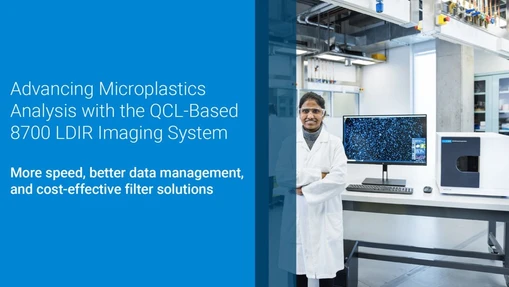
Advancing Microplastics Analysis with the QCL-Based 8700 LDIR Imaging System
The QCL-based 8700 LDIR has firmly established itself over the last few years as a fast, automated, and intuitive technology, which is also reflected in the recently published EU directive.
Related content
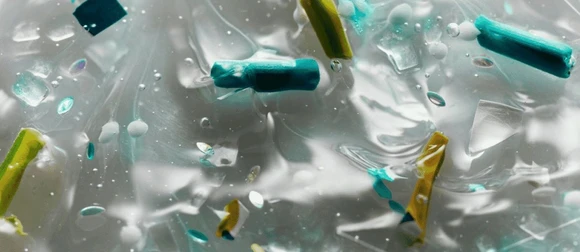
Surpassing the Limits of Traditional Microplastic Analysis Methods with Thermal Desorption and Pyrolysis GCxGC-TOFMS
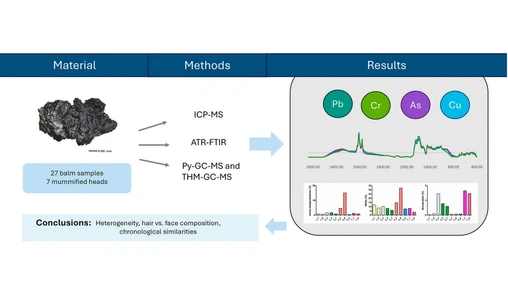
Combining elemental analysis and molecular techniques to characterize Ancient Egyptian mummification balms
