

PFAS in Water, Food & Packaging: Michelle Taylor on the "Forever Chemicals" Documentary Series
Michelle Taylor of Labcompare discusses how PFAS testing is evolving across water, food and packaging, from ultratrace LC-MS analysis and contamination control to AI and destruction technologies.

The Importance of Detecting Per- and Polyfluoroalkyl Substances (PFAS)
PFAS are highly persistent environmental contaminants. Explore their health risks, EPA methods, LC-MS/MS analysis, and emerging technologies for their detection and determination.

Why Biologics QC Is So Much Harder Than Small Molecule Pharma
Colette Quinn discusses how LC, high-resolution MS, light scattering, automation and data literacy are transforming QA/QC for increasingly complex biologics.

The Helium Crisis Is Here: Why Laboratories Should Switch to Hydrogen Now
The 2026 helium crisis is driving up prices and increasing supply risks. Discover why laboratories are considering switching to hydrogen carrier gas and installing an on-site generator.

Why Capillary LC Is the Future of LC-MS Sensitivity
Samuel Foster discusses capillary LC, from dramatic solvent savings and enhanced ESI-MS sensitivity to extra-column effects, method translation, radiopharmaceuticals, and the future of miniaturized HPLC.
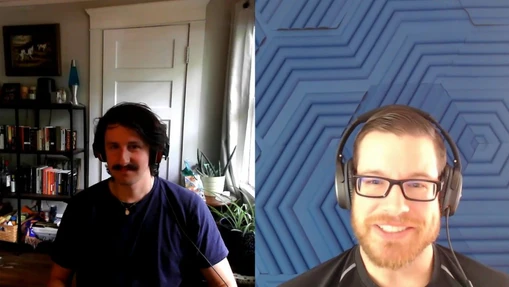
LC-MS Metabolomics and Next-Generation Ionization Technologies
Joseph Corstvet discusses LC–MS lipidomics for monitoring mesenchymal stromal cell senescence, the importance of tandem MS, and triboelectric ionization for more affordable and portable mass spectrometry.

The Chemistry of Human Decomposition: GC×GC, Body Farms, and Forensic Science with Dr. Darshil Patel
Darshil Patel discusses his path from dentistry to forensic chemistry and explains how GC×GC–TOF-MS reveals complex VOC profiles from human decomposition and supports human-remains detection.
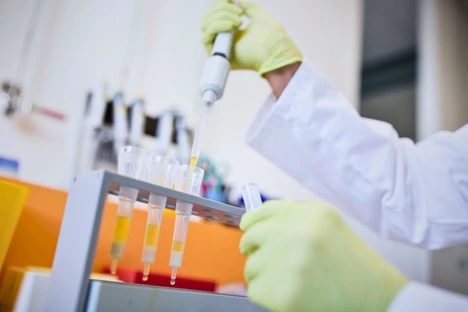
Why Solid Phase Extraction Is Having Its Moment
SPE has become a key technique in modern sample preparation. Explore how automation, PFAS analysis, LC-MS/MS, and emerging applications are driving its continued growth.

The Future of Ion Chromatography | PFAS Testing, EPA 1621 & AOF Explained
Jay Gandhi discusses ion chromatography, AOF and combustion IC for PFAS analysis, explaining how these techniques complement targeted LC-MS and help reveal the broader fluorine burden.

How Mass Spectrometry Actually Works: The Quadrupole Explained
Dr. Lee Polite explains the fundamentals of GC/MS through memorable analogies, making one of analytical chemistry's most powerful techniques easy to understand.