Fr, 4.9.2026 | Original article from: Concentrating on Chromatography
Michelle Taylor of Labcompare discusses how PFAS testing is evolving across water, food and packaging, from ultratrace LC-MS analysis and contamination control to AI and destruction technologies.PFAS in Water, Food & Packaging: Michelle Taylor on the "Forever Chemicals" Documentary Series
- Photo: Concentrating on Chromatography: PFAS in Water, Food & Packaging: Michelle Taylor on the "Forever Chemicals" Documentary Series
- Video: Concentrating on Chromatography: PFAS in Water, Food & Packaging: Michelle Taylor on the "Forever Chemicals" Documentary Series
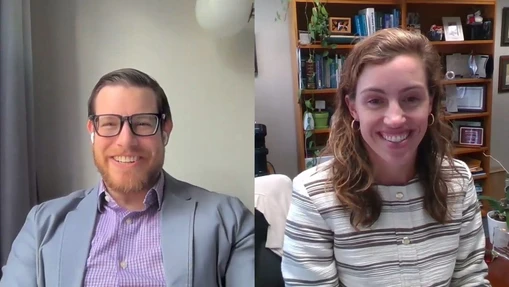
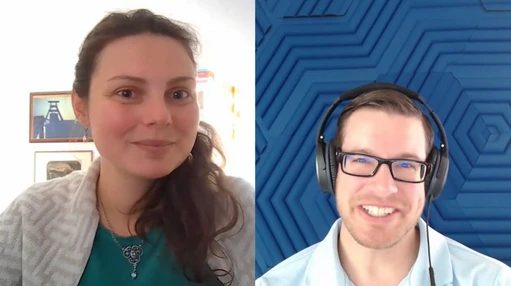
In this episode of ChromatographyTalk, Organomation General Manager David Oliva sits down with Michelle Taylor, Editor-in-Chief of LabCompare, to go behind the scenes of their groundbreaking two-part documentary series on PFAS (per- and polyfluoroalkyl substances).
The conversation kicks off with a startling revelation: many of the world’s leading PFAS experts have completely stopped eating seafood due to high contamination levels discovered during testing. From there, we dive deep into the technical and regulatory challenges facing today's analytical laboratories.
In this episode, we discuss:
- The Laboratory Throughput Crisis: Why labs are currently "overwhelmed with samples" and how tiered testing—using single quad instruments for screening before moving to triple quads—is helping to manage capacity without sacrificing sensitivity.
- The Battle Against Background Contamination: Why PTFE-free (PFAS-free) laboratory equipment is no longer optional when trying to detect "forever chemicals" at the parts-per-trillion and parts-per-quadrillion levels.
- Complex Matrices (Seafood & Packaging): The technical hurdles of analyzing high-lipid samples like fish and the rising demand for migration testing as states like Rhode Island begin to phase out PFAS in food packaging.
- Global Regulatory Shifts: A look at the "dual compliance model" required for labs supporting international exporters, especially with the European Union’s stricter enforcement compared to the U.S. monitoring approach.
- The "Grand Challenge" of Unknowns: How EPA Method 1621 (Total Organic Fluorine) is helping labs close the mass balance gap and why the next generation of bench chemists must embrace *AI and data science* to manage the massive datasets generated by high-resolution mass spectrometry.
- PFAS Destruction vs. Remediation: The promising (and problematic) methods for breaking the carbon-fluorine bond, and why incineration may inadvertently be spreading shorter-chain PFAS into the air.
Whether you are a lab manager looking to future-proof your workflow or a chemist navigating the ever-evolving landscape of EPA Method 1633, this episode provides essential insights into the most pressing environmental crisis of our time.
Video Transcription
Michelle Taylor: PFAS Testing Is Becoming a Much Bigger Analytical Challenge
PFAS analysis has rapidly evolved from a specialized environmental testing problem into a much broader challenge involving drinking water, food, packaging, laboratory contamination, international regulation, data analysis, and even destruction technologies. In an interview with Michelle Taylor, Editor-in-Chief of Labcompare, the discussion explored what laboratories are learning from the latest PFAS research—and why the analytical demands are likely to continue growing.
Taylor leads editorial content for Labcompare, an online resource covering analytical laboratory instrumentation, products, and scientific developments. Among the projects she considers particularly important are two long-form documentaries produced by Labcompare examining per- and polyfluoroalkyl substances (PFAS), first through drinking water and subsequently through food.
The documentaries brought together subject-matter experts working across PFAS analysis and exposed some of the practical realities laboratories now face: rapidly changing regulations, extremely low detection limits, complex matrices, contamination risks, and sample volumes that can overwhelm laboratory capacity.
From drinking water to seafood
One of the most memorable findings for Taylor came during production of the second documentary, which focused on PFAS in food.
Several experts interviewed for the project told her they had stopped eating seafood, in some cases many years earlier, because of concerns surrounding contamination. For Taylor, the consistency and immediacy of those responses illustrated how closely analytical research can intersect with everyday decisions.
Seafood also demonstrates why PFAS testing can become analytically difficult.
Fish and other high-lipid samples require effective extraction to release the analytes, followed by rigorous cleanup to remove fats. According to the experts Taylor interviewed, the cleanup step is particularly critical because residual lipids can damage LC columns and create severe matrix interferences.
Laboratories are therefore using approaches such as enhanced matrix removal and carbon- or silica-based sorbents to reduce the lipid content of extracts before instrumental analysis. The goal is not simply obtaining sufficient recovery, but producing an extract clean enough to maintain analytical performance and laboratory throughput.
How laboratories are handling the PFAS sample burden
The analytical sensitivity now required for PFAS testing presents another challenge: laboratories may need to measure compounds at parts-per-trillion levels while processing growing numbers of samples.
Automation has therefore become increasingly important, particularly during sample preparation, where repetitive manual procedures can otherwise create a major bottleneck.
Taylor also described a tiered analytical strategy being used by some laboratories. A less demanding measurement can first be used for screening, while samples generating a positive result are subsequently transferred to a more sensitive platform, such as triple-quadrupole mass spectrometry, for confirmation and quantitation.
This type of workflow can help laboratories concentrate their highest-performance instrumentation on the samples that actually require it rather than applying the most intensive analysis to every incoming sample.
The broader principle is likely to become increasingly important as PFAS testing expands: laboratories must find ways to increase throughput without sacrificing the sensitivity demanded by regulatory methods.
When the laboratory itself becomes a source of PFAS
At trace concentrations, contamination introduced during sample preparation or measurement can become comparable to the concentration being determined.
This makes the materials used throughout the analytical workflow particularly important.
Taylor emphasized that PFAS laboratories must maintain continuous awareness of potential contamination from solvents, water, tubing, containers, and other laboratory components. Equipment containing fluoropolymers such as PTFE may be problematic in certain PFAS workflows because background contamination can contribute to false positives or elevated blanks.
As detection limits move lower, dedicated PFAS-compatible or fluoropolymer-free laboratory equipment becomes increasingly valuable.
Taylor described manufacturers offering clearly identified PFAS-free configurations as an important response to this problem. Rather than forcing laboratories to investigate the material composition of each component individually, dedicated configurations can simplify method implementation and reduce uncertainty about potential background sources.
For laboratories already dealing with demanding workflows and large sample loads, eliminating potential contamination before it occurs can save considerable troubleshooting time.
Food packaging could drive the next major wave of testing
PFAS concerns are not limited to the food itself.
The interview also examined food-contact materials, including takeout containers and other packaging from which PFAS may migrate into food. State-level restrictions in the United States are already beginning to affect the materials manufacturers can use.
For contract laboratories, this creates the possibility of another significant increase in demand for compliance and migration testing.
Taylor’s recommendation is straightforward: laboratories should follow proposed regulations before they become final.
Waiting until a new requirement takes effect can leave a laboratory simultaneously trying to acquire instrumentation, establish methods, train staff, and respond to customer demand. Monitoring regulatory agencies, scientific meetings, and industry discussions earlier gives laboratories time to prepare analytical capabilities before the testing requirement becomes urgent.
She expects PFAS restrictions in food packaging to continue developing first through a patchwork of individual state regulations. Once a sufficient number of states adopt restrictions, however, the economics may increasingly encourage suppliers to move toward PFAS-free materials regardless of whether every jurisdiction requires them.
A national standard could eventually follow that transition.
One sample, two regulatory environments
International food exporters face another complication: PFAS requirements are not necessarily the same between the United States and European Union.
Taylor noted that laboratories serving both markets may effectively need to operate under a dual-compliance model.
In the interview, she highlighted EU requirements targeting specific PFAS—including PFOS, PFOA, PFNA, and PFHxS—at very low concentrations in certain foods, while the U.S. approach has historically involved a different combination of monitoring programs, evolving compound lists, and import-related requirements.
For laboratories supporting international customers, this means more than simply selecting a different reporting limit.
Different markets may require different target lists, methods, documentation, auditing, and compliance procedures. Laboratories therefore need analytical platforms capable of ultratrace measurements while also maintaining the operational flexibility to support multiple regulatory frameworks.
That additional complexity also carries a practical cost: performing different protocols for different jurisdictions means more staff time, additional workflow management, and potentially greater instrument demand.
Total fluorine screening can help laboratories decide what to analyze next
Targeted LC-MS/MS methods are highly sensitive, but they only measure compounds included in the analytical panel.
This creates an important question: what about fluorinated substances that are present but are not included in the targeted method?
The interview discussed EPA Method 1621, which uses a broader fluorine-based screening approach. Taylor described this type of measurement as useful for helping laboratories assess the gap between compounds captured by targeted LC-MS/MS methods and the broader amount of organofluorine present in a sample.
Such screening can also become part of a tiered workflow.
For applications such as food packaging, laboratories could initially use a broader fluorine measurement to determine whether a sample warrants further investigation. Positive or suspicious samples could then move to more selective and sensitive targeted analysis for identification and quantitation.
Non-targeted high-resolution mass spectrometry can add another layer by revealing compounds outside conventional target lists.
Together, these approaches create a funnel from broad screening toward increasingly detailed characterization rather than attempting the most comprehensive analysis on every sample from the outset.
PFAS analysis is becoming a data problem too
High-resolution mass spectrometry can generate enormous datasets containing signals from large numbers of known and unknown compounds.
As a result, Taylor believes the role of the analytical chemist is changing.
Strong laboratory skills remain essential, but scientists increasingly need data literacy as well. Understanding complex datasets, working with advanced software, and interacting effectively with artificial intelligence and machine-learning tools are becoming important parts of modern analytical work.
Taylor does not see this change primarily as replacing scientific expertise.
Instead, she compares it with earlier laboratory automation: repetitive or technically demanding tasks can increasingly be handled by software, allowing scientists to spend more time interpreting results and making decisions.
AI may also make sophisticated analytical information more accessible. A less experienced mass spectrometry user could potentially receive explanations of complex data through software capable of presenting results in natural language, reducing dependence on a single specialist being immediately available.
There is another potential advantage beyond speed.
Machine-learning systems can recognize patterns across large datasets that may be difficult or impossible for an individual scientist to detect manually. As analytical datasets become larger and multidimensional, that pattern-recognition capability could become increasingly valuable.
Finding PFAS is only the first half of the problem
For years, much of the PFAS discussion has focused on answering two questions:
- Are PFAS present, and how much is there?
The next challenge is considerably harder: how do we actually remove or destroy them?
Taylor described this as an expanding research field that will increasingly involve analytical laboratories.
The strength of the carbon-fluorine bond makes PFAS destruction difficult. Some treatment approaches seek to break this bond and achieve complete defluorination, but incomplete destruction can create another analytical problem.
For example, thermal treatment may transform longer-chain PFAS into shorter-chain fluorinated compounds rather than eliminating them completely. Those products may then enter another environmental compartment, including atmospheric emissions.
Consequently, laboratories studying PFAS destruction must do more than measure disappearance of the original compound. They also need to determine whether fluorinated transformation products or other byproducts remain.
Analytical chemistry therefore has two roles: monitoring PFAS contamination and demonstrating whether remediation technologies truly destroy the substances they are intended to remove.
The PFAS problem is expanding beyond water and food
The first two Labcompare documentaries focused primarily on water and food, two matrices already receiving substantial regulatory and public attention.
But Taylor does not expect the story to end there.
If Labcompare produces another PFAS documentary, she sees PFAS in air as a likely subject. Discussions with experts during earlier filming repeatedly raised atmospheric contamination, including both direct environmental occurrence and emissions potentially associated with treatment or destruction processes.
The progression illustrates how quickly the PFAS field is expanding.
Drinking water regulation accelerated analytical development. Food testing introduced more difficult matrices and new exposure pathways. Packaging is creating another compliance challenge. Environmental remediation raises questions about destruction products. Atmospheric monitoring could become another significant frontier.
For laboratories already working with chromatography and mass spectrometry, Taylor’s message is essentially to be prepared—even organizations that do not currently consider themselves “PFAS laboratories” may eventually become involved.
An analytical field that is still changing rapidly
Perhaps the strongest theme running through the interview is that PFAS analysis has no fixed endpoint yet.
Methods continue to evolve. Regulations change. Target compound lists expand. Instrument sensitivity improves. Laboratories discover new sources of background contamination, while researchers identify additional exposure pathways and investigate new destruction technologies.
Taylor compares the situation to earlier periods of rapid analytical development, such as the evolution of forensic DNA analysis: each technological advance reveals more information, which in turn creates new questions and new analytical requirements.
That makes preparation particularly important.
Laboratories cannot predict every future regulation, but they can follow proposed requirements, develop flexible workflows, invest in contamination control and data capabilities, and understand how their existing chromatography and mass spectrometry expertise could be applied to emerging PFAS challenges.
The analytical problem is no longer simply detecting a group of “forever chemicals.”
It is becoming a much larger question of how we identify them, quantify them, prevent contamination during analysis, understand their movement through food and the environment, comply with evolving regulations, and ultimately prove that they have actually been destroyed.
This text has been automatically transcribed from a video presentation using AI technology. It may contain inaccuracies and is not guaranteed to be 100% correct.
Concentrating on Chromatography Podcast
Dive into the frontiers of chromatography, mass spectrometry, and sample preparation with host David Oliva. Each episode features candid conversations with leading researchers, industry innovators, and passionate scientists who are shaping the future of analytical chemistry. From decoding PFAS detection challenges to exploring the latest in AI-assisted liquid chromatography, this show uncovers practical workflows, sustainability breakthroughs, and the real-world impact of separation science. Whether you’re a chromatographer, lab professional, or researcher you'll discover inspiring content!
You can find Concentrating on Chromatography Podcast in podcast apps:
and on YouTube channel