Fr, 28.8.2026 | Original article from: Concentrating on Chromatography
Colette Quinn discusses how LC, high-resolution MS, light scattering, automation and data literacy are transforming QA/QC for increasingly complex biologics.Why Biologics QC Is So Much Harder Than Small Molecule Pharma
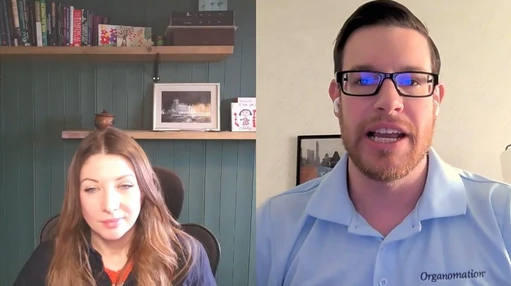
- Photo: Concentrating on Chromatography: Why Biologics QC Is So Much Harder Than Small Molecule Pharma
- Video: Concentrating on Chromatography: Why Biologics QC Is So Much Harder Than Small Molecule Pharma
In this episode of @ChromatographyTalk David speaks with Colette Quinn, Senior Director within the Biologics Business at Waters Corporation, about the rapidly evolving world of pharmaceutical and biopharma QA/QC.
As biologics become more complex, QA/QC labs are being pushed beyond traditional pass/fail testing toward deeper molecular characterization, advanced analytics, and data-driven decision making. Colette explains why “the product is the process” in biologics manufacturing, how chromatography and mass spectrometry are transforming QC workflows, and why orthogonal analytical techniques are becoming increasingly important for understanding critical quality attributes (CQAs).
The conversation explores:
- Why biologics QC differs fundamentally from small molecule pharma
- The growing role of LC, HRMS, MALS, CE, and 2D-LC in QA/QC
- Challenges surrounding aggregation, co-elution, heterogeneity, and higher-order structure
- How automation, software, and machine learning may reshape future QC labs
- The importance of data integrity and standardized workflows
- Why advanced techniques like MALS and mass spectrometry are moving downstream into QC environments
- How QC teams can think scientifically about adopting new analytical technologies
Colette also shares insights on building high-performing analytical teams, the skills needed by the next generation of QC scientists, and where she believes the future of real-time release testing and biologics characterization is headed.
Whether you work in chromatography, mass spectrometry, pharmaceutical analysis, biologics development, or analytical chemistry, this episode offers a detailed look at how modern QA/QC is evolving alongside increasingly sophisticated therapeutics.
Video Transcription
As biologic medicines become increasingly complex, quality control laboratories are being asked to deliver much more than a simple pass-or-fail result. According to Colette Quinn, Senior Director at Waters Corporation, modern biopharmaceutical QC is moving toward deeper molecular characterization, greater use of orthogonal analytical techniques, standardized workflows, automation, and more sophisticated data analysis.
Colette Quinn has spent around 16 years at Waters Corporation, building a career that has taken her from application science through mergers and acquisitions to a senior leadership role focused on technologies including light scattering and particle analysis.
Her path began after completing a PhD at Dartmouth College. Knowing that an academic career was not the right fit, she was attracted to application science because it offered exposure to a wide variety of analytical challenges, technologies, laboratories, and industries.
Over time, her focus shifted from using existing technologies to asking what analytical information scientists would need next. Could software or hardware be modified to answer a new scientific question? And if the required expertise was not available internally, could Waters acquire the necessary technology? That interest eventually brought her into mergers and acquisitions and, later, into her current role.
Despite moving into the business side of analytical instrumentation, Quinn says science remains central to her work. Understanding where analytical science is heading is essential for deciding which technologies should be developed next.
Why QA/QC Is Much More Than a Checkbox
Quinn’s interest in pharmaceutical and biopharmaceutical QA/QC is closely connected to what she describes as the certainty provided by analytical science.
Quality control represents one of the final stages before a therapy reaches the patient. Analytical testing therefore provides the evidence needed to confirm that a product meets its required specifications and is suitable for release.
At the same time, Quinn challenges the perception that QC laboratories simply work through predetermined checklists.
QC scientists are the people performing the measurements and interpreting what those measurements reveal about a molecule, product, or analytical system. Their work requires technical knowledge and an understanding of what the data actually mean rather than simply recording whether a test passed or failed.
That responsibility becomes even more important as pharmaceutical development shifts from relatively well-defined small molecules toward increasingly complex biologics.
From Small Molecules to Managing Biological Variability
For traditional small-molecule pharmaceuticals, analytical chemists often know precisely what molecular structure they expect to find. Structure, chirality, identity, and other properties can be characterized using established analytical methods with a high degree of certainty.
Biologics present a very different situation.
These molecules are inherently heterogeneous and dynamic. Individual molecules within the same population may differ slightly, for example in glycosylation or aggregation state. The analytical challenge therefore becomes not only determining whether a molecule is present, but understanding the distribution of molecular species within the sample.
Historically, this complexity has contributed to the concept that for biologics, “the product is the process.” Maintaining defined manufacturing conditions—temperature, bioreactor stirring, nutrient addition, and other parameters—helps ensure that one batch is comparable with another.
Quinn sees an opportunity for analytical technology to push this concept further.
Modern instrumentation can provide increasingly detailed information about glycosylation, molecular weight, aggregation, higher-order structure, and other molecular characteristics. This opens the possibility of moving closer toward a situation in which “the product is the product”—where QC laboratories can characterize the biologic itself with much greater confidence rather than relying primarily on consistency of the manufacturing process.
LC Remains the Foundation of Biopharmaceutical QC
Liquid chromatography remains one of the most important analytical tools in biologics characterization.
Quinn points to its ability to address a large proportion of critical quality attributes using established separation modes including:
- size-exclusion chromatography (SEC)
- ion-exchange chromatography
- reversed-phase LC
- affinity chromatography
- two-dimensional liquid chromatography (2D-LC)
SEC can reveal aggregation and molecular-size distributions, while ion-exchange methods provide information about charge variants. Reversed-phase LC is commonly coupled with mass spectrometry for more detailed molecular characterization.
The increasing complexity of new biologics is also creating greater interest in 2D-LC.
Bispecific and multispecific antibodies, antibody-drug conjugates (ADCs), and other conjugated molecules can exhibit several different physicochemical characteristics at the same time. Combining complementary chromatographic dimensions can therefore deliver information that may be difficult to obtain from a single separation.
For example, affinity chromatography can first isolate molecules according to a specific binding interaction before a second separation, such as SEC, provides another dimension of characterization.
When Chromatography Raises a Flag
Chromatographic data can reveal that something unusual is present without necessarily identifying exactly what it is.
A shoulder on a chromatographic peak, increased peak width, or an unexpected retention profile may indicate greater sample heterogeneity, structural changes, aggregation, or the presence of another species.
But interpretation is not always straightforward.
Two molecules with similar hydrodynamic properties may co-elute during SEC even if their molecular weights are different. Conversely, contaminants can sometimes appear beneath what otherwise looks like a normal chromatographic peak.
This is where orthogonal detection becomes particularly valuable.
Quinn describes chromatography as a technique that can effectively raise the flag, while additional detectors or analytical technologies help determine what is actually responsible for the unusual signal.
Mass Spectrometry and Light Scattering Add Molecular Detail
High-resolution mass spectrometry is becoming increasingly important as biologic therapeutics grow more complicated.
Simpler quadrupole instruments may be sufficient for confirmation based on peptide-level measurements, but more complex molecules increasingly require information about intact species, post-translational modifications, conjugates, and related molecular variants.
High-resolution MS therefore provides important information on identity and molecular composition, particularly when coupled to reversed-phase LC.
Another increasingly important technique is multi-angle light scattering (MALS).
Light scattering provides an orthogonal measurement of molecular weight and can help distinguish different high-molecular-weight species. This becomes especially useful when an SEC chromatogram shows material eluting before the principal monomer peak.
Simply reporting this material as “high-molecular-weight species” may not provide enough information. QC scientists may need to determine whether they are looking at oligomers, large aggregates, or another molecular population.
MALS can provide molecular-weight information across the chromatographic peak and help answer that question.
The technique is becoming particularly relevant for larger and more heterogeneous structures such as lipid nanoparticles, virus-like particles, and conjugated vaccines.
Other analytical approaches—including capillary electrophoresis, dynamic light scattering, membrane imaging, and microfluidic imaging—can add further information depending on the critical quality attribute being investigated.
Automation Is About More Than Moving Samples
Automation is another major trend in modern QC laboratories.
Although QC laboratories may process fewer samples than discovery laboratories, automation can reduce variability introduced during manual procedures such as pipetting, dilution, and addition of reagents.
Quinn expects automated laboratories and real-time release approaches to drive greater adoption of these technologies.
But she argues that some of the largest opportunities lie on the software side.
Modern analytical software can already automate data processing, perform system suitability checks, and flag results that fall outside predefined specifications. The next step is bringing together information from multiple analytical platforms.
Biologics are often characterized using several orthogonal techniques, each generating data in separate software environments. Combining these datasets automatically could provide a more comprehensive picture of the molecule and simplify the interpretation of complex QC results.
Environmental information may also become part of this process. Quinn notes that variations in laboratory conditions can affect analytical measurements even when an instrument itself passes all required system checks.
Integrating analytical, instrument, and environmental data could therefore improve understanding of measurement variability.
Methods Should Be Designed for QC From the Beginning
Transferring an analytical method from development into QC can be a significant challenge.
A method that works well in an R&D environment is not automatically suitable for routine quality control. QC methods must be robust, reproducible, transferable, and capable of operating reliably under routine conditions.
Quinn therefore emphasizes Quality by Design (QbD) and method lifecycle management.
Instead of developing a method first and considering QC requirements later, scientists should challenge and stress methods early in development. They should identify variables that could eventually affect pass/fail decisions and understand how robust the analytical procedure is before it reaches the QC laboratory.
Using software and workflows that can operate consistently across both development and QC can also reduce variability during method transfer.
Three Priorities for a Modern QC Laboratory
Asked what she would prioritize if running a QC laboratory today, Quinn highlights three areas.
The first is data integrity. There must be no uncertainty about whether analytical data have been altered or improperly handled.
The second is reproducibility—between instruments, analysts, laboratories, and manufacturing sites.
The third is education and training.
QC scientists need to understand not only how to operate instrumentation, but also the meaning of the data they generate. A chromatographic shoulder, for example, should stimulate a scientific question rather than simply become another box on a specification sheet.
For Quinn, curiosity is therefore an important characteristic of successful QC teams.
High-performing laboratories give scientists enough freedom to investigate unexpected observations, test new approaches, and occasionally discover that an idea does not work. Failure during experimentation can still generate useful knowledge and ultimately lead to more efficient workflows.
Standardized Workflows Deliver Major Value
When asked which investment can provide the greatest return in QC, Quinn’s answer is straightforward: standardized workflows.
Standardization saves time and reduces variability across analytical processes. For regulated laboratories working across multiple instruments, analysts, and locations, consistency can have enormous practical value.
Importantly, however, standardization should not eliminate scientific thinking.
Quinn argues that one of the biggest misconceptions about QA/QC is that it is fundamentally reactive. In reality, high-performing QC laboratories are highly proactive.
Long before a sample arrives, scientists must consider potential sources of variability, prepare analytical systems, establish specifications, validate procedures, and ensure that everything required for a reliable decision is already in place.
Data Literacy Will Be Essential for the Next Generation
For early-career analytical scientists, strong fundamentals remain essential.
Understanding chromatography, analytical instrumentation, statistics, and the principles behind individual techniques provides the foundation for working successfully in QC.
But Quinn believes data literacy is becoming increasingly important.
As laboratories adopt automation and combine data from LC, mass spectrometry, light scattering, and other analytical technologies, scientists will need to interpret increasingly complex datasets and determine when an analytical result should raise a warning.
The next generation of QC scientists will therefore need to be comfortable bringing together information from several analytical platforms to reach a scientifically justified conclusion.
Start With the Decision, Not the Instrument
For laboratories considering advanced analytical technology, Quinn recommends starting with a scientific question rather than a particular instrument.
The first question should be: What decision is difficult to make confidently with the data available today?
If an existing method already provides clear, reproducible information, adding a more sophisticated technology may offer limited practical benefit.
But if scientists are relying on assumptions—for example, assuming the identity of material beneath a chromatographic peak—an orthogonal technique such as high-resolution mass spectrometry or light scattering can reduce uncertainty and increase confidence in the final decision.
This is also why Quinn challenges the idea that advanced technologies belong only in development laboratories.
Techniques such as mass spectrometry or light scattering are frequently used during development precisely because they provide critical molecular information. If those insights remain important when the product reaches QC, there is a strong scientific argument for bringing the analytical capability downstream as well.
Toward Real-Time Quality Decisions
Looking five years ahead, Quinn expects QC to demand increasingly rapid and information-rich analytical methods.
Real-time evaluation and ultimately real-time release will require laboratories to process large quantities of analytical information quickly. At the same time, increasingly complex therapeutic formats—including bispecific and multispecific molecules—will require multiple complementary analytical technologies.
Machine learning and centralized analytical data could become important tools for bringing these individual measurements together.
Instead of examining chromatography, mass spectrometry, light scattering, and other datasets independently, future QC systems could potentially combine them into a unified view of the product and support faster, better-informed quality decisions.
For Quinn, however, technology alone is not the defining factor.
The foundation remains the same: reliable analytical science, data integrity, reproducibility, standardized workflows, and scientists who remain curious about what their data are actually telling them.
This text has been automatically transcribed from a video presentation using AI technology. It may contain inaccuracies and is not guaranteed to be 100% correct.
Concentrating on Chromatography Podcast
Dive into the frontiers of chromatography, mass spectrometry, and sample preparation with host David Oliva. Each episode features candid conversations with leading researchers, industry innovators, and passionate scientists who are shaping the future of analytical chemistry. From decoding PFAS detection challenges to exploring the latest in AI-assisted liquid chromatography, this show uncovers practical workflows, sustainability breakthroughs, and the real-world impact of separation science. Whether you’re a chromatographer, lab professional, or researcher you'll discover inspiring content!
You can find Concentrating on Chromatography Podcast in podcast apps:
and on YouTube channel