
Why Biologics QC Is So Much Harder Than Small Molecule Pharma
LCMSArticle | Interview

Why Biologics QC Is So Much Harder Than Small Molecule Pharma

Colette Quinn discusses how LC, high-resolution MS, light scattering, automation and data literacy are transforming QA/QC for increasingly complex biologics.
Why Biologics QC Is So Much Harder Than Small Molecule Pharma
A Liquid–Liquid Extraction Method for Measuring Ultrashort PFCAs and Longer-Chain PFAS in Water
LCMSScientific article | Science and research

A Liquid–Liquid Extraction Method for Measuring Ultrashort PFCAs and Longer-Chain PFAS in Water

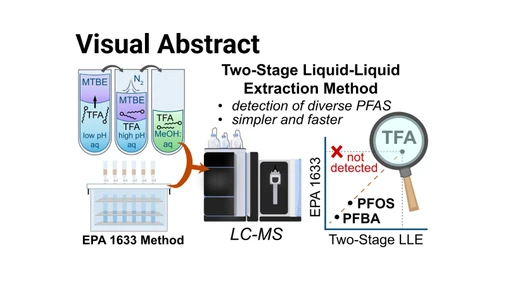
A two-stage liquid–liquid extraction method enables sensitive, reproducible analysis of ultrashort PFCAs such as TFA and longer-chain PFAS in water.
A Liquid–Liquid Extraction Method for Measuring Ultrashort PFCAs and Longer-Chain PFAS in Water
Aromatase Inhibitor Therapy Is Associated with Distinct Plasma Lipidomic Profiles in Postmenopausal Breast Cancer Patients
LCMSScientific article | Science and research

Aromatase Inhibitor Therapy Is Associated with Distinct Plasma Lipidomic Profiles in Postmenopausal Breast Cancer Patients

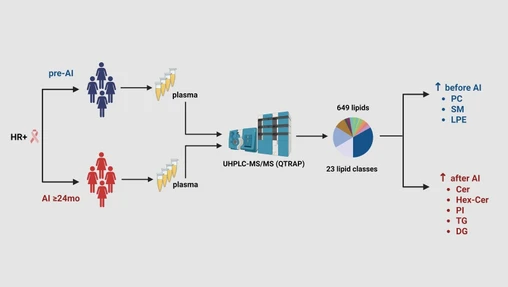
Mass spectrometry-based lipidomics identifies distinct plasma lipid changes linked to long-term aromatase inhibitor therapy in postmenopausal breast cancer patients.
Aromatase Inhibitor Therapy Is Associated with Distinct Plasma Lipidomic Profiles in Postmenopausal Breast Cancer Patients
Residue-Level Determination of Small-Molecule–Protein Affinities by Hydrogen–Deuterium Exchange Mass Spectrometry
LCMSScientific article | Science and research

Residue-Level Determination of Small-Molecule–Protein Affinities by Hydrogen–Deuterium Exchange Mass Spectrometry

This study introduces an HDX-MS titration workflow for quantifying protein–ligand affinities at global, peptide, and residue resolution.
Residue-Level Determination of Small-Molecule–Protein Affinities by Hydrogen–Deuterium Exchange Mass Spectrometry
Tracking Protein Misfolding and Oligomerization: A Temperature-Controlled Ion Mobility-Mass Spectrometry Approach
LCMSScientific article | Science and research

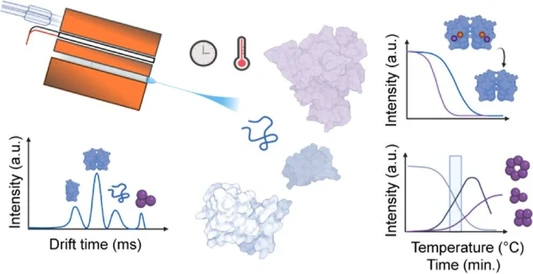
Tracking Protein Misfolding and Oligomerization: A Temperature-Controlled Ion Mobility-Mass Spectrometry Approach

This study uses temperature-controlled IM-MS to monitor protein unfolding and oligomer formation in real time, revealing early aggregation pathways.
Tracking Protein Misfolding and Oligomerization: A Temperature-Controlled Ion Mobility-Mass Spectrometry Approach
Comparative Evaluation of Total Ergot Alkaloids Determination by ELISA and UHPLC-MS/MS in Wheat: Implications of Cross-Reactivity and Matrix Effects
LCMSScientific article | Science and research

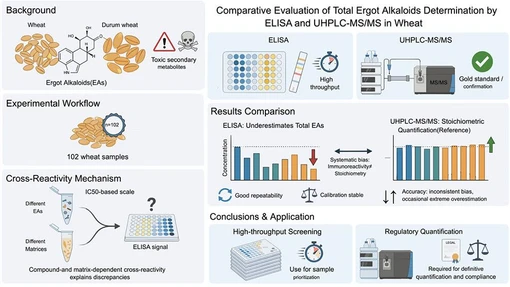
Comparative Evaluation of Total Ergot Alkaloids Determination by ELISA and UHPLC-MS/MS in Wheat: Implications of Cross-Reactivity and Matrix Effects

This study compares ELISA and UHPLC-MS/MS for ergot alkaloid analysis, highlighting the effects of cross-reactivity and sample matrix.
Comparative Evaluation of Total Ergot Alkaloids Determination by ELISA and UHPLC-MS/MS in Wheat: Implications of Cross-Reactivity and Matrix Effects
ISC 2026 Program
LCMSGCMSArticle | Events

ISC 2026 Program

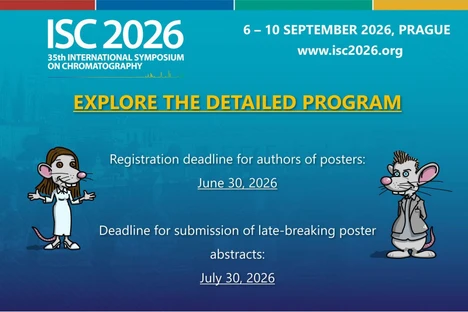
Explore the scientific program of ISC 2026, featuring world-leading experts in chromatography, mass spectrometry, omics, bioanalysis, AI, and separation science across four days in Prague.
ISC 2026 Program
Tutorial Lectures at ISC 2026
GCMSLCMSArticle | Events

Tutorial Lectures at ISC 2026

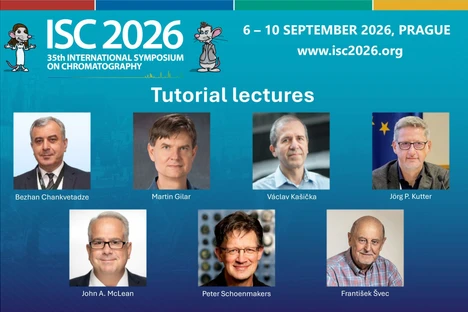
ISC 2026 tutorial lectures will feature internationally recognized experts covering chromatography, electrophoresis, mass spectrometry, miniaturized separations, and sample preparation.
Tutorial Lectures at ISC 2026
Awards at the 44th International Symposium on Capillary Chromatography and 21st GCxGC Symposium
LCMSGCMSArticle | Events

Awards at the 44th International Symposium on Capillary Chromatography and 21st GCxGC Symposium

RIVA 2026 will honor leading scientists in chromatography and GC×GC, recognizing lifetime achievements and emerging talent across capillary and multidimensional separations.
Awards at the 44th International Symposium on Capillary Chromatography and 21st GCxGC Symposium
LCMS-Net: Deep Learning for Raw High Resolution Mass Spectrometry Data Applied to Forensic Cause-of-Death Screening
LCMSScientific article | Science and research

LCMS-Net: Deep Learning for Raw High Resolution Mass Spectrometry Data Applied to Forensic Cause-of-Death Screening

LCMS-Net is an end-to-end deep learning model for raw LC-HRMS data, improving accuracy, reducing preprocessing, and minimizing batch effects in metabolomics.

LCMS-Net: Deep Learning for Raw High Resolution Mass Spectrometry Data Applied to Forensic Cause-of-Death Screening