We, 25.11.2026 | Original article from: KNAUER
Discover how KNAUER AZURA SMB systems use pressure sensors, flowmeters, and UV/RI detectors to monitor continuous chromatography, identify deviations, and support method optimization.Monitoring SMB Chromatography: In-Line Tools for Process Control and Method Optimization
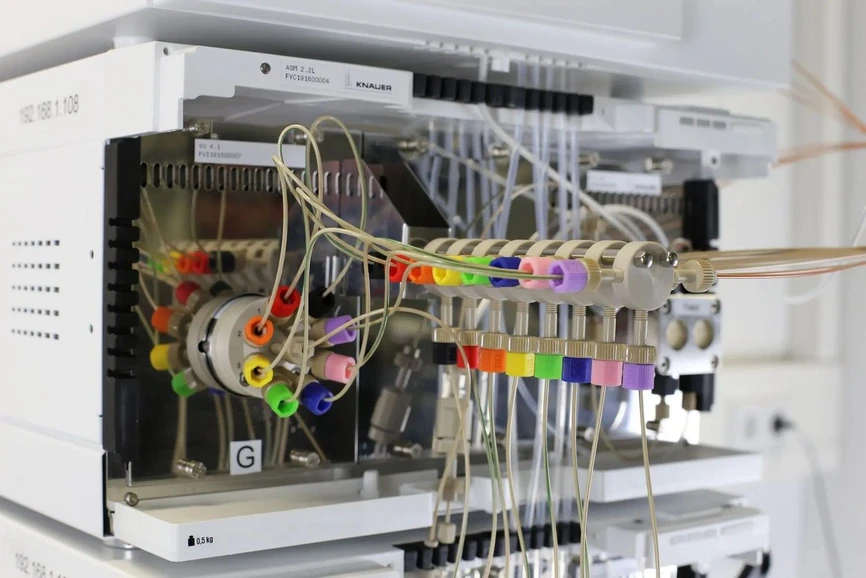
KNAUER: Simulated Moving Bed Chromatography
Simulated moving bed (SMB) chromatography enables continuous separation and purification, but maintaining stable performance over extended operating periods requires effective process monitoring. Unlike conventional batch chromatography, SMB systems continuously produce extract and raffinate streams, making traditional chromatograms less suitable for assessing separation performance. KNAUER AZURA SMB systems address this challenge through in-line monitoring of pressure, flow rates, and detector signals, providing valuable information for method development, troubleshooting, and continuous process optimization.
Understanding the challenges of continuous SMB monitoring
In conventional liquid chromatography, individual injections produce chromatograms that provide information about retention, peak resolution, and analyte concentration. SMB chromatography operates differently, with multiple columns connected through a system of pumps and switching valves that simulate the countercurrent movement of the stationary phase.
Rather than generating a conventional chromatogram for each injection, the system continuously collects two product streams: the extract and raffinate. Since an SMB separation may operate for several hours or even days, maintaining stable process conditions is essential for achieving reproducible separation performance and consistent product quality.
Monitoring tools can be divided into two main categories:
- In-line monitoring: Instruments integrated into the SMB system provide continuous measurements that can be recorded and visualized directly in the chromatography control software.
- Off-line analysis: Samples collected from the process are analyzed using separate analytical equipment to obtain additional information, such as product composition or purity.
Both approaches have their advantages. In-line measurements provide immediate information about the operating conditions, while off-line analysis can offer more detailed characterization of the separated fractions.
The KNAUER AZURA Lab SMB system supports several monitoring configurations, allowing laboratories to select instrumentation according to their analytical requirements and process complexity.
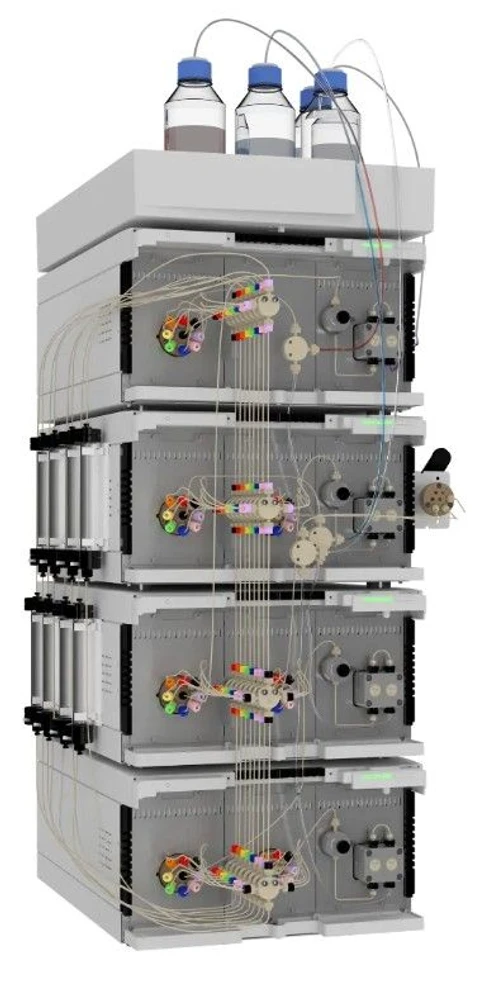 KNAUER: Fig. 1 KNAUER AZURA® Lab SMB system biocompatible version
Three particularly useful in-line monitoring technologies are pump pressure sensors, flowmeters, and UV or refractive index (RI) detectors. Each provides different information about the ongoing separation.
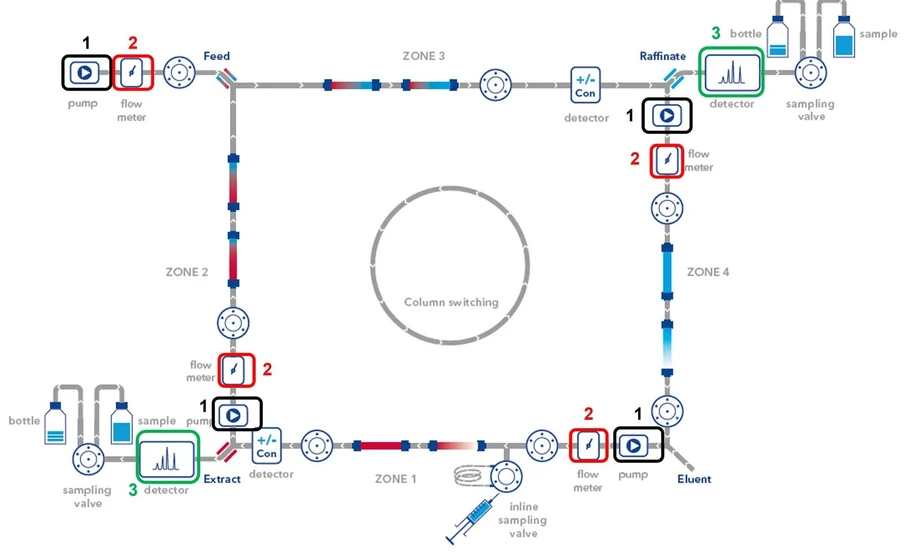 KNAUER: Fig. 2 Scheme of the KNAUER SMB system principle with different monitoring tools. Location of three different in-line tools are highlighted: 1) pressure sensor pump, 2) flow meter, 3) detectors
Pressure monitoring: Identifying changes in system conditions
Pressure measurement is one of the simplest ways to monitor the hydraulic conditions within an SMB system.
The four pumps used in a standard SMB configuration are equipped with pressure sensors that continuously measure operating pressure. Their signals are recorded individually by the control software, providing operators with an overview of the pressure behavior throughout the process.
Stable and reproducible pressure profiles generally indicate consistent operating conditions. Unexpected variations, however, may provide early indications of problems affecting the fluidic system.
For example, an increase in pressure may suggest partial blockage of a chromatographic column or capillary. Pressure changes may also occur when pump flow rates are adjusted during method development.
The interpretation of pressure signals therefore requires an understanding of the current method parameters, pump settings, and column configuration. Not every pressure fluctuation indicates a malfunction; some variations can be associated with normal operating changes.
By recording all four pressure signals, operators can recognize deviations from expected conditions and investigate potential problems before they significantly affect the separation process.
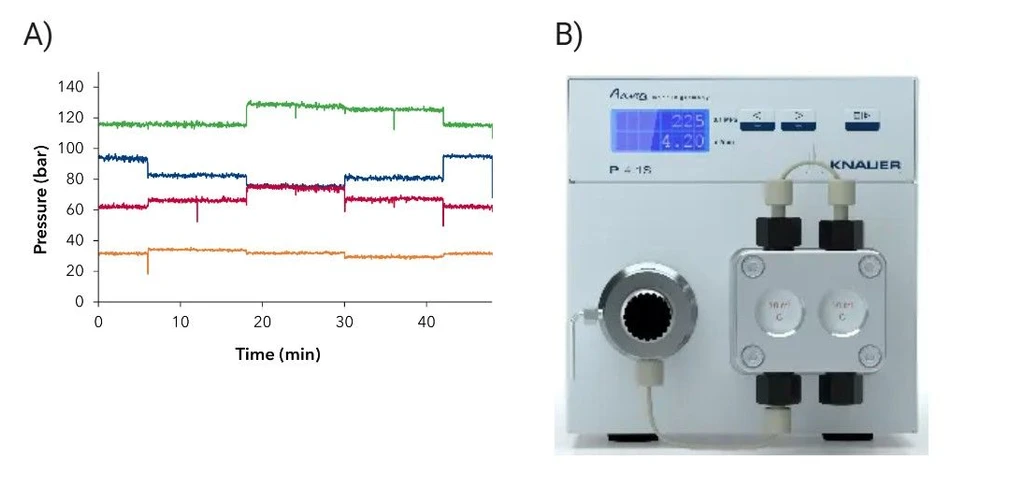 KNAUER: Fig. 3 Pressure signals of the four SMB system pumps (A), pressure sensor of the SMB Lab system pump (B)
Flow measurement: Maintaining the conditions required for separation
While pressure monitoring reveals changes in hydraulic resistance, flowmeters provide direct information about the actual mobile-phase flow rates.
Accurate control of the flow rates in the individual SMB zones is essential because the separation process depends on maintaining the operating conditions established during method development.
Flowmeters help identify deviations from the desired flow rates, interruptions, and other changes that could influence separation performance.
For comprehensive monitoring, a flowmeter can be installed downstream of each of the four pumps. This arrangement allows the system to measure all pump flow rates continuously and compare their behavior during operation.
An alternative configuration uses fewer measuring devices. A flowmeter positioned upstream of a selected column can monitor the different SMB zones as the column changes its position within the switching sequence. A second flowmeter can independently monitor the feed stream.
This approach can provide useful information about zone flow rates while reducing the number of flowmeters required.
Flow measurements are particularly valuable during method optimization, when operators adjust process parameters and need to verify that the desired conditions are being maintained.
Continuous monitoring also makes it easier to distinguish between intended changes in pump operation and unexpected deviations that require intervention.
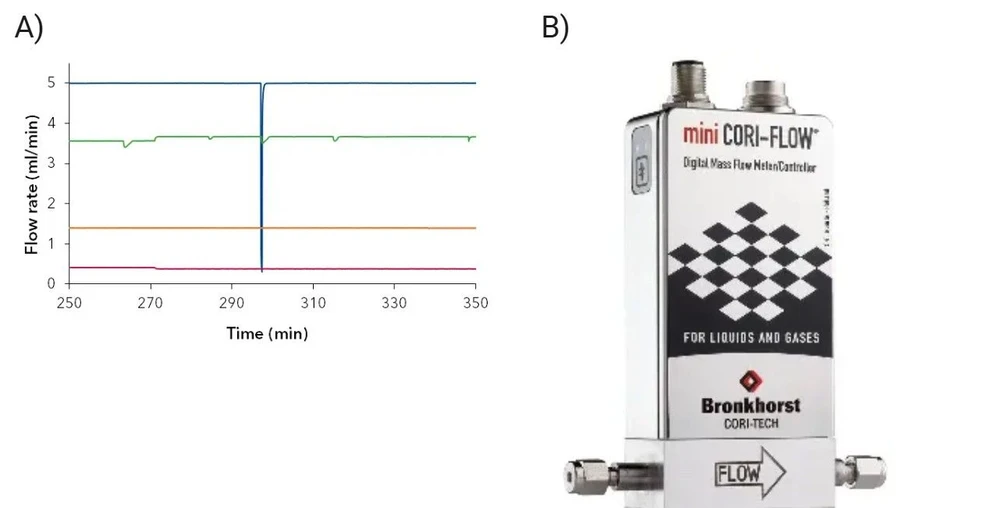 KNAUER: Fig. 4 Pressure signals of the four SMB system pumps (A), pressure sensor of the SMB Lab system pump (B)
UV and RI detectors: Following the separation process at the outlets
Monitoring pressure and flow provides information about the physical operating conditions. To observe changes in the material leaving the system, UV and refractive index detectors can be installed at the extract and raffinate outlets.
These detectors measure changes in the signals associated with the components present in the continuously collected streams.
Unlike conventional chromatographic analysis, the resulting detector traces do not represent a sequence of individually resolved analyte peaks. Instead, they reflect the combined concentration profiles of components leaving each outlet during the SMB switching sequence.
This distinction is important when interpreting the data.
During startup, detector signals may increase as the system approaches its operating state. Once the separation has stabilized, the signals can provide an indication of the consistency of the outlet streams.
Changes in detector response during operation may reveal shifts in the separation process, while decreasing signals can be observed during washing or column-cleaning procedures.
For example, the simultaneous use of two RI detectors allows operators to follow the extract and raffinate streams independently and compare their signal profiles.
Continuous outlet detection therefore provides a useful indicator of process stability, although additional analytical measurements may be required when the composition or purity of individual components must be determined.
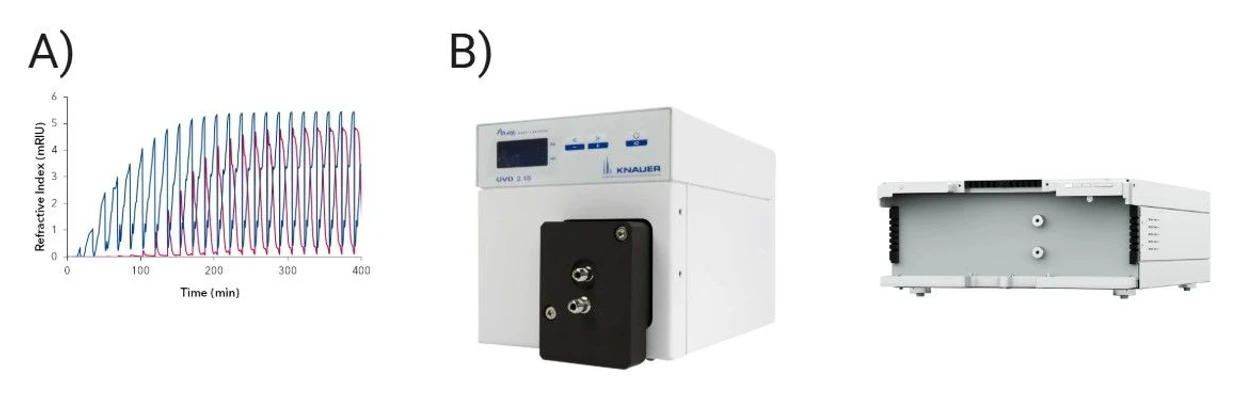 KNAUER: Fig. 5 Signals of two RI detectors placed at the raffinate and extract outlets (A), single wavelength and RI detector (B)
Combining monitoring signals for better process understanding
The greatest value of in-line monitoring comes from combining information obtained from different parts of the SMB system.
Pressure sensors reveal the hydraulic conditions, flowmeters confirm that the required flow rates are being delivered, and outlet detectors indicate how the separation process is behaving over time.
Together, these measurements help operators interpret changes that would be difficult to understand from a single signal.
For example, a variation in outlet detector response may indicate a change in separation behavior. By simultaneously reviewing pressure and flow data, operators can determine whether the change coincides with altered operating conditions or whether further investigation of the separation is needed.
During method development, these measurements provide immediate feedback when process parameters are modified. During extended production runs, they support continuous observation of system performance and help identify unexpected deviations.
The most suitable monitoring configuration depends on the complexity of the separation, the required level of process control, and the information needed for analytical or production decisions.
Conclusion: Improving SMB reliability through in-line measurements
Effective SMB monitoring requires more than following a single process parameter. Pressure sensors, flowmeters, and outlet detectors provide complementary information that helps laboratories understand how their continuous chromatographic separations are performing.
By integrating these technologies into the KNAUER AZURA SMB platform, operators can monitor important operating conditions, support method optimization, and identify potential problems during extended separations.
In-line monitoring does not replace detailed off-line analysis when product purity or composition must be established. Instead, it provides the continuous process information needed to support stable operation and make informed adjustments.
For additional technical information on monitoring configurations, see the KNAUER technical note Smart Monitoring & Optimization Solutions for SMB Processes: In-Line and Off-Line Tools for SMB Systems.
This version of the article was adapted from the original text using AI-assisted rewriting and editorial review.