

Inert, Low Bleed 5% Phenyl Selectivity
- Highly inert - improved peak shape for acidic/basic compounds, drugs of abuse, and pesticides
- Very low bleed (MS certified) levels provide maximum sensitivity
- Intense QC specifications ensure column-to-column performance
- Engineered Self Cross-linking™ (ESC) bonding results in phase stability and high temperature limits
- Same selectivity as the 5 % phenyl / 95 % dimethylpolysiloxane phase
Recommended Use
- Highly inert for improved peak shape of acidic/basic compounds, drugs of abuse, and pesticides
Recommended Applications
- Barbiturates
- Benzodiazepines
- Drugs of Abuse
- EPA Methods
- FAMEs
- Nitrosamines
- Pesticides
- Phenols
- THC Metabolites
Upgrade to ZB-5PLUS from any 5 % phenyl / 95 % dimethylpolysiloxane phase:
Agilent®
- DB®-5
- HP-5
- HP-5ms
- HP-5msi
Restek®
- Rtx®-5
- Rtx-5MS
- Rtx-5Amine
- Rxi®-5ms
SGE®
- BP5
- BPX5
Supelco®
- MDN-5S
- SPB®-5
- Equity®-5
OV®
- OV-5
Phenomenex Zebron PLUS GC Columns
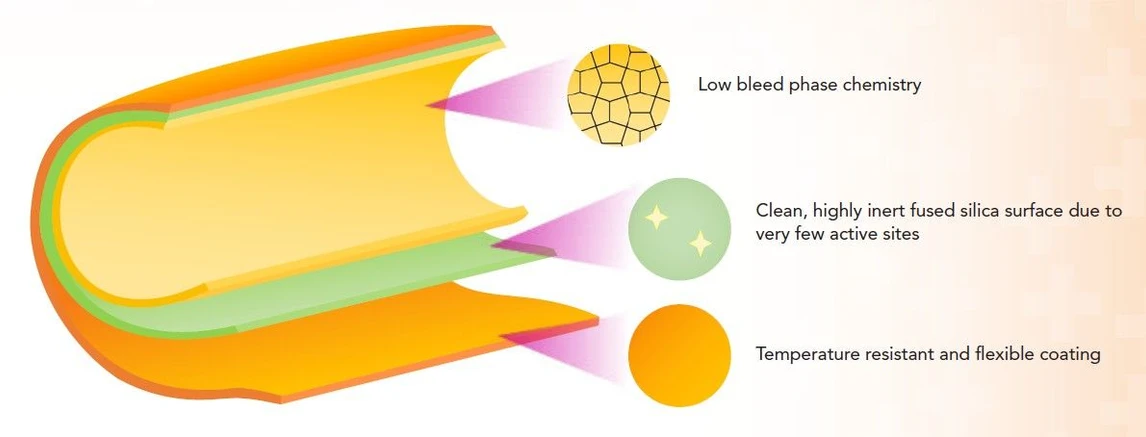
What’s in the Zebron™ PLUS?
- Active sites on a GC column’s surface can result in analyte adsorption and degradation, which negatively affect peak shape and response.
- To reduce potential surface activity, Zebron PLUS phases (ZB-1plus, ZB-5plus, ZB-5MSplus, and ZB-624plus) are designed with a rigorous fused silica deactivation process that improves inertness and peak shapes for troublesome compounds
- Zebron ZB-WAXPLUS is specially designed for 100% aqueous stability, enhanced resolution and better reproducibility.
 Phenomenex: Zebron PLUS GC Column phase