
Zaměření
Type of News
Focus

Propionic Acid Outperforms Formic and Acetic Acid in MS Sensitivity for High-Flow Reversed-Phase LC-MS Bottom-Up Proteomics
Propionic acid increases peptide identifications by 39% versus formic acid in LC-MS proteomics while maintaining chromatographic performance and compatibility.
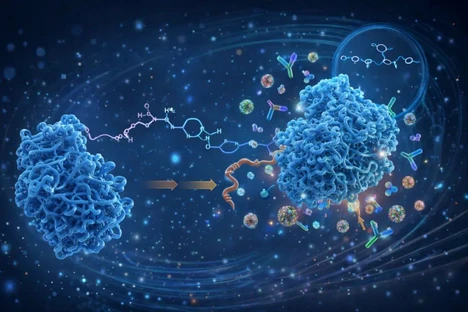
Cracking the Code of PEGylated Proteins: How Advanced Mass Spectrometry Reveals What’s Really Attached
Discover how Orbitrap Charge Detection MS and a multi-enzyme workflow characterize PEGylated therapeutic proteins by determining PEG stoichiometry, mapping attachment sites, and detecting impurities.
Electrospray 101: What to Know About LC-MS Sources – and a First Look at Optispray
Discover how ion sources shape LC-MS performance and why electrospray transformed modern mass spectrometry. Explore EASY-Spray™, NanoSpray Flex™, and the new OptiSpray™ technology.

Exploring a Versatile LC–HRMS Strategy for NDSRI Determination in Beta Blocker Drug Substances
A single LC-HRMS method for NDSRI quantitation across six beta blockers. Discover how Orbitrap MS enables sensitive, robust analysis of trace nitrosamine impurities.
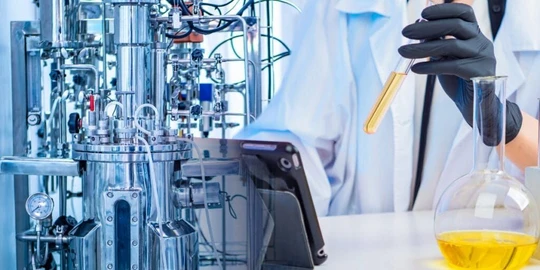
Monitoring mAb Manufacturing the Easy Way with Switchable 2D‑LC-UV-MS
How can mAb manufacturing monitoring be simplified? Switchable 2D-LC-UV-MS workflows enable near real-time tracking of critical quality attributes and faster process decisions.

Sharper, Faster, Smarter: HRAM Orbitrap Mass Spectrometry Meets Postmortem Toxicology
HRAM Orbitrap LC-MS accelerates postmortem toxicology, enables retrospective screening for emerging drugs, and improves confidence in complex sample analysis.

Upgrade Smarter: Trade In Your Current LC-MS System and Boost Lab Performance Without Breaking Budget
Upgrade your LC-MS with Thermo Fisher Scientific’s Trade-In / Trade-Up Program. Reduce costs, boost performance, and transition seamlessly to advanced mass spectrometry solutions.
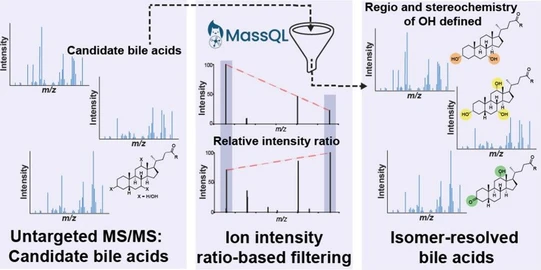
MS/MS Mass Spectrometry Filtering Tree for Bile Acid Regio- and Stereoisomer Annotation
This study introduces an MS/MS filtering tree workflow to distinguish bile acid isomers in LC-MS/MS data using ion intensity ratios and a web-based tool.

From Complexity to Clarity: Smarter PFAS Identification Workflows in Compound Discoverer Software
Non-targeted PFAS analysis using Orbitrap HRAM and Compound Discoverer 3.5 enables confident identification of thousands of PFAS through advanced libraries, scoring tools and visualization workflows.
Identification of Substructures in Unknowns Through MSn Data
How MSⁿ spectral libraries like mzCloud help identify substructures in unknown compounds. Learn how fragmentation data can guide structure elucidation and support identification of complex molecules.