
PFAS are among the most persistent environmental contaminants. Explore LC-MS/MS, GC-MS, TOF, and HRMS approaches for PFAS detection, identification, and quantification.
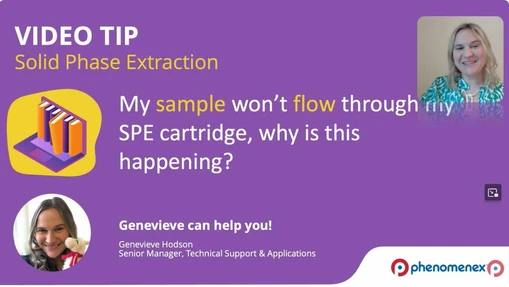
SPE Troubleshooting: Why Won't My Sample Flow Through the SPE Cartridge?
Learn the most common causes of SPE cartridge flow problems and how to troubleshoot them. Identify issues related to samples, solvents, manifold pressure, and precipitation.
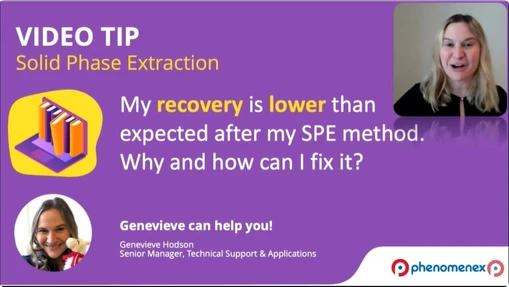
SPE Troubleshooting: Understanding and Resolving Low Recovery in Solid Phase Extraction
Low SPE recovery does not have to mean method failure. Learn how fraction collection and analysis can identify analyte losses and guide effective troubleshooting steps.
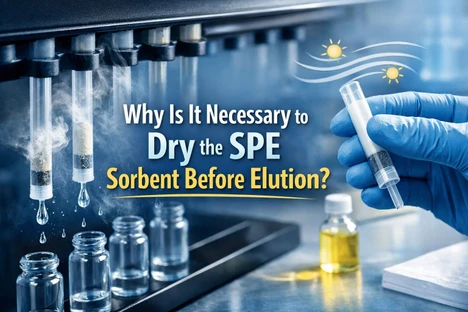
Why Is It Necessary to Dry the SPE Sorbent Before Elution?
Proper drying of the SPE sorbent is a critical step to achieve high sensitivity, good reproducibility, and maximum analyte recovery, especially for complex sample matrices.
How can you extend GC column lifetime and prevent contamination? Part 2 focuses on using liners with glass wool and proper column bake-out to maintain separation performance.
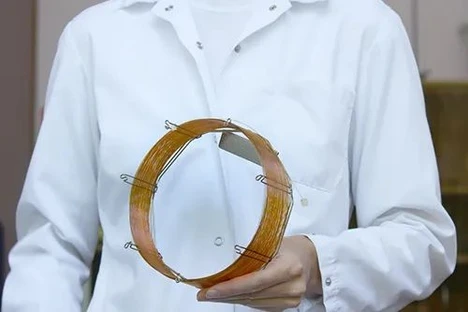
Dirty samples can quickly damage your GC column and shorten its lifetime. Learn simple, proven ways to protect your column, improve performance, and reduce downtime. Part 1 focuses on smart sample preparation.
Efficient Sample Concentration for Micropollutant Surveillance Under EU Directive 2024/3019
How the EU’s revised Urban Wastewater Treatment Directive is driving demand for ultra-sensitive LC-MS/MS workflows—and why nitrogen evaporation is critical for reliable micropollutant monitoring.

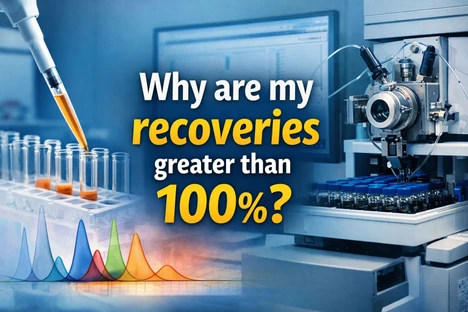
Although 100% recovery is expected in SPE, values above 100% are sometimes observed. This article explains the most common causes and provides practical guidance on how to identify and resolve them.
A technical guide to troubleshooting low analyte recovery in SPE. Explains relative vs. absolute recovery and provides practical solutions for conditioning, loading, and sorbent selection.