Zaměření
Type of News
Focus
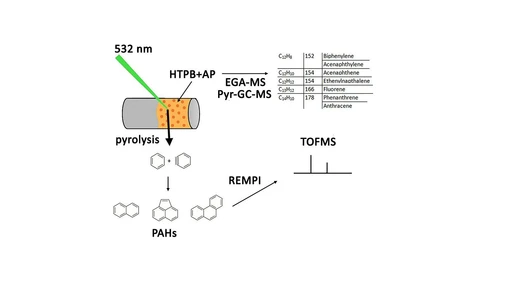
PAH Induction upon Pyrolysis of Hydroxyl-Terminated Polybutadiene-Based Solid Rocket Fuels
Pyrolysis of HTPB/AP mixtures produces PAHs and aromatic C6 species absent in pure HTPB. Mass spectrometry confirms rapid PAH growth on μs time scales with pathways revealed by Pyr-GC-MS.
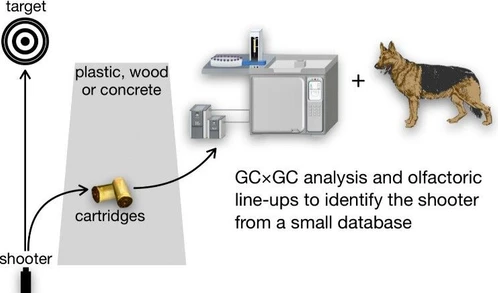
Analysis of the Human Scent on Fired Cartridge Cases from a Simulated Crime Scene
Pilot study shows human scent can survive firing on cartridge cases. Using olfactronics and olfactorics, traces were matched to volunteers to reveal who loaded the weapon.

Work of Professor Cibulka's team featured on the cover of Chemical Science journal
A Czech-Polish team discovered a stable flavin anion catalyzing visible-light photoreductions. This novel system may simplify synthetic routes to drugs and other valuable compounds.
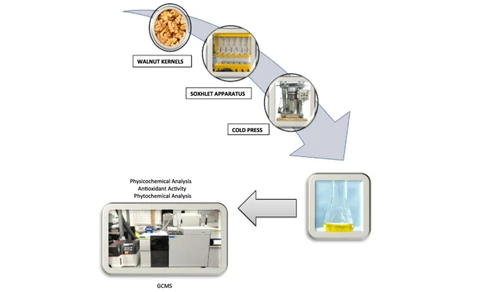
Quality analysis of walnut oil extracted by cold press and solvent methods for in vitro phytochemicals, antioxidant activity and GCMS analysis
The study compares cold press and solvent extraction methods for walnut oil, focusing on yield, viscosity, bioactive compounds, and potential applications in food, cosmetics, and healthcare.
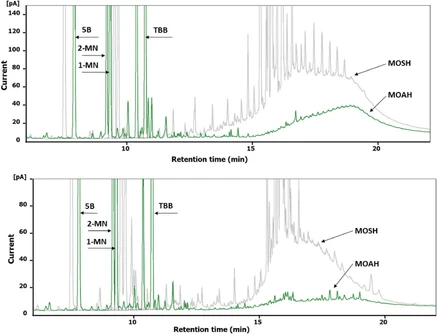
Comparison of carrier gases for the separation and quantification of mineral oil hydrocarbon (MOH) fractions using online coupled high performance liquid chromatography-gas chromatography-flame ionisation detection
This study evaluates hydrogen, helium, and nitrogen as carrier gases in HPLC-GC-FID for MOH analysis in food, showing nitrogen as a suitable and effective alternative despite some peak broadening.

Injection artifacts in odorant analysis by gas chromatography
The study evaluates GC injection techniques to minimize artifact formation in odorant analysis, confirming on-column injection as most accurate and recommending its use in GC–olfactometry.

New strategies for non-targeted quantification in comprehensive two-dimensional gas chromatography: The potential of reconstructed TIC response factor surfaces
This study develops a GC×GC method using reconstructed TIC response factor surfaces to estimate compound concentrations without needing reference standards or molecular descriptors.