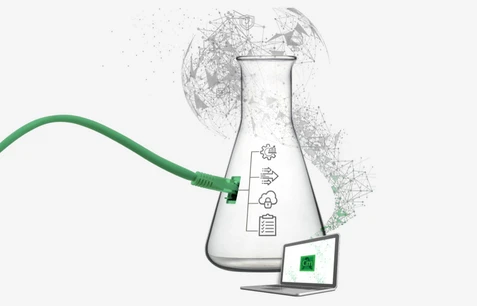



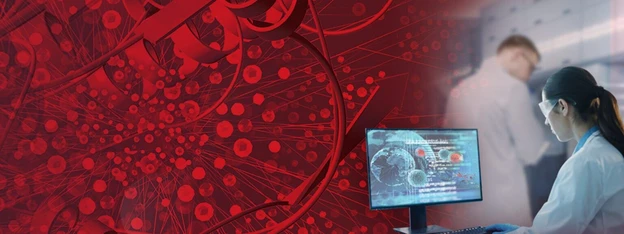
Accelerate Proteomics Research with Smart Automation
Transform proteomics research with Thermo Fisher’s Proteomics Software Solution — integrating Proteome Discoverer and Ardia Platform for automated, secure, and connected data workflows.
Episode 4: Introducing a More Confident Era in HPLC-CAD Analysis
Discover the new Thermo Scientific Vanquish CAD P Series – the next evolution in HPLC detection. Improved sensitivity, method transfer tools, and real-time optimization.

Take Control of Your Data: An Introduction to the Scripting Node in Compound Discoverer Software
Discover how the scripting node in Thermo Scientific Compound Discoverer lets you run custom R or Python code directly in your workflow for tailored calculations, database links, and advanced data insights.

MOSH/MOAH Analysis: Technology, Regulation, and the Road Ahead
MOSH/MOAH testing is becoming a key topic in food safety and regulation. Discover how Thermo Fisher Scientific’s LC-GC-FID and GC×GC-MS workflows improve reliability, compliance, and source identification.
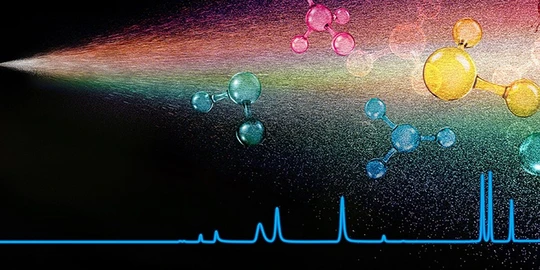
Episode 3: Understanding How Charged Aerosol Detection (CAD) Works
Dive deeper into Charged Aerosol Detection (CAD) technology in HPLC. Learn how nebulization, evaporation, charging, and detection steps deliver consistent, mass-based quantification across analytes.
Episode 2: The Benefits of CAD Compared to Other Universal Detectors: ELSD and MALS
Compare Charged Aerosol Detection (CAD) with ELSD and MALS to see why CAD delivers superior sensitivity, uniform response, and robustness for a broad range of HPLC applications.

Sample Preparation Strategies Demystified: Choosing the Right Fit for Your Toxicology Workflow
Discover smarter LC-MS sample preparation strategies—dilute-and-shoot, PPT, LLE, SPE, automation & microsampling—for cleaner samples, robust toxicology results and efficient workflows.
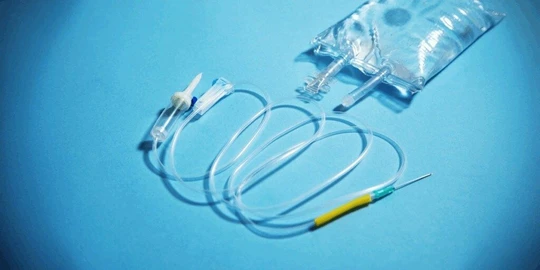
Understanding PFAS in Pharmaceutical Manufacturing
PFAS play vital roles in pharma but pose risks as “forever chemicals.” Thermo Fisher’s LC-MS solution enables precise PFAS screening in packaging and processes, ensuring compliance and safety.

Collision-Based Ion-activation and Dissociation
Collision-based ion activation, developed nearly 80 years ago, remains the most widely used fragmentation method. Learn about three key techniques on Thermo Scientific MS.